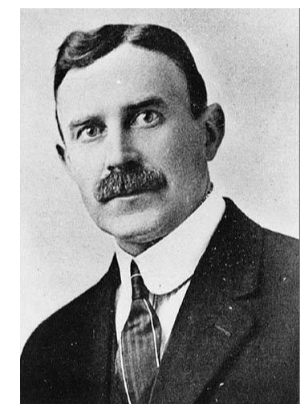
 Photographers in the Yukon, Alaska and BC, 1886-1946
Dateline: January 13, 2026.
Eric A. Hegg was born Erik Jonsson in Bollnäs, Sweden, on September 17, 1867. He was the second son of crofter Jon Persson and Brita Ersdotter, and would eventually have three brothers and two sisters. In 1881 the family emigrated to the United States, looking for a better life. They settled in the Swedish communities at the southern shore of Lake Superior in Wisconsin, and the family surname was changed to Hegg. At 14, Eric got a job as a photographer's apprentice in Cloquet, Minnesota, and later opened his own studio in Washburn, Wisconsin.
In 1888, Eric and his brother Peter moved to the Bellingham, Washington, area, which had a sizeable community of Swedish immigrants. There, they opened photography studios both in New Whatcom and Fairhaven.
September 22, 1888: E. A. Hegg is checked into the Western Hotel in Tacoma; address given as Cumberland, a farming community just east of Tacoma. (The Daily Ledger, Tacoma)
March 27, 1891: E. A. Hegg is installed as a member of the Whatcom chapter of the Knights of Pythias. (Fairhaven Herald)
March 29, 1891: "The Little Diamond Photo, by E. A. Hegg. Something new. Call and see them. Only $1.75 per dozen." (this ad ran regularly in the Fairhaven Herald)
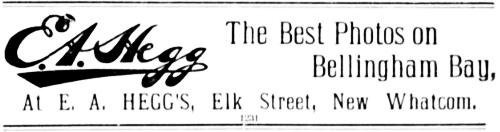
April 5, 1891: The ad below ran for the first time in the Fairhaven Herald. New Whatcom was formed by the merger of Whatcom and Sehome that year (1891), then it and Fairhaven combined to form the city of Bellingham in 1903.
February 17, 1893: E. A. Hegg transferred to to Gussie Hegg an undivided
one-half share of Lot 8, Blk 7, York, add to New Whatcom, for #1.
March 6, 1893: "The 3-year-old son of E. A. Hegg fell through a trestle a distance of ten feet Sunday, striking his head and causing a severe wound on the forehead. Dr. McPherson sewed up the wound, using six stitches." (The Bellingham Herald)
May 12, 1893: "M. R. Alexander, E. A. Hegg and others are considering a trip to Alaska during the summer. They propose buying a boat and making a leisurely trip up the coast, taking views of the scenery en route." (Fairhaven Herald)
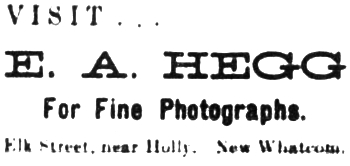
June 3, 1893: The small ad below ran for the first time in The Argosy, New Whatcom.
September 4, 1893: "E. A. Hegg leaves on a visit to the World's Fair Monday." (The Bellingham Herald)
October 6, 1893: E. A. Hegg of New Whatcom is staying at the Occidental Hotel in Seattle. (The Seattle Post-Intelligencer)
January 20, 1895: "Mr. E. A. Hegg left Tuesday for Vancouver, whence he will sail for the Hawaiian islands. Mr. Hegg will be absent about two months." (The Sunday Ledger, Tacoma)
January 29, 1895: "Mr. E. A. Hegg, a Crayon Artist, with his headquarters at Williams' studio, will be in Honolulu for a short time only. Orders solicited and satisfaction guaranteed." This text ad in The Pacific Commercial Advertiser ran daily until February 26th.
March 2, 1895, The Hawaiian Star:
A party of eight tourists completed last evening the circuit of Oahu in one of Smith's big busses. They were out three days and finished the trip by crossing the
pali from Kaneohe. All are free in their praises of the scenery, the air, the bathing and the hospitality of the natives and foreigners everywhere.
There were in the party: F. J. Painter, C. S. Bailey, J. A. McAlphine, J. P. Nightengale, V. W. Haywood, E. Shaw, E. A. Hegg and J. Fishburn. Artist Hegg and Mr. Bailey, who is a photographer, had cameras and secured any numbers of good snapshots. Mr. Hegg may undertake a painting with the pali as a subject.
A. Woolf was driver and O. J. Holt guide for the party. All hands
assisted in getting the heavy bus over the mountain into Honolulu.
March 5, 1895: "An Artist to Return. E. A. Hegg, the artist and photographer, took passage by the S. S. Miowera to-day for his home in Whatcom, Washington, after a several months' visit in Honolulu. Mr. Hegg intends to settle up his business there and return to Honolulu, where he will establish a photograph gallery in partnership with A. W.
Holster of the Aloha Gallery. Mr. Hegg is a finished artist, as evidenced by the work he has done during his visit." (The Daily Bulletin, Honolulu)
March 14, 1895: The Daily News-Advertiser, Vancouver, reported on the voyage and arrival at Vancouver on March 13th of the R. M. S. Miowera, from Australia. She had sailed from Sydney on February 18th, Honolulu on March 5th, arriving at Victoria on March 12th "after a smart passage of seven days." E. A. Hegg is listed among about fifty passengers. "Her cargo, 225 tons, is made up as follows. Two hundred cases of butter, 15 cases treacle, 25 bags coffee, 28 packages opium, 200 cases fruit, 1,481 ingots tin, 200 bales papok, 148 bales wool, 700 bags rice and 85 packages of general merchandise."
October 19, 1896: "E. A. Hegg, J. F. Hope, Pat Jessup, J. W. Phillips and H. Monson were naturalized yesterday." (The Bellingham Herald)
June 2, 1897: "PHOTOGRAVURES OF RESIDENCES AND business houses. E. A. Hegg, S. 175½ Howard." The address is in downtown Spokane. This ad ran regularly in The Spokesman-Review, Spokane, through June.
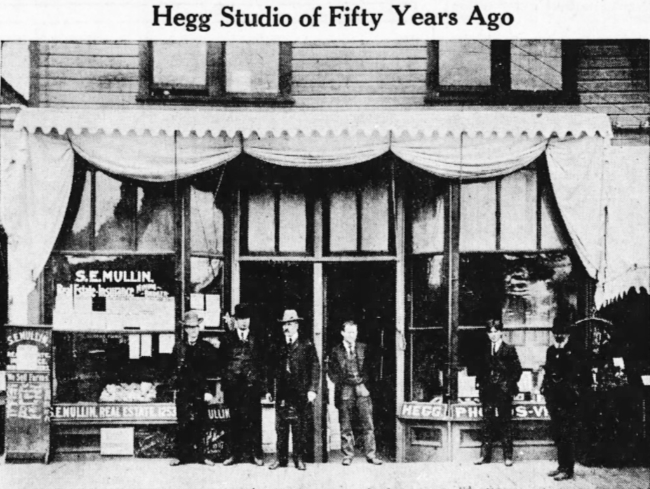
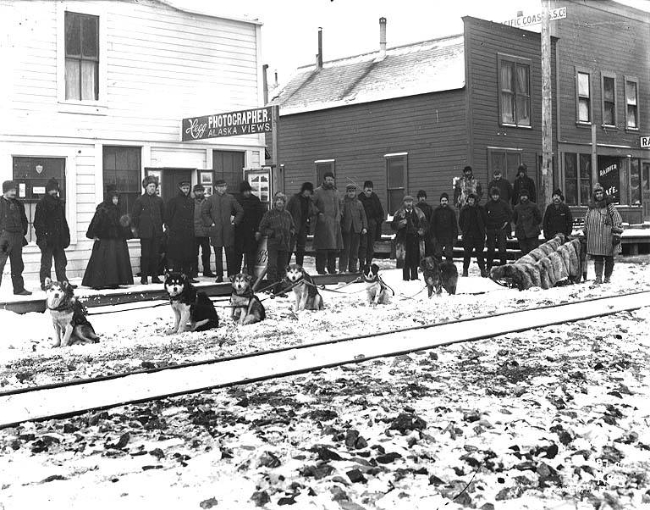
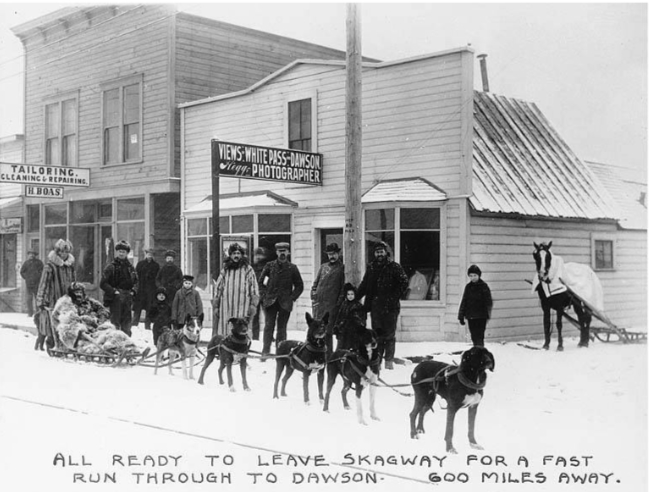
In the fall of 1897, after hearing of the gold strikes in the Klondike, Eric joined a group of men from the Bellingham area and headed north with thousands of other gold seekers. The navigation season on the Yukon River was now closed, so they stopped at Dyea, Alaska, the starting point of the Chilkoot Trail to the interior. There he opened a small photography studio, and soon opened a second, more substantial, studio in Skagway. Two photos of the Skagway studio, an early one and one with the bay window mentioned in 1899, can be seen below.
In his book "Klondike," Pierre Berton described Hegg during the stampede: "A photographer was in the crowd as well. E. A. Hegg, who had closed his two studios on Bellingham Bay, had arrived with a darkroom fastened to a sled drawn by a herd of long-haired goats. He was obliged to heat his developer to keep it from freezing, to filter his water through charcoal, to coat his wet plates with a mixture improvised from herbs and egg albumen, and to work his bulky camera in forty-below weather; but the pictures he made of that strange mountain migration were so effective that when some of them went on exhibit in New York, crowds fought to get a glimpse of them and police had to be called to restore order."
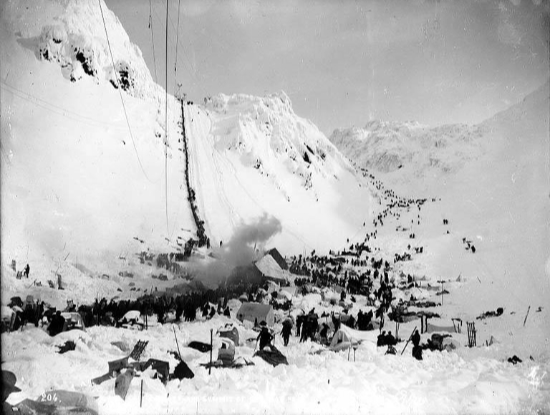
In March 1898, photographer Per Edward "Ed" Larss arrived in Skagway, and Hegg hired him to help document the Klondike stampede. Hegg and Larss made frequent trips to both the Chilkoot and White Pass Trails, carrying their heavy equipment and creating a significant record of activities along the trails.
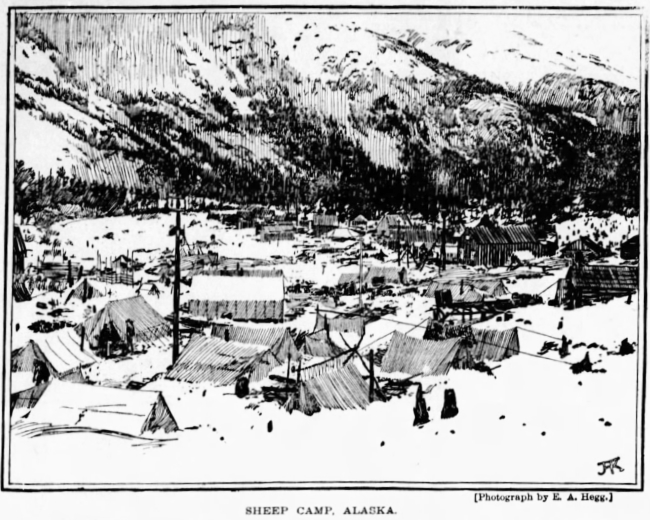
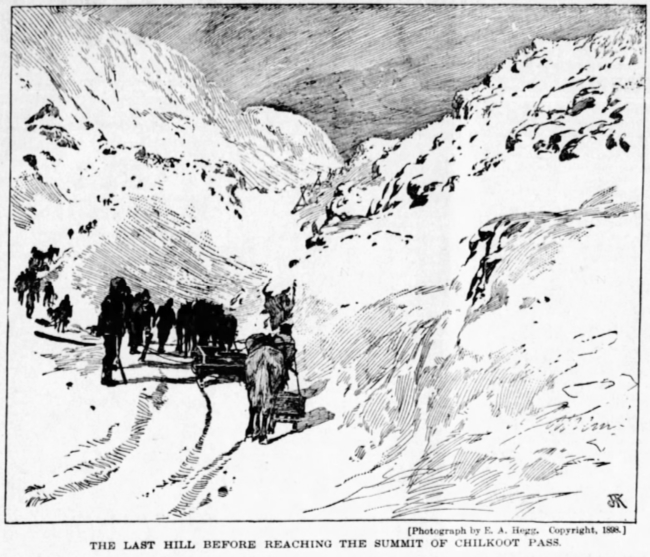
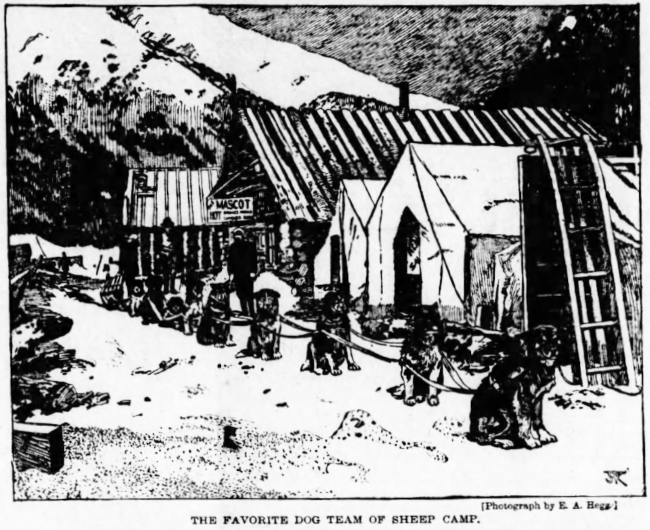
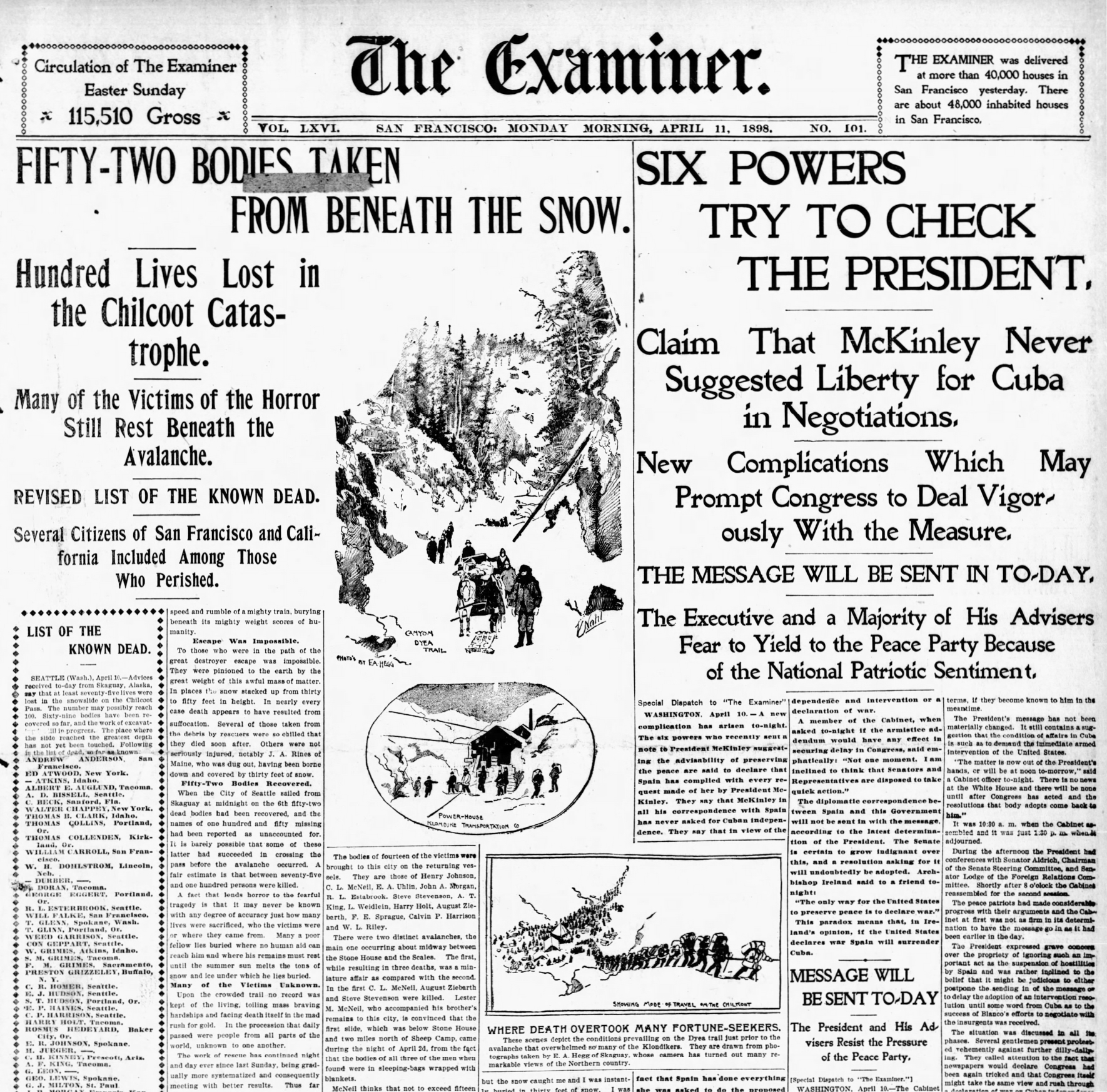
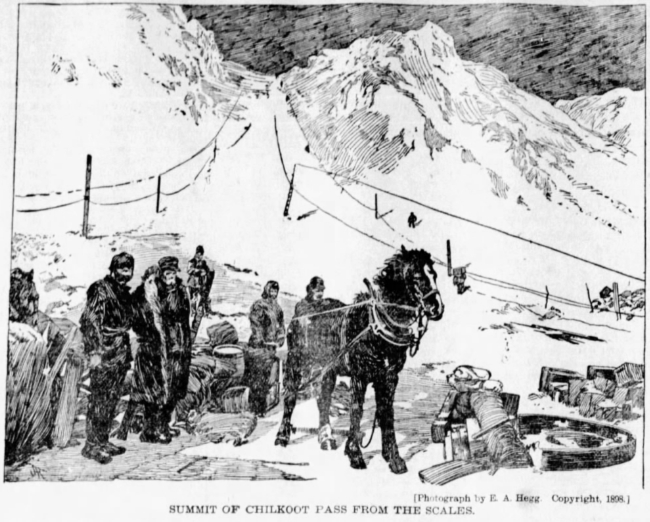
On April 6, 1898, Hegg's photos of the Klondike trails began to appear in many newspapers. In April and May, they appeared hundreds of times. See the four photos used below.
April 14, 1898: "The best collection of photographs of the Dyea and Skagway trails ever seen in the city are on exhibition at the office of Wallace Grime & Co., Yates street. Some of them have been taken during the last month and show the difficulties under which the travel of the Klondike pilgrims has been undertaken. One, illustrating a crowd of several hundred men ascending to the summit of the Chilkoot Pass, is particularly realistic, and gives a better idea of the work accomplished than could be conveyed in columns of print, The photos were taken by Mr. E. A. Hegg of Skagway and are copyrighted." (Victoria Daily Times)
In the Spring of 1898, Hegg headed for Dawson with his brother, Peter Hegg, friend P. B. Anderson, and partner Peter E. Larss. Anderson built a boat for them at Lake Bennett; he charged Hegg $1800. The boat was 18 feet long, with a 4 foot beam. It had a darkroom at the front end, and carried 4 tons. It was not large enough, however, and Hegg bought a smaller boat as well and paid Anderson to take it to Dawson. Larss, Hegg and Anderson left Lake Bennett on June 1, 1898, got to Dawson June 20.
In June 1898, Hegg turned over the majority of his work produced at Bennett over to Bennett photographer Ephraim J. Hamacher, who later relocated to Whitehorse.
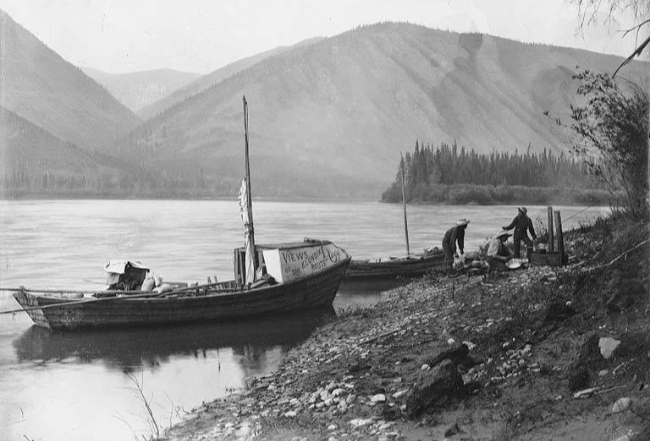
As with those taken on the Chilkoot and White Pass, many of the photographs of the trip to Dawson were taken and developed under very difficult conditions, with a darkroom in the bow of their small boat. The sides of the darkroom had large signs advertising "Views of the Klondike Route, by Hegg" - see a photo of it below.
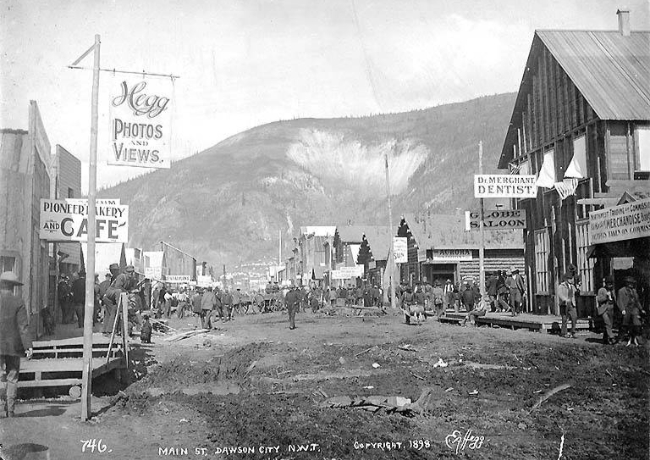
After arriving in Dawson, Hegg set up a formal partnership with P. E. Larss in a shop near the waterfront between First and Second Streets. Hegg travelled back to Skagway twice, continuing to document the stampede, but also checking on the Skagway studio, which he had kept open. Hegg's sign on "Main Street" in 1898 is shown in a photo below.
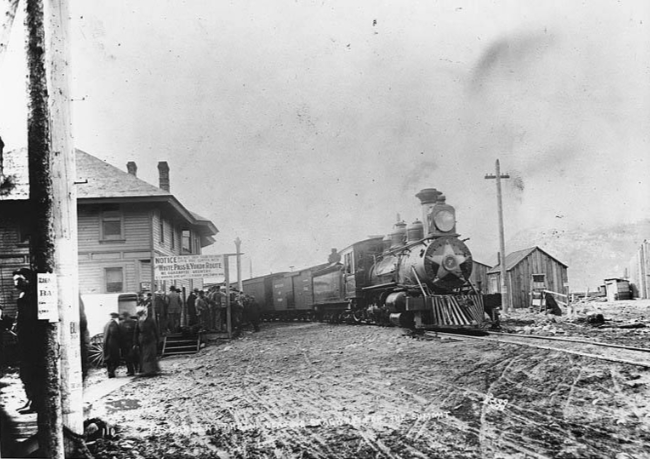
Returning to Skagway in late 1898, Hegg photographed the rush to the Atlin gold fields and the building of the White Pass and Yukon Route railroad. Larss remained in Dawson and continued the photography business as Hegg & Co., and later Hegg and Larss.
In October 1898, the Dawson studio was destroyed by fire. The studio was rebuilt and in November 1898 George G. Cantwell joined the staff.
November 26, 1898: "Mr. Geo. G. Cantwell late of Juneau, Alaska, is doing the outside photographie work for E. A. Hegg." (The Klondike Nugget, Dawson)
January 1, 1899: "Mr. E. A. Hegg arrived on Tuesday afternoon after an extended trip in the East. Mrs. Hegg stopped in Portland to visit for a short time, when they will sail from Seattle to Dawson, where Mr. Hegg will continue his work of photography." (The Seattle Post-Intelligencer)
January 12, 1899: "Mrs. E. A. Hegg, now of Alaska, is the guest ef Mrs. W. H. Axtell. She reports much success in the photographic business both in Skagway, where she has a gallery, and in Dawson, where her husband is located." (The Bellingham Herald)
January 24, 1899: "Hegg, the photographer, has copies of the sepulchre of the late Rev. Father Judge for sale. These pictures were taken by flashlight, and are particularly good, the altar and decorations showing up very clearly. Copies may be had at St. Mary's hospital and Hegg's photograph studio." (Yukon Sun)
February 3, 1899: "Official Photographer Hegg, of the White Pass Route, is the owner of the finest bay window in the city. The new window decorates the front of Mr. Hegg's studio on Broadway and is the admiration of all passers by. It is even said that people who have been accustomed to take the sidewalk on the other side of the street now come and go by the bay window side." (The Daily Alaskan, Skagway). On this date, the ad below also appeared in The Daily Alaskan.
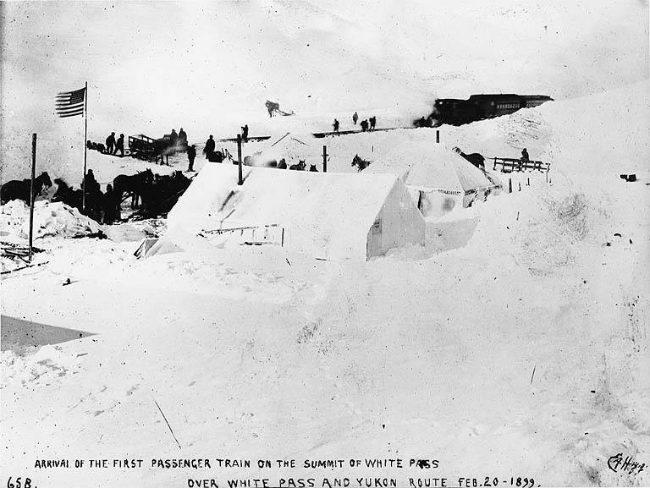
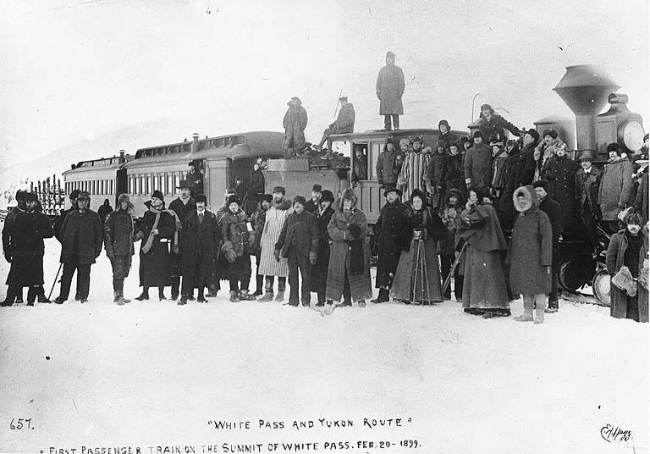
February 21, 1899: The official photographer for the White Pass & Yukon Route, Harry C. Barley, was unable to attend the celebration of the completion of the railroad to the summit of the White Pass, so E. A. Hegg was hired for the day. "Traffic Manager Gray, who appeared to have had supervision of the whole affair, overlooked nothing, not even a photographer, and Mr. Hegg made it a business to take a number of views of the train and its passengers at a number of the most picturesque points on the road. These will be souvenirs of the occasion, dear to all participants, and the railroad in particular. Beside Mr. Hegg there were kodaks and cameras enough on board to have made a good start for a camera club. These were Mrs. Sehibrede, Mrs. Battin, Mrs. Case, Mrs. Dautrick, Miss Church, Mrs. Hollister, Mrs. Thomas Brackett, Messrs. Case, Frank Brackett, Hollister, W. A. Reid, F. B. Flood, Bart Robinson, Mr. Jones, C. H. Stagman and Rev. J. A. Sinclair. All these lined up at every stop and formed an interesting, picturesque group of themselves, which it is to be hoped was secured by. Mr. Hegg." (The Daily Alaskan). Read the rest of that lengthy article at RailsNorth.com. Three of the photographs shot that day can be seen below.
March 3, 1899, Hegg met the Carr and Yaeger party as they neared Dawson, and photographed the group of five men with five sleds and 27 dogs. (The Klondike Nugget, March 4)
April 28, 1899: "E. A Hegg received a shipment of photographic supplies on the Al-Ki." (The Daily Alaskan)
May 7, 1899: "Nature in Alaska is constantly playing tricks with man by reproducing in colossal forms something readily recognized as the handiwork of man. Several of these abound in and around Skagway, and one of the latest discovered and most unique in point of striking character is a gigantic waterfall on the creek across the bay where the new strike was made a week ago, which is a dead representation of the full rounded back of a woman's head, the running water forming the loose hair falling over her shoulders with a distinctness that is striking. The outline of the head is cleverly defined with the face apparently turned slightly to the right, leaving the right shoulder and back covered with the dishevelled hair well exposed. A beautiful photograph of this freak of nature was taken by Hegg, the photographer of this city,and adds another to the many natural wonders of Alaska. When photographed the surface water over the falls was still frozen and had a fringe of thin crystalized icicles immediately over the running water that look like lace work and which adds to the oddity of the woman's head. The photograph is a great curiosity and will add another to the many already discovered in Alaska." (The Daily Alaskan)
May 30, 1899: "Mr. Hegg, who came up several days ago on his way to Dawson to engage in business, will start for the interior today. While in Skagway Mr. Hegg met an old friend in Lee Guthrie and during his stay here was his guest." (The Daily Alaskan)
In July 1899, Hegg sold his interest in his Dawson studio to Larss, who then partnered with Joseph Duclos and headed for Nome to record that gold rush. Larss and Duclos spent two years recording life in the Nome area.
January 14, 1900, The Daily Alaskan:
The wonderful progress of the last decade of the century that closes with this year of grace is not better exemplified than in the strides toward perfection mode in
the art of picture making. The word "art" is here used, advisedly, to include advanced modern photography and the scientific mechanical skill required to transfer the photographer's art to paper by the printing presses. The work of the latter has been of scarce less importance than that of the former; in fact, one has been largely dependant upon the other for its own development.
It is not claiming too much to say that E. A. Hegg, of Skagway, through the wide circulation of the product of his skill in portraying the marvelous grandeur of Alaska scenery, has contributed as much as any man in America to the elevation of his adopted profession to one of the fine arts.
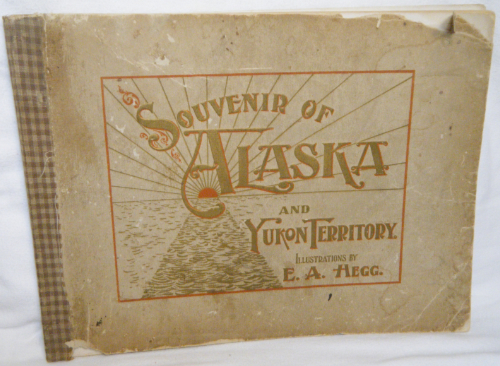
Mr. Hegg has recently had published a "Souvenir of Alaska and Yukon Territory" which probably excels anything in its line ever issued, even surpassing the famous "Stoddard Views" in the character and finish of its illustrations and the excellence of the engraver's and printer's art displayed. The souvenir contains 194 pages and 198 views, and comprehends within its scope the entire field embraced by its title.
The history of the famous epoch-marking Klondike rush of 1897 and the
civilizing progress following in its wake are more eloquently told by the views contained in this souvenir and their descriptive titles than by anything that has ever been published. It is a veritable pictorial history of the last two and a half years in the Northland.
The scenes start at Skagway and go over the White Pass trail of 1897, telling the tale of hardship amidst scenery grand with ilustrations that are superb. Then
the winter trail of 1898 is portrayed, and again the same route with the same magnificent grandeur of surroundings, but with the hardships eliminated by the railroad. The pages devoted to this branch of the story contain views of all the important points of interest and many typical pictures of dog teams, pack trains, horses in "heaps of dead" as on a battlefield; and everywhere acres of caches and a multitude of argonauts.
Ten pages are devoted to Dyea and the Chilcoot trail, with its greater rush and greater areas of "freight." There are pictures of snowstorms on the summit of each route that are marvels in the art of photography.
Mr. Hegg takes the traveler on a trip to Atlin and up its rich creeks, giving one many glimpses into the art of placer mining besides a comprehensive idea of the
character of the country.
From Atlin we proceed down the magnificent lakes, through the famous White Horse rapids and down the beautiful Yukon to Dawson, the Klondike metropolis. A view of Dawson at midnight is one of the characteristic views presented, which gives one a clear idea of the effect of the midnight sun, which itself is photographed from Dawson's dome and from Circle City. The many creeks, gulches and hills of Dawson are not overlooked; and a graphic history of life in Dawson is given in the picture story.
From Dawson Mr. Hegg proceeds down the Lower Yukon river, showing all the principal features to St. Michael, at its mouth.
The "Souvenir of Alaska and Yukon Territory" is a work of art and history that should be in every library, private and public, in the land.
April 29, 1900: "Mrs. A. E. Hegg, accompanied by her daughter, Miss Reta St. Clair, will leave soon for Dawson, where she will join Mr. Hegg. The party will travel from the Klondike metropolis to Nome in their own boat, and take photographs of the scenery on the route. Miss St. Clair has been attending school in St. Helen's hall in Portland, and will soon join her mother here for the trip to Dawson. Mr. Hegg has one of the finest photograph galleries in Skagway and has leased it to Mrs. J. T. Havne. Mr. and Mrs. Hegg and their daughter are among the most esteemed of Skagway's pioneers." (The Daily Alaskan)
June 8, 1900: "A New Point of View. Mrs. J. T. Havne has taken a new departure in art, by adding photography to her oil and water color work, having leased the Hegg photograph gallery. Mr. E. J. Hamacher will have charge of the operating and finishing department which is a guarantee of the high grade of work that will be turned out by the establishment from this time on. Special attention will be given to portrait work and to finishing for amateurs." (The Daily Alaskan)
August 5, 1900: The Daily Alaskan notes that E. A. Hegg now has a photograph gallery in Nome. A photo of it, a large tent on Front Street, can be seen below.
November 17, 1900: The Daily Alaskan notes that Mr. and Mrs. Hegg have already given up on Nome. They have closed their business and left for the States.
January 17, 1901: "AGENTS wanted to sell Yukon and Nome ssouvenir books. E. A. Hegg Art Co., 908 Second avenue." (The Seattle Post-Intelligencer)
March 10, 1901: "CLOSING out below cost, artists' materials, pictures and frames; the Perry pictures, 2 for 1 cent, E. A. Hegg Art Co., 908 Second avenue." (The Seattle Post-Intelligencer)
May 8, 1901: "W. R. Lang has leased Hegg's gallery and is prepared to do all kinds of photographic work." (The Daily Alaskan)
October 31, 1901: The Seattle Post-Intelligencer lists E. A. Hegg as one of the first class passengers among the 500 people on the steamer Queen when she returned from Nome with $400,000 worth of gold.
November 5, 1901: "Painters are at work painting the front of the building on Broadway next to what was formerly the Hegg gallery." (The Daily Alaskan)
December 7, 1901: "E. A. Hegg, a resident of Queen Anne hill, who has been in the Klondike for the past four years, where he made a comfortable fortune, has purchased lot 9, block 19, on Capital hill." (The Seattle Post-Intelligencer)
December 17, 1901: "Alaska Souvenirs. Hegg and Cantwell's views, Alaska and the Klondike illustrated, Special reduction for the holiday trade. Case & Draper photographers, Broadway, Skagway." (The Daily Alaskan)
June 8, 1902: E. A. Hegg of Seattle is registered at the Fifth Avenue Hotel in Skagway. Formerly the well known photographer of Skagway, he arrived on the Humboldt and is on his way to Dawson. (The Daily Alaskan) Three days prior, Mrs. Hegg was visiting Dr. and Mrs. J. K. Appleby in Everett, Washington.
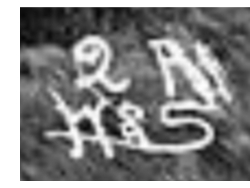 In 1902 in a bitter divorce from his wife Ella, who operated the Skagway studio, many of Hegg's negatives and photographs were sold to a Seattle , Washington firm of Webster and Stevens, who removed the Hegg studio imprint from the negatives and sold prints made from Hegg's negatives as products of their studio, with the "W&S" signature seen to the right. The remaining assets of the Skagway studio were absorbed by Dedman's Photo Shop, which continues in business to this day in the town of Skagway.
May 17, 1903: "Will Locate in Juneau. E. A. Hegg, formerly of this city, will open a photograph gallery in Juneau. Since leaving Skagway, Mr. Hegg has had a gallery in Seattle." (The Daily Alaskan)
May 20, 1903: "Mr. E. A. Hegg, a photographer, has leased the old Roene Hardware Store on D street, remodeled the building, and opened up art parlors. Mr. Hegg is equipped with the latest and most improved apparatus for up to date photography." (The Douglas Island News, Juneau)
August 5, 1903: "E. A. Hegg, the photographer, and his assistant Miss Henson, went down to visit the Takus yesterday; they went to take some pictures of the dancing
at the potlatch which has been going on for several weeks. When they arrived at Taku they had some difficulty in landing as the Indians had been drinking quite freely of the hootch that cheers. They finally effected a landing, and, after much diplomacy on both sides, they gained an entrance into the hall where the dancing was taking place. There arrival there created quite a commotion among the performers and a halt was called in the ceremonies while a pow-wow was indulged in, the verdict of which as given in the words of Jimmie Jack, their special guardian, was; 'Ladies and gentlemen, you had better come back some other day.' The visitors were glad enough to get in their little boat and get away from the noise and the smell of the hootch." (The Douglas Island News)
August 26, 1903: "Photographer E. A. Hegg is putting the finishing touches on three large panoramic views of Douglas and Treadwell, for Supt. MacDonald. These views are 2½x6½ ft. and show the entire groupof mines under the Treadwell management, also Douglas City. Mr. Hegg is surely an artist and these pictures prove it. He has probably taken more views in Alaska than any other man. The click of his camera has been heard as far north as Pt. Barrow, the most northerly settlement on the American continent. In the early rush to the Klondike, when thousands of eager men Were struggling through
the passes over the summit, Hegg was there with his camera, snapping everything in sight. When Dawson became the metropolis of the Yukon, Hegg was located in her midst. When Nome
burst forth in all the glory of a gold camp, Hegg was there taking pictures of the miners as they washed the gold from the sands of the beach. So it is that he now has views of Alaska numbering away up in the thousands." (The Douglas Island News)
October 14, 1903: "E. A. Hegg went South on the Seattle." (The Douglas Island News)
April 4, 1904: A Master carpenter shipbuilding certificate was received at the Tacoma custom house on March 26 as follows: "Thomas J. King, of the firm of King & Winge, of Seattle, for E. A. Hegg, steamer E. A. Hegg; length, 40 feet; breadth, 10.5 feet: depth of hold, 4 feet; 11 gross tons, 7 net tons." (The Tacoma Daily Ledger)
June 11, 1904: "E. A. Hegg, the photographer, took a trip to the summit of Mt. Constitution and made a panoramic view of the scenery which is the grandest to be seen from any point on Puget Sound." (The San Juan Islander, Friday Harbor)
July 20, 1904: "Mr. E. A. Hegg, the well known photographer, arrived here with his launch on Wednesday and will remain to do business in his line for two weeks. Call at his tent and examine his up-to-date pictures. Special attention given to viewing in the vicinity." (Ketchikan Journal)
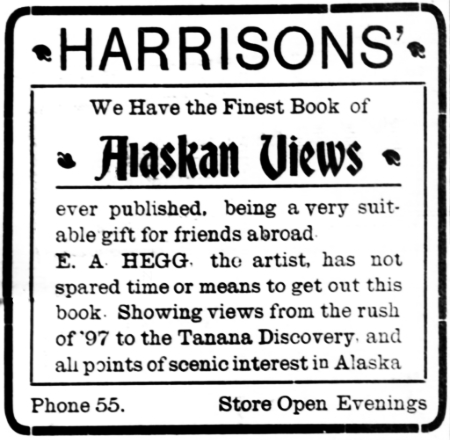
May 26, 1905: The top ad below ran for the first time in The Daily Alaskan, Skagway. It ran several times, then on August 4th the book went on sale.
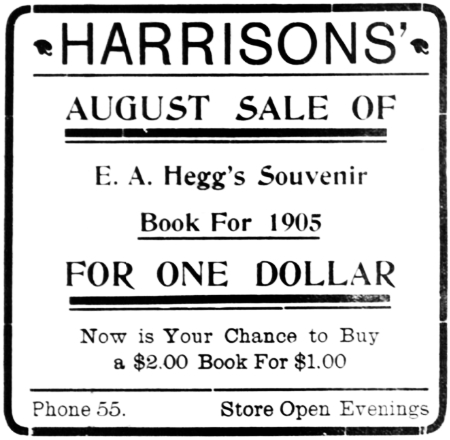
June 14, 1905: "E. A. Hegg is building a photograph gallery on Front street, opposite the Douglas Iron Works." (The Douglas Island News)
August 30, 1905, The Daily Alaskan:
E. A. Hegg, the pioneer photographer, has again opened a studio in Skagway and will remain in this city until September 10. He will be at the old stand formerly occupied by him on lower Broadway, and will give his attention to portrait work.
Mr. Hegg is making a specialty of the famous platinum finish, which is regarded as the highest grade of work in photography. He hes samples of the work on exhibition at his studio.
Mr. Hegg's photographic work has a very high reputation all over the cast. His landscapes are sold everywhere and his portraits admired by everybody.
Mr. Hegg came to Segway on his own gasoline yacht, the E. A. Hegg, which arrived yesterday evening.
Godfrey Chealander, formerly of Skagway, arrived in town last night on
the E A. Hegg from Juneau, and will spend a few days in this city in the interest of the Alaska fair that is proposed for Seattle in 1907.
August 30, 1905 "Mr. E. A. Hegg, the photographer, has gone out among the Islands to take views of mining camps, canneries &c. He will be back at his Douglas gallery about Oct. 1st." (The Douglas Island News)
The date of this piece is the same as the Skagway article - it's not clear how he could be in two places at once, cruising the islands near Juneau and shooting portraits at Skagway.
September 1, 1905: The ad below ran for the first time in The Daily Alaskan. It ran daily until September 8th.
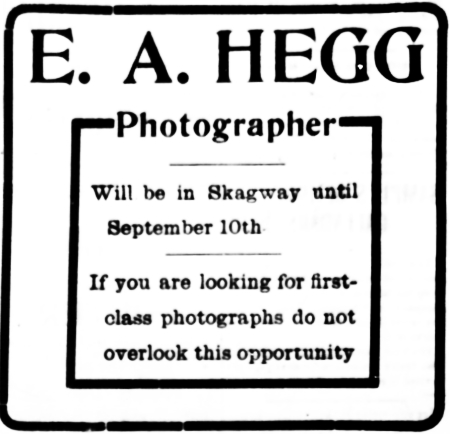
September 1, 1905: "E. A. Hegg left for Juneau today with his trim little gasoline yacht, the E. A. Hegg, after spending two busy and prosperous weeks in business in this city. Mr. Hegg says it is his intention to return to Skagway next spring - perhaps to remain. (The Daily Alaskan)
October 25, 1905, The Daily Alaskan:
A suit was begun at Juneau last week by Case & Draper, the Skagway and Juneau photographers and curio dealers, against E A. Hegg, the photographer, for damages. Hegg is accused with printing and selling copies of a copyrighted photograph belongiog to the plaintiffs. The picture in question is one of Chilkat Indians in dancing costumes at a Sitka potlatch.
January 17, 1906: E. A. Hegg is on the Delinquent Tax List, owing $1.75 for his "photo gallery on millsite." (The Douglas Island News)
September 22, 1906, The Daily Alaskan:
The E. A. Hegg will be placed on the Skagway-Haines run to succeed the Greyhound. Peter Madsen, proprietor, who has the contract to carry mail between Skagway and Haines, has purchased the Hegg, and she will arrive from Juneau this evening for
delivery to her new owners.
The Hegg is one of the best gasoline boats in the north. She is considerably larger than the Union, which gave such excellent service on this route for so
long a time, and is handsomely furnished. Her passenger accommodations are excellent.
The Hegg was built for E. A. Hegg, the well known photographer, who has
used the staunch little craft for several years in his business in Alaska.
September 24, 1906: "Charles W. Wright, of the United States geological survey, is in Skagway, a guest of the Pullen House. Mr. Wright has been in charge of a party which has been working in Southeastern Alaska for the summer. He came to Skagway to turn the gasoline boat E. A. Hegg over to Peter Madsen, her new owner. The little craft had been
chartered by Mr. Wright for the season." (The Daily Alaskan)
October 30, 1906: E. A. Hegg is on the list of unclaimed letters at the Seattle post office. "If not called for In two weeks, the letters are sent to the dead letter office, Washington, D. C. Letters addrest to initials, as 'B. B.' or 'Miss Lizzie,' etc.,
under the law cannot be delivered at the general delivery." (The Seattle Post-Intelligencer)
January 14, 1907: In the column "Questions and Answers":
"Gold fever: Through your column would you kindly advise what works I could purchase dealing with the present mining conditions of Alaska? Any data or information that you could furnish, relative to outfit needed, cost, conditions, prospects, would be appreciated.
"The list of works on Alaska is long, but they are not all accessible. By consulting the publishers' catalogues at the booksellers or the public libraries, you
could more satisfactorily select the titles of works which would suit your purpose.
"E. A. Hegg, 908 Second avenue, Seattle, publishes several small guides and pamphiets.
"The Americana cyclopedia, to be seen at the Howard Library. contains a descriptive article, which you will doubtless find helpful." (The Times-Democrat, New Orleans)
January 23, 1908: "E. A. Hegg, the Cordova photographer, is in Valdez." (The Alaska Prospector, Valdez)
A photo of his Cordova studio in 1908 can be seen below.
January 23, 1908: "Cordova for some reason unexplained held a second republican
primary last week and elected two more delegates to the territorial convention to be held next month at Ketchican. Leo Van Slyke and E. A. Hegg wore chosen." (The Alaska Prospector, Valdez)
In 1908, E. A. Hegg signed on as the company photographer for the Copper River and Northwestern Railroad (CR&NW), documenting it's construction. Two of those hundreds of photos can be seen below. Most of the 58 CR&NW photos at Wikimedia Commons are Hegg images.
February 8, 1911: "Cordova. Jan. 24. - A deal was consummated yesterday whereby a group of twenty-four oil claims located at Cape Whitshed, about twelve miles from this city, were sold for $100,000. The sale of the property was made to W. B. Vanderlip, a mining man who represents London capitalists, and it is the intention of the purchasers to place machinery on the ground within sixty days and begin active work in drilling for oil. ‘The claims were owned by D. Elliott, E. A. Hegg, W. M. Wilson, Harry Thisted, Charles Ross, George Cohn, E. E. McCoskey, Harry D. Martin, Charles A. Stumpf, George McBee, George Ortkras and E. R. Caldwell. On the highlands there is a good flow of oil and upon the beach at low tide there is a good seepage. These claims are said to be located in the same strata as those of the Katalla oil fields." (The Douglas Island News)
July 19, 1911: At the annual meeting in Tacoma of the Washington Association for the Prevention and Relief of Tuberculosis, E. A. Hegg was elected to the Board of Directors. (The Spokesman-Review, Spokane)
April 3, 1912: Running under the Peoples' ticket, E. A. Hegg was an unsuccessful candidate in yesterday's election in Cordova. "The Peoples' ticket were pledged to a safe and sane administration by levying taxes necessary for an economical government of the city. The ticket was doomed to defeat before the polls opened as it carried too much dead timber." (The Alaska Prospector)
December 3, 1914: "A great variety of attractive Christmas cards at E. A. Hegg's." This and similar small text ads ran through December in The Cordova Daily Times.
December 10, 1914: The Seattle Post-Intelligencer reports that E. A. Hegg has been elected as one of the Councilmen at Sedro Wooley, Washington.
January 8, 1915, The Cordova Daily Times:

Photographer E. A. Hegg will leave on this trip south of the steamer
Alameda for San Francisco, where he expects to install an exhibit at the Panama-Pacific Exposition. He will take with him several hundred negatives of scenes in Cordova and throughout the Copper River valley. As many of these views are works of art and have been favorably commented on by the those from the states who have been fortunate enough to get
them, the advantage of such an exhibit is apparent.
Mr. Hegg is making the trip to the fair under the auspices of the local
Chamber of Commerce and if possible it will be arranged so that he secures the necessary wall space for the display, in the building which houses the Alaskan exhibit and in connection with the one sent out from Cordova.
By adding this rare collection of views to Cordova's exhibit the Copper
River valley will be possibly better represented at the exposition then any other one section of Alaska. These pictures will give the people of the states an idea of the beautiful scenery in the north, and correct erroneous impressions as to climate and actual
conditions prevailing here. From an educational standpoint alone Mr. Hegg's display will do considerable good, and at the same time should be the means of attracting many people to this country during the coming year.
January 27, 1915: "Cordova and the country to the north of it along the Copper river is going to be brought to the attention of visitors at the San Francisco exposition, if E. A. Hegg prevails upon the authorities, as he hopes. Mr. Hegg is a photographer of Cordova, and he is on his way to California with several thousand views, for which he is going to seek space in the Alaska building. He bears letters to the authorities from the Cordova Chamber of Commerce, which he represents, and from Gov. Strong." (The Douglas Island News)
February 20, 1915: "Cordova is creditably represented at the Panama-Pacific
Exposition by an excellent mineral exhibit sent there by the local chamber of commerce, and the wonderful photographic display of scenes taken here and throughout the Copper River Valley by Photographer E. A. Hegg, who is present in person at the fair to look after his exhibit." (The Cordova Daily Times)
March 10, 1915: "E. A. Hegg, who has had an exhibit of Cordova and Copper River valley scenes at the Panama exposition, is a returning passengers on the steamer Mariposa, which left Seattle last night." (The Cordova Daily Times)
March 15, 1915: "The steamer Mariposa arrived in port from the south about 10 o'clock last night and sailed west about 6 o'clock this morning. The Mariposa carried a very large list of passengers..." E. A. Hegg was among the 26 first class passengers for Cordova, and there were 71 Cordova passengers in steerage. (The Cordova Daily Times)
March 15, 1915, The Cordova Daily Times:
E. A. Hegg returned on the Mariposa last evening after having spent some weeks in the states, much of which was at the Panama-Pacific Exposition at San Francisco, where a number of the handsome views taken by him are on exhibition.
Mr. Hegg pays a high tribute to the exposition, stating that it far surpasses any he has ever seen.
Regarding the Alaska exhibits he states that in the minerai line Cordova
is represented by an exhibit that's far ahead of any other section of the North. In fact the many specimens sent by the Cordova Chamber of Commerce constitute an exhibit that is
more than equal to the combined showing of all the rest of Alaska. This exhibit has been given a prominent position in the mines building, where it is attracting a great deal of
attention.
Another Alaska exhibit is that of the Alaska Steamship Company. This is in the transportation building, where it occuples an extremely novel and handsome booth. Over the entrance to the booth in relief is a picture of Cordova, and the wharf and bay,
which is very handsomely executed. Inside the booth, which is so situated that almost every visitor to the building must pass through, are many views of Cordova, the bay and scenes along the railroad. These are enlargements made by Mr. Hegg, handsomely colored, and depict the beauties of this section of Alaska from a scenic point of view. The huge photo of Miles glacier, which adorned Mr. Hegg's window here for some time, is also included in the number.
Still another Alaska exhibit in the transportation building is that of the Pacific Coast Company, which is located near that of the Alaska Steamship Co. This is also decorated with Alaska views, the largest one being a picture of Muir glacier. In the booth is a native engaged in carving totem poles and a native woman weaving baskets. Many curios from Alaska are also on exhibition.
These two latter exhibits, Mr. Hegg states, are attracting as much or more attention than any other feature of the fair. They are continually surrounded by large crowds, all anxious to learn something of the country which is so much before the public eye at present, and those in charge are busy throughout the day passing out pamphlets descriptive of Alaska and answering a multitude of questions propounded by the throngs which continually gather.
Mr. Hegg is extremely well pleased with his trip, and predicts that the
fair will prove of wonderful value in advertising Alaska to the people all over the states who are flocking to the big fair.
On March 16, 1915, a fairly lengthy article in The Bellingham Herald about Charles F. Easton's book "Mount Baker: Its Trails and Legends" notes that some Hegg photos are used in it, and that E. A. Hegg of Bellingham was a member of a group that scaled the Twin Sisters range (just southwest of Mount Baker) in 1891.
March 19, 1915: The small display ad below ran for the first time in The Cordova Daily Times. It ran daily until January 4, 1917. The spelling error was finally corrected on September 7th, 1915.
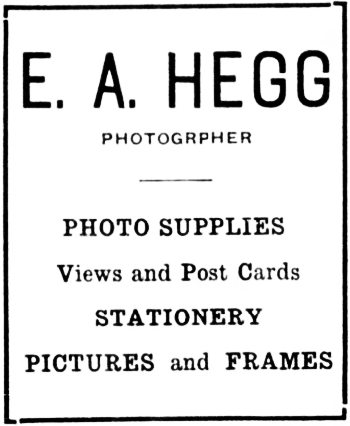
March 23, 1915: "Miss Merle Helmich returned to Cordova on yesterday's steamer and has accepted her old position in E. A. Hegg's photograph studio." (The Cordova Daily Times)
May 6, 1915: "The Admiration of Tourists. E. A. Hegg has an attractive photographic display of Cordova and Copper River views on exhibition, neatly arranged on the board fence adjoining his place of business." (The Cordova Daily Times)
May 18, 1915: "E. A. Hegg, H. B. Burkhart and V. G. Vance left on the Alameda for Anchorage to look over the business possibilities at the new government railroad terminal." (The Cordova Daily Times)
May 28, 1915: "Good Photographs Taken at Anchorage. E. A. Hegg returned on the steamer Watson from Anchorage, where he spent several days, during which time he took a number of excellent photographs of the new camp. He reports that there are a large number of people there and the commission is beginning to do some active railroad work." (The Cordova Daily Times)
May 28, 1915: "All the music of all the world - Columbia Records. E. A. Hegg, Agent." First insertion in The Cordova Daily Times. It alternated with "Latest dance music - Columbia Records. E. A. Hegg, Agent." - January 7, 1916 was the final one.
March 14, 1916: The Cordova Daily Times reports that E. A. Hegg is again running in the upcoming municipal election on the Peoples' Ticket. They add that he is one of the community's largest property owners, and is "well and favorably known by the people of Cordova."
April 5, 1916: In a very quiet election (only 128 votes were cast), E. A. Hegg was elected, tied for third place with 95 votes.
April 16, 1916: "Mrs. Wells has endeared herself to about fifty of the school boys and girls of Cordova through a kindly act on her part. Friday afternoon she invited all the young folks to her restaurant to partake of an appetizing lunch she had prepared for them. It is needless to say that all the youngsters were present, and they had a royal good time. After partaking of the 'good eats,' Photographer E. A. Hegg appeared on the scene and took a picture of the happy group." (The Cordova Daily Times)
August 23, 1916: E. A. Hegg got a building permit for "repairs and alterations to his basement" in Cordova.
December 30, 1916: "The evening services of the Episcopal church will, after tomorrow evening, be held in E. A. Hegg's 'Bungalow Hall,' at 7:30 p. m. Sundays." (The Cordova Daily Times)
January 20, 1917: The display ad below (twice the size of the previous one) ran for the first time in The Cordova Daily Times. It ran daily until June 20, 1917.
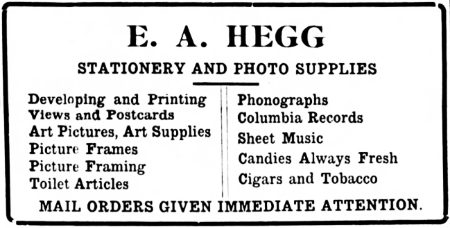
February 23, 1917: "E. A. Hegg left on the Alaska this morning for Seward and from there will go over the trail to Anchorage on a short business trip." (The Cordova Daily Times)
March 17, 1917: "E. A. Hegg, the Cordova photographer, has entered into partnership with Sydney Laurence and the new firm will move into the Masonic building the latter part of the week." (Anchorage Times)
May 7, 1917: "E. A. Hegg has returned from Anchorage, fully convinced that Cordova is the one live and prosperous town in Alaska."
June 11, 1917, The Cordova Daily Times:
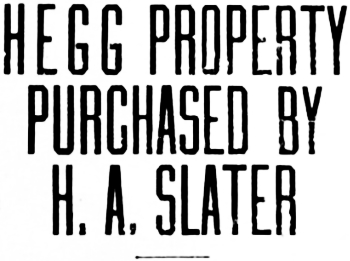
That Henry A. Slater has unbounded faith in the future of Cordova is
shown by his recent real estate investments. Today he closed a deal with E. A. Hegg for the purchase of his property at the corner of First avenue and C street, which includes the lot and building. The consideration was $7,000 cash. Roy E. Hegg has taken a year's lease on the building and will continue the business established here by his father during the construction days. E. A. Hegg intends leaving for California, where he will make his
future home.
Mr. Slater has also become the sole owner of the building occupied by the Northern Drug Company on First avenue, and the two story building on Second street, formerly occupied by the McDonald & Reedy grocery store, by purchasing H. I. O'Neill's half interest in these holdings.
February 18, 1918: "Burglars Busy. Clothing burglars were busy again over the week end, several such robberies being reported today. E. A. Hegg of 329 Pennsylvania reports the theft of several articles of clothing from his residence Saturday night during the absence of the family.
February 11, 1920: "The Hegg Studio [in Cordova] has been taken over by the creditors and R. E. Hegg is a passenger on the Alaska on his way to join his father, E. A. Hegg, who is in business in California. E. A. Hegg was one of the pioneers of Juneau and also located a pioneer photographic supply house and studio in Cordova. He did much of the
official photographic work of the Copper River & Northwestern Railway." (The Alaska Daily Empire, Juneau)
December 22, 1920: In New York, a judgement against Albert Kleine has been issued in favour of E. A. Hegg, for $800.40. (The New York Herald)
January 1, 1921: "I will not be responsible for any debts contracted by any one but myself on and after Dec. 31, 1920. E. A. Hegg." (The Fresno Morning Republican)
February 27, 1923: "Messrs. E. A. Hegg, E. G. Ludwick and Lamping were business visitors in Bellingham Monday on cannery business and also attended the regular meeting and luncheon of the Bellingham Rotarians at the Hotel Leopold." (The Bellingham Herald)
By September 1928, E. A. Hegg was back living in Bellingham, and his brother Peter was in nearby Park. (The Bellingham Herald)
January 19, 1929, The Fresno Morning Republican:

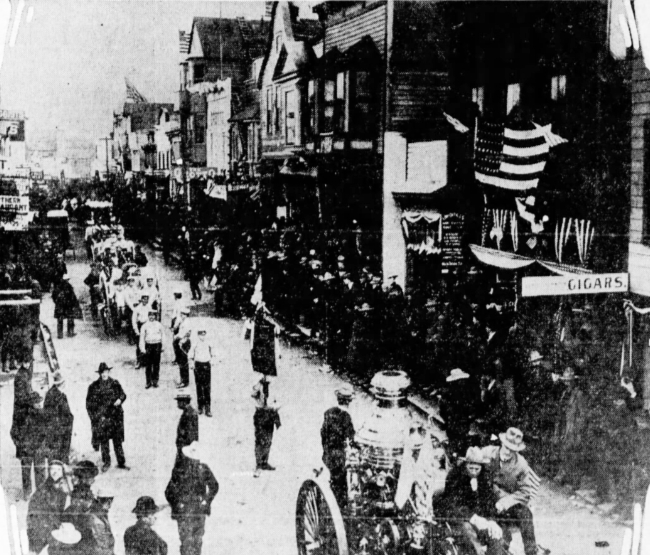
In the days of the gold rush at Nome, Alaska, a young photographer from Fresno in 1901 "covered" a July 4 celebration. He "shot" a picture of a parade consisting of man-drawn fire wagons as shown herewith, and the picture lives because on the reader's right sitting on the seat of the foremost fire wagon is Tex Rickard, the late fight promoter. Rickard was a great figure in those days in Nome. One needs but to study the picture to discern the repressed wildness of that gold-lure city, while its citizens compelled a pause in their respect to the birthday of their nation. The picture was taken
by E. A. Hegg, former head of the Hegg Art shop of Fresno, 843 Fulton street. He is now of Bellingham, Washington.
Eric Hegg died in San Diego, California, on December 13, 1947, at the age of 80. We can find no published obituary, and it is not known where he was buried.
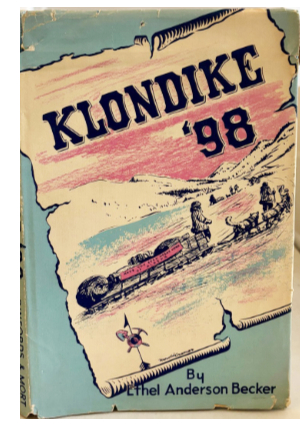
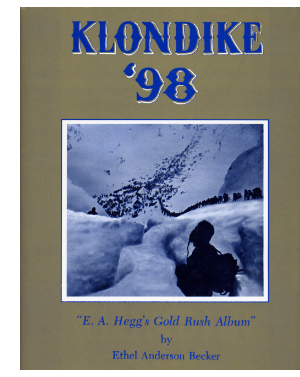
"Klondike '98" was first published in 1949. It was one of the first books about the Klondike I bought - in 1972, when the Second Printing of the Revised Edition (1967) was released. See both the 1949 and 1972 covers to the right.
The text on the jacket of "Klondike '98" ends with the very accurate statement that "A century from now, historians will still be turning to Eric Hegg's photographs and Ethel Becker's interpretation of them to find out what the Gold Rush to the Klondike was really like."

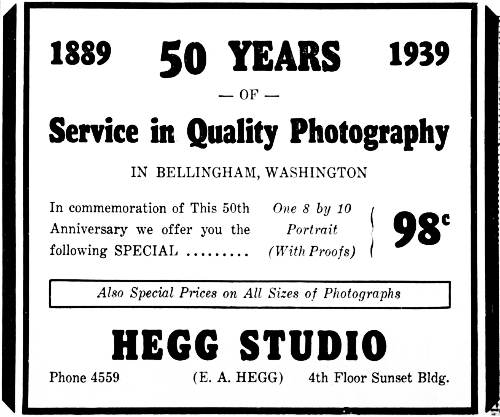


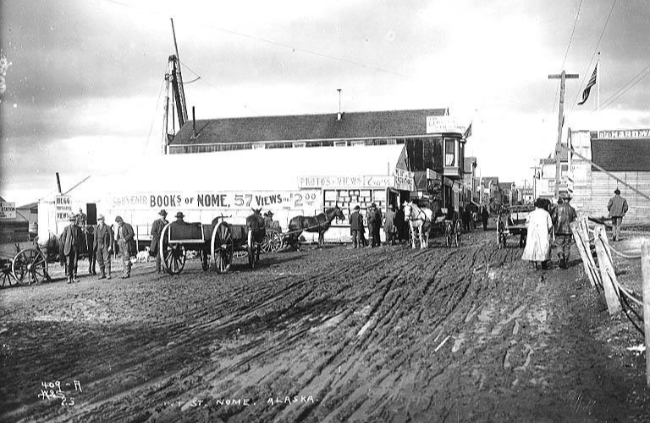
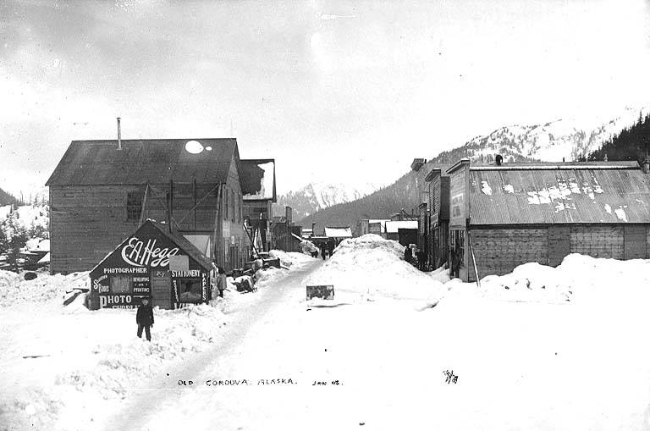
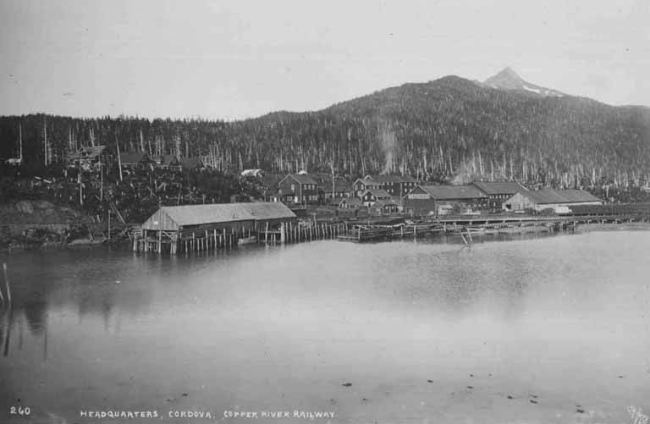
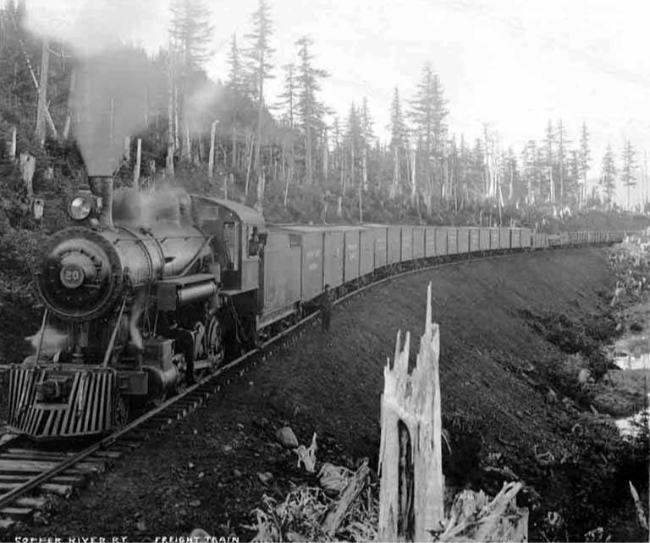
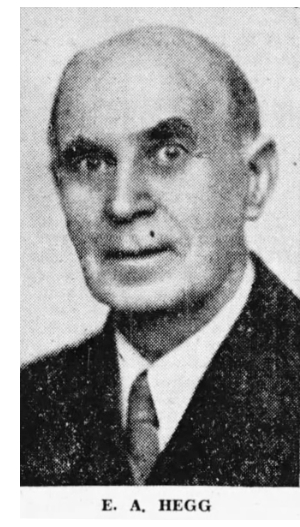 At the age of 15 years Hegg became a student of photography and art. After studying for a time he first opened a studio at Washburn, Wisconsin, where he operated for a time before coming west to Tacoma, then boarded the steamer Fairhaven on its maiden voyage from Tacoma to Whatcom - now Bellingham.
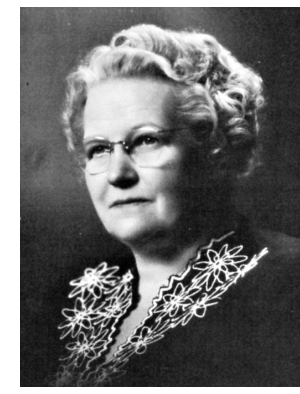 This biography wouldn't be complete without a section about Ethel Anderson Becker, a Klondike pioneer herself, who dedicated many years to gathering Hegg's photographs. She describes her mission in the Author's Preface to "Klondike '98: E. A. Hegg's Gold Rush Album":
 When Ethel Anderson Becker was preparing the first edition of Klondike '98,
she had Eric A. Hegg read the book in manuscript form. In April, 1941, he wrote:
When Ethel Anderson Becker was preparing the first edition of Klondike '98,
she had Eric A. Hegg read the book in manuscript form. In April, 1941, he wrote:
