Yukon's historic places
Dateline: January 28, 2026.
Pioneer Hotel 2
Shipyards Park, Whitehorse, Yukon.
Formally Recognized: May 23, 2000
The Pioneer Hotel 2 is a municipally designated site consisting of the single storey rectangular frame and log building located in Shipyards Park, Whitehorse, Yukon, on the west bank of the Yukon River. This rear portion of the Pioneer Hotel is a log building with two frame additions situated in the former Shipyards squatter community.
Heritage Value
The Pioneer Hotel is significant for its historical and architectural values. The hotel was built in 1899 by John Smart, a saloon keeper and Edward Dixon, an ex-Mountie who turned river pilot during the Klondike gold rush. The hotel was constructed in the first community of White Horse, located across the river from the present city centre. In 1900, a new townsite was laid out on the opposite riverbank to accommodate the terminus of the White Pass and Yukon Route Railway. The Pioneer Hotel was moved to a prominent position near the railway depot and sternwheeler terminus where it served as a hotel, bar and restaurant, a rooming house and finally as rental accommodation. It remained on Front Street between Elliot and Lambert Streets through the heyday of the sternwheeler era, witnessing the rise and demise of the Whitehorse waterfront as a transportation hub.
By 1955, the Alaska Highway had supplanted sternwheelers and dismantling of the infrastructure associated with the fleet began. During this period the Pioneer Hotel was split into parts and relocated to the squatter community north of the Shipyards. This community was originally home to transient workers and First Nations people, representing an alternative lifestyle and was occupied by people who by choice or economic circumstance, opted to reside here. One of these people was John Hatch who lived in the building for twenty years prior to his death and coincidentally, the end of the Shipyards community. Hatch was a well known local photographer and advocate for the preservation of the Shipyards neighbourhood. Many of the remaining interior furnishings of the Pioneer Hotel 2 were constructed by Mr. Hatch. Of particular note is the built-in furniture and cabinet work along with the hand crafted windows. Several artifacts from Mr. Hatch's life remain inside the cabin. His photographs in particular document life in the Shipyards community during his time there.
The Pioneer Hotel is a rarity having survived here over forty years, outliving the Shipyards squatter community, a key element of Whitehorse's social development. It is one of three remaining buildings of the community that was vacated in 2001.
Pioneer Hotel 2 is the rear portion of the hotel that was originally built in four sections. Shortly after the move to the Shipyards, the middle sections of the hotel were destroyed, one by fire and one for use as firewood. Pioneer Hotel 1 and Pioneer Hotel 2 are all that remain of the oldest known building in Whitehorse associated with the founding of the community and early commercial development.
Architectural features such as the medium pitched gable roof, the round log walls V-notched at the rear corners and hewn flat on the interior, are typical of the vernacular construction style in Whitehorse dating from the turn of the century. A unique element of the Pioneer Hotel cabins is the use of hawsers as chinking. Although partially obscured by a frame addition extending from the west end of the building, the original portion of the hotel can be discerned as a distinct entity. An addition off the east wall was demolished when the Yukon River eroded the foundation, all that remains of this addition is a small plywood structure attached to the southeast corner. A fire erased the original interior, however the remaining elements from its last occupant provide an authentic glimpse of the lifestyle in this former squatter community just before its demise.
Sources:
- Keay & Associate, Architecture Ltd. Restoration Plans: Pioneer Hotel 1, Pioneer Hotel 2, US Army Building, Shipyards Park Whitehorse, Yukon. Whitehorse Riverfront Planning, March, 2004.
- Helene Dobrowolsky & Rob Ingram. Edge of the River, Heart of the City. Whitehorse, Lost Moose Publishing, 1994.
- Midnight Arts. Whitehorse Heritage Building Report. City of Whitehorse, 1999.
- Kobayashi & Zedda, Midnight Arts and N.A. Jacobsen. Shipyards Park Heritage Conservation Plan. City of Whitehorse, 2002.
Character-Defining Elements
The character defining elements of the hotel include:
- the exposed round log construction with interior side hewn flat and V-notched rear corners
- hawsers used as chinking between the logs
- architectural elements such as the medium pitched gable roof, roof purlins, ridge pole, plank sheathing, hexagonal asphalt shingles
- gable roofed frame addition extending from one end with board and batten gable end
- original window and door openings with exterior trim, hand crafted windows
- early interior finishes including built in cabinets and hand crafted furniture
- collection of archival materials and artefacts that belonged to John Hatch
- location and siting within the small cluster of buildings remaining from the squatter community, including the proximity to the river and Pioneer Hotel 1
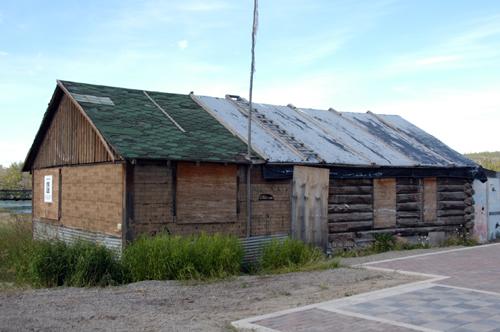
Pioneer Hotel 2, southwest corner, 2007. Photo by Yukon Government.
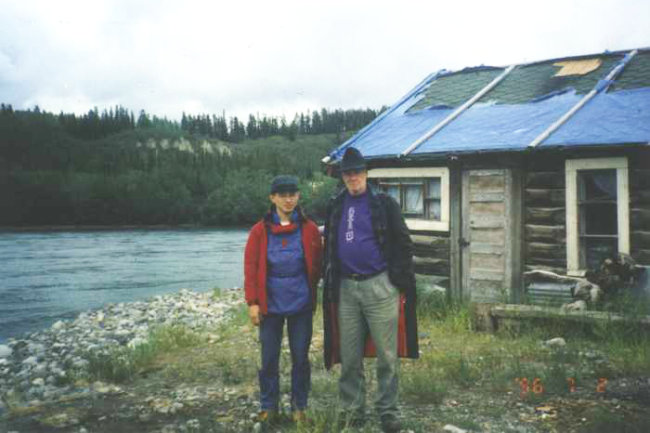
John Hatch on the right outside his home, the former Pioner Hotel. Photo from the John Hatch site.
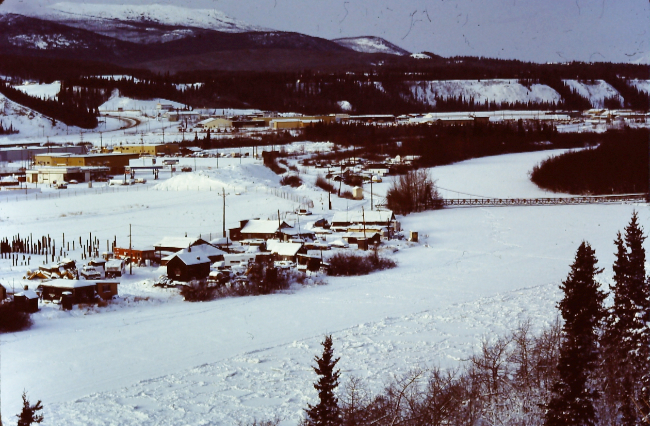
The Shipyards squatter community in February 1993; John Hatch's house (the Pioneer Hotel) is the one closest to the footbridge to Kishwoot Island. Photo by Murray Lundberg.
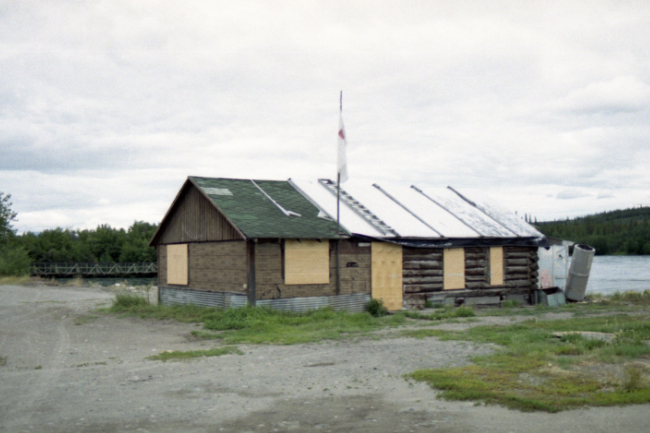
John Hatch's house (the Pioneer Hotel) in August 1, 2001. Photo by Murray Lundberg.
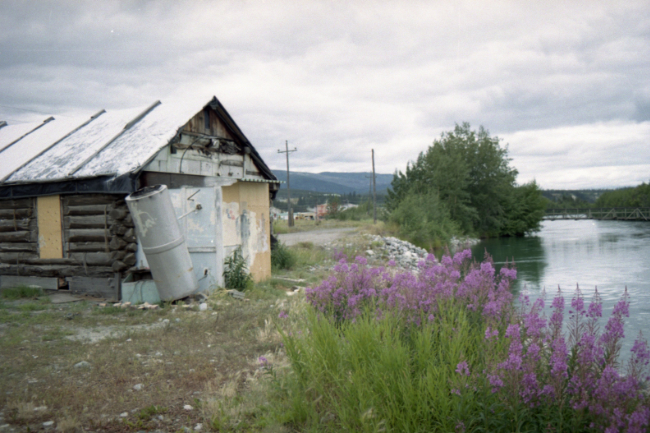
John Hatch's house (the Pioneer Hotel) in August 1, 2001. Photo by Murray Lundberg.
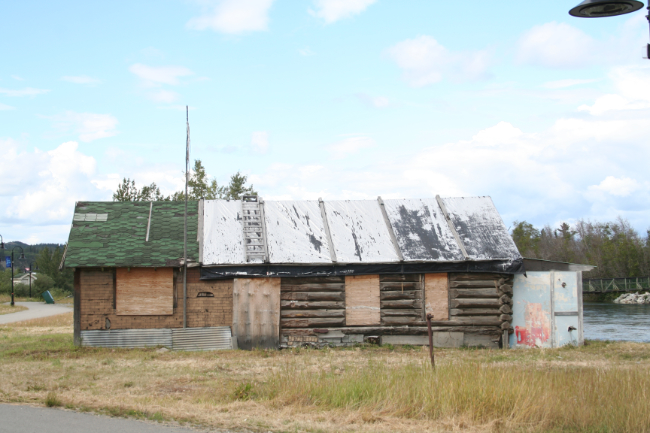
The Pioneer Hotel on August 9, 2006. Photo by Murray Lundberg.
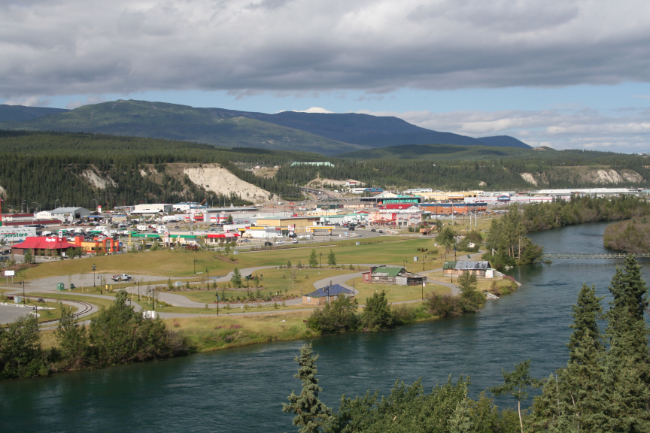
Shipyards Park on August 10, 2006. Photo by Murray Lundberg.
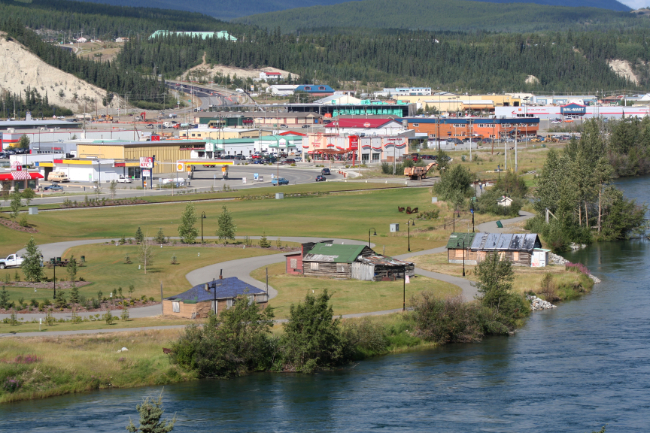
A closer look at the heritage buildings in Shipyards Park on August 10, 2006. Photo by Murray Lundberg.
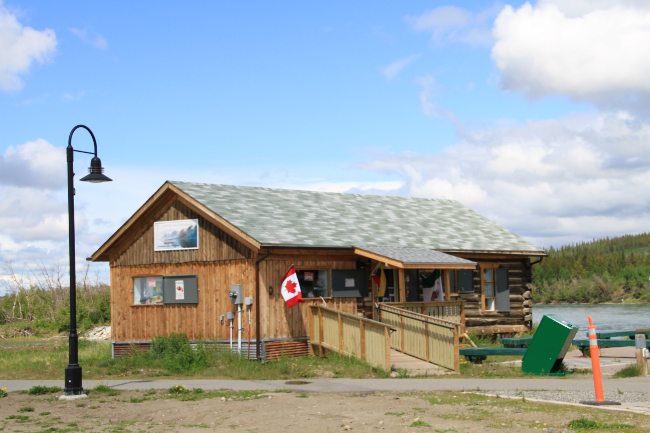
Hathmus Latin House & Gallery (the Pioneer Hotel) on June 20, 2012. Photo by Murray Lundberg.
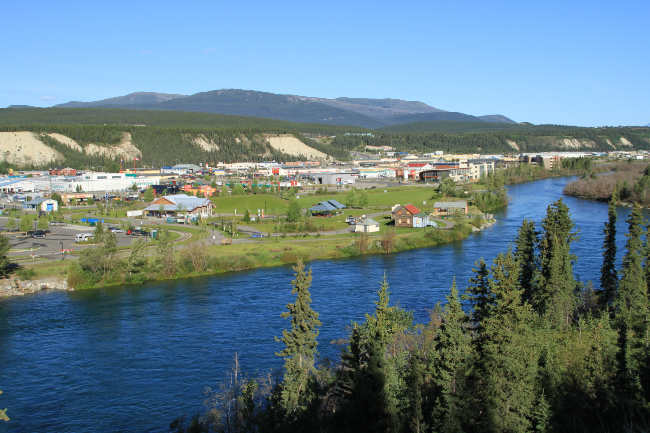
Shipyards Park on August 9, 2013. Photo by Murray Lundberg.






