Yukon's historic places
Dateline: January 26, 2026.
Yukon Hotel National Historic Site of Canada
Also known as the Binet Block
Located on First Avenue, Dawson, Yukon.
Built in 1898 by J. E. Binet.
Formally Recognized: June 12, 1982
The Yukon Hotel is a small wooden false-front building on First Avenue, Dawson City’s major street at the height of the Klondike Gold Rush. Its log side walls and pitched roof are visible from Third Avenue which runs beside its site.
Heritage Value
The Yukon Hotel was designated a national historic site of Canada in 1982 because it was typical of commercial structures built at the height of the Klondike Gold Rush.
The heritage value of the Yukon Hotel resides in its representation of typical commercial structures built at the height of the Klondike Gold Rush as illustrated by its site, setting and composition. Built in 1898 by J. E. Binet, the Yukon Hotel was first known as the Binet Block. Initially rented for Government Offices, it became a hotel in 1900 and served as such under a variety of names until 1957. Today it has been restored as part of Dawson Historical Complex National Historic Site of Canada.
Source: Historic Sites and Monuments Board of Canada, Minutes, 1982.
Character-Defining Elements
Key elements that contribute to the heritage value of this site include:
- its siting flush to the sidewalk on a major street within downtown "Dawson City";
- its boom town architectural vocabulary translated as a rectangular footprint, two-and-a-half pitched roof massing, behind a three-storey false-front;
- its log construction with milled lumber façade;
- the simple articulation of the three-bay façade with central entry between large, multi-pane commercial windows, second-storey balcony and false window at third-storey level;
- its wooden detailing, notably the ornate balcony railing and brackets;
- the functionally driven arrangement of apertures on all other elevations;
- its use of pressed metal as a roofing material;
- the surviving evidence of original interior layout, workmanship and materials.
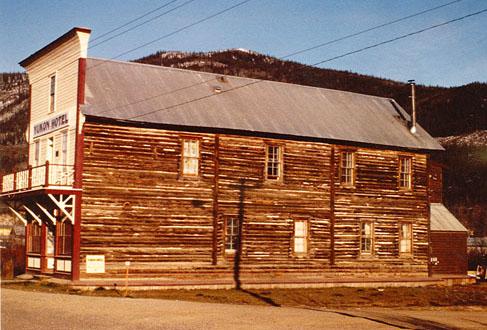
Yukon Hotel National Historic Site of Canada, after restoration. Photo by Heritage Canada.
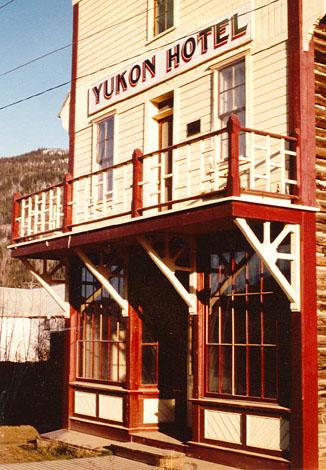
Yukon Hotel National Historic Site of Canada, after restoration. Photo by Heritage Canada.
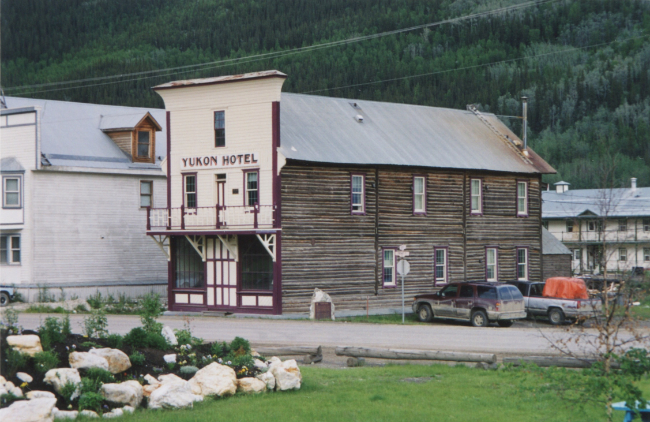
The Yukon Hotel from the southwest. Photo by Murray Lundberg, September 1999.
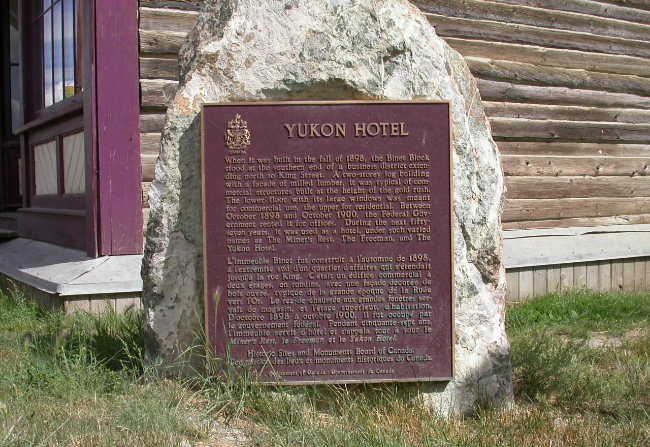
Yukon Hotel Historic Sites plaque. Photo by Murray Lundberg, August 4, 2007. The text reads:
"When it was built in the fall of 1898, the Binet Block stood at the southern end of a business district extending north to King Street. A two-storey log building with a facade of milled lumber, it was typical of commercial structures built at the height of the gold rush. The lower floor with its large windows was meant for commercial use, the upper for residential. Between October 1898 and October 1900, the Federal Government rented it for offices. During the next fifty-seven years, it was used as a hotel, under such varied names as The Miner's Rest, The Freeman, and The Yukon Hotel."
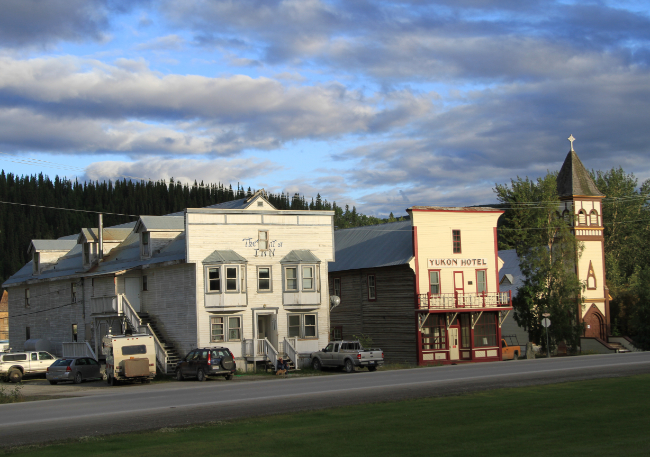
The streetscape on the evening of July 12, 2012. Photo by Murray Lundberg.
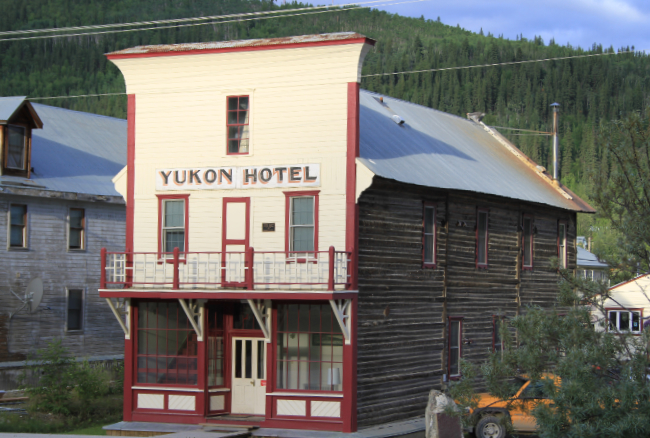
The Yukon Hotel from the southwest. Photo by Murray Lundberg, July 11, 2012.






