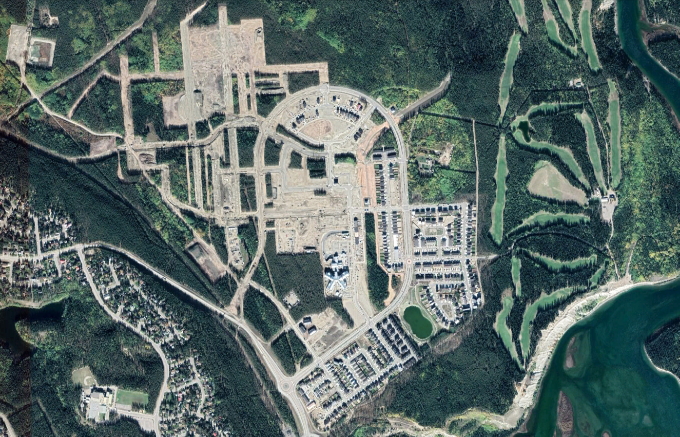
"The name Whistle Bend was developed through the 2006 Charrette and refers to steamships blowing their whistles to alert oncoming ships of their presence. As such, the proposed theme for street names in Whistle Bend is northern steamships. As there were a limited number of ships operating in the Yukon, the list has been expanded to include Alaskan and British Columbian ships as well." City of Whitehorse, City Planning Committee agenda, June 16, 2014. Much more information can be found at the City's project history pages.
This article describes the streets as you see them driving around clockwise - the alphabetical list below will take you directly to each street. When a boat name is linked in the article, the link goes to a page with much more information about the boat. This will be an ongoing project for the next few years as Whistle Bend grows and new streets are added.
Tarahne Way
 In 1917, Tarahne was designed and built by British Yukon Navigation Company (BYN) construction foreman A. E. Henderson, with materials hauled over the ice from Carcross to Atlin. She was driven by propellers rather than the sternwheels commonly used on northern boats. Tarahne was built for the Atlin Lake tourist trade, in combination with the Atlin Inn and the sternwheeler Tushi. Tourism was so successful that in 1928, she was cut in 2, the halves pulled apart, and 41 feet were added in the middle. That took her overall length to 119.3 feet, and accommodation was increased to 198 passengers. She now rests on the shore of Atlin Lake in downtown Atlin.
Keno Way
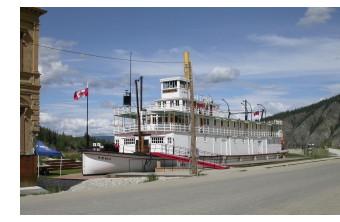 The Keno was designed and built at Whitehorse in 1922 by British Yukon Navigation Company construction foreman A. E. Henderson. Designed especially for shallow water work, she drew only 21 inches of water forward and 19 aft with 50 tons of freight and 12 cords of wood on board; most of the boats drew 30 inches empty. Powered by machinery salvaged from the second Casca, she operated on Yukon River's "side streams", mainly hauling silver ore on the Stewart River from Mayo to Stewart City. She was retired and put on the ways at Whitehorse in 1951, but in August 1960, made the last sternwheeler run in the territory, to her final resting place at Dawson.
Sybil Circle
Sybil, 101 feet long, was built of B.C. fir at Victoria in 1898. She was intended for use on the Stikine River, but was taken to the lower Yukon River instead. In 1899, she was chartered by the Canadian Development Company, and moved to the upper river. The following year, she carried Lord and Lady Minto on their Yukon tour. In June 1904, her machinery was installed in the sternwheeler Bonanza King, and her hull was used as a barge for a short period and then was abandoned.
Iskoot Crescent
The Iskoot, 143 feet long, was built at Vancouver in 1898 by B.C. Iron Works, for the Klondyke Mining, Trading & Transport Company. On June 1, 1898, while being delivered to the Stikine River, she was wrecked when the pilot steamed into a cove thinking that it was the mouth of the Skeena River. The wreckage was auctioned off in July for $1,600, sold to a man building a new steamer at Victoria. Still plagued by bad luck, everything was destroyed in a fire at the shipyard a few months later.
Bellingham Court
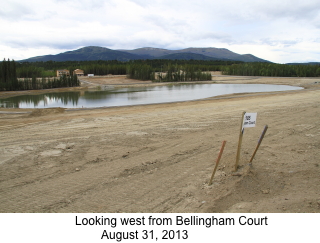
The tiny Bellingham, only 35 feet long with an 8-foot beam, was built in 1897 at Whatcom, near Bellingham, Washington. She was dismantled and shipped to Skagway on the bark Theobold, then skidded over the White Pass at a cost of $2,000 and reassembled at Lake Bennett. She left Bennett on her first trip on June 5, 1898 with 40 sacks of mail, and towing a scow (for $1100) carrying most of the staff, cash, safes and other equipment to open two branches of the Canadian Bank of Commerce at Dawson. On June 9, 1898, she was run through Miles Canyon by pilot M.L. Foster, for $200. The trip took 40 minutes, and because of the value of the cargo, the NWMP refused to allow the scow through the Rapids loaded; everything had to go around on the tramway. Although she has been credited as the first steamer through Miles Canyon, it seems likely that the Kalamazoo was the first, having left Windy Arm on June 4 and gone through the canyon on June 8, 1898. Once at Dawson, the Bellingham was used as a ferry for a short period, then her machinery was removed and the boat disassembled.
Aksala Drive
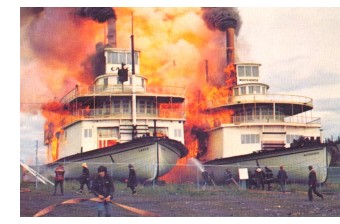
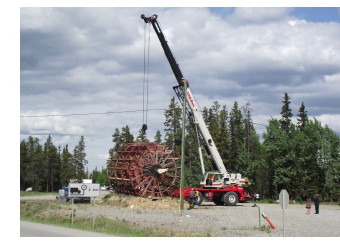 Initially named Alaska, the Aksala and a sister ship, the Yukon, were built in Whitehorse by BYN crews for a newly-formed WP&YR division, the American Navigation Company. Until 1922, the Alaska was used on the Dawson-Fairbanks run, which involves 700 miles downstream on the Yukon, and 275 miles upstream on the Tanana and Chena Rivers. In 1923 was put on the ways at Whitehorse. Her oil tanks were removed and installed in the Tutshi, which was converted to oil in 1925. The Alaska was used as a hotel in 1926, then in 1927 she was renamed Aksala and put into service on the upper Yukon River. By 1929, the front of the hull was rotting, and warped from loads heavier than she was designed for. The front 70 feet of the hull was completely replaced, and she worked until 1952. In 1961 she was dismantled and moved up to the Alaska Highway to be used as a motel. That wasn't successful, and the Aksala sat on timbers until it became a fire hazard and was demolished. Only the paddlewheel remains, at Mile 913, Paddlewheel Village.
Dora Crescent
The Dora, 60 feet long, was built in 1898 at Bennett, but there is no agreement on the details, or even on the original name of the boat. She was built by and for Albert S. Kerry, but soon after she was built, the Lake Bennett and Klondyke Navigation Company was operating her, having renamed her Dora. In 1899, she was renamed the Olive May and was running from Bennett to Taku in competition with the Gleaner and Mabel F., but on June 16, 1902, she was run through Miles Canyon to work the upper Yukon River. In October 1902 she sank in Squaw Rapids, in June 1904 she sank in the Thirty Mile River with a load of sheep, and in 1908 she sank in the Thirty Mile River again and was broken up.
Atlin Place
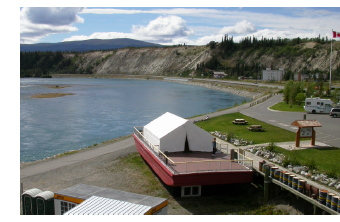 Despite the fame of the name, there actually has never been a boat named Atlin. In 1903, though, a 58-foot-long barge, built entirely of B.C. fir by the British Yukon Navigation Company, was built at Atlin to be used by the Scotia. It was used until the early 1930s, then was put up on ways at Atlin. In February 1974, the barge was trucked to Whitehorse and set up on the riverfront at the site where the S.S. Klondike was to be located. In the summers, a tent is now set up on the barge to show sternwheeler movies to visitors.
Bailey Place
The Bailey, 110 feet long, was built at Lake Bennett in 1899 by Louis Pacquet of Portland, for Captains Steve Bailey and Irwin B. Sanburn. She was operated on the Bennett-Canyon City run, and after being bought by the Canadian Development Company, was run through Miles Canyon in 1900 and put on the Whitehorse-Dawson run. In April 1901, the Bailey was one of 17 steamboats bought by the British Yukon Navigation Company. The last year she was put in service was 1903. In 1904, she was launched but not used; in October she was put on the ways at Whitehorse for the final time. In 1909 her boiler was put into the Gleaner, and in 1931 she was demolished at Whitehorse.