A Guide to the Alaska Highway ("Alcan")
Dateline: June 6, 2011. Last update: September 29, 2026.
As the Alaska Highway gets more and more modern with fairly constant re-construction, travel becomes much easier, but at the same time the journey is losing some of its magic. Many of the colourful lodges are closing, and travellers are more inclined to not "stop to smell the flowers" now. One of the losses occurred when an 8-kilometer-long section of the highway was moved away from a memorial to a soldier who was killed during the construction of the highway. In this article I'd like to show you how to reach it.
Update, September 29, 2026: we have now posted a log of that section of the highway - see "The Old Alaska Highway along the Kluane River".
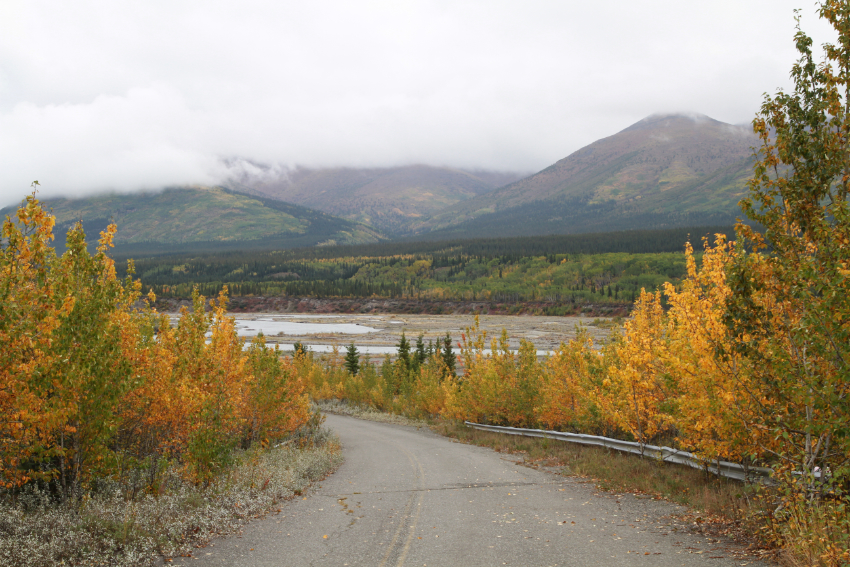
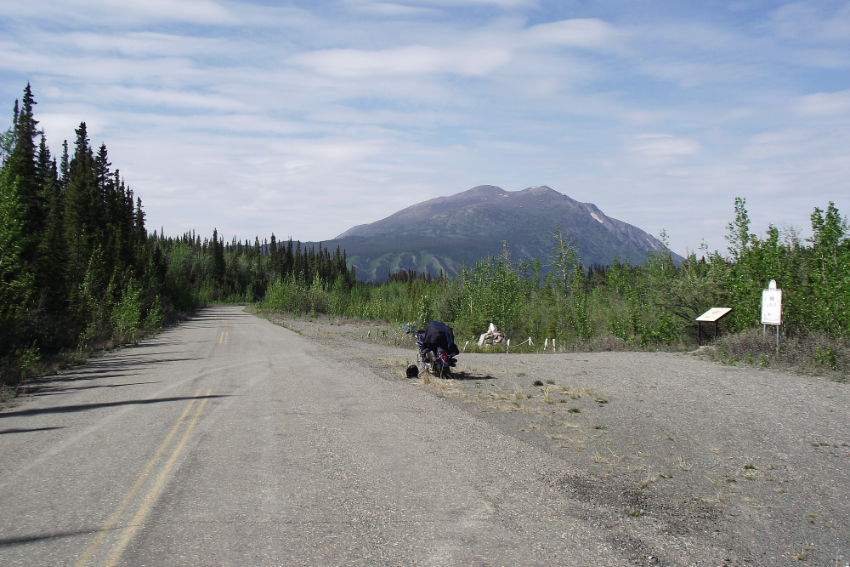
At the bottom of the dip in the first photo is Quill Creek (Km 1729) - just past that is the old Alaska Highway to the right.
These photos were all taken during a 3-day trip I made from Whitehorse to Chicken on my motorcycle from June 1-3, 2011 - see The ExploreNorth Blog for 100+ photos and commentary from that trip. I was shooting with a Fujifilm FinePix S1800.
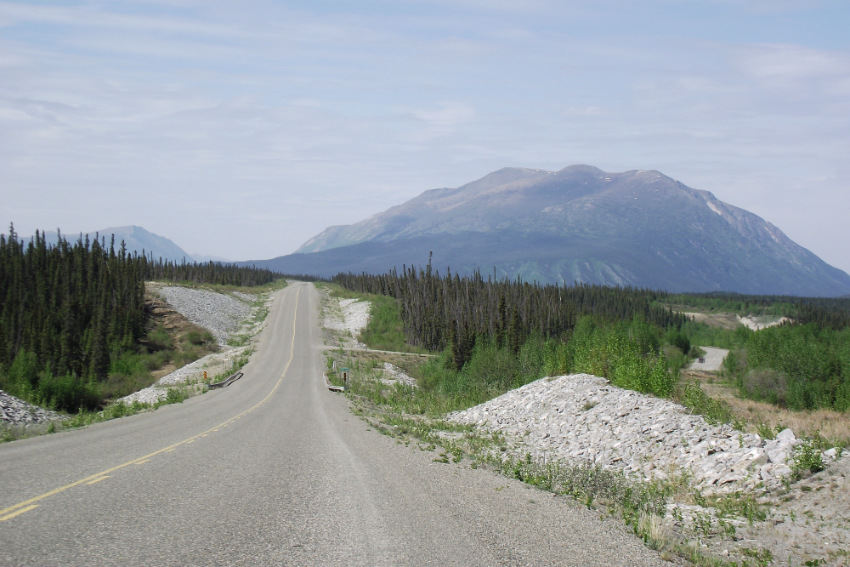
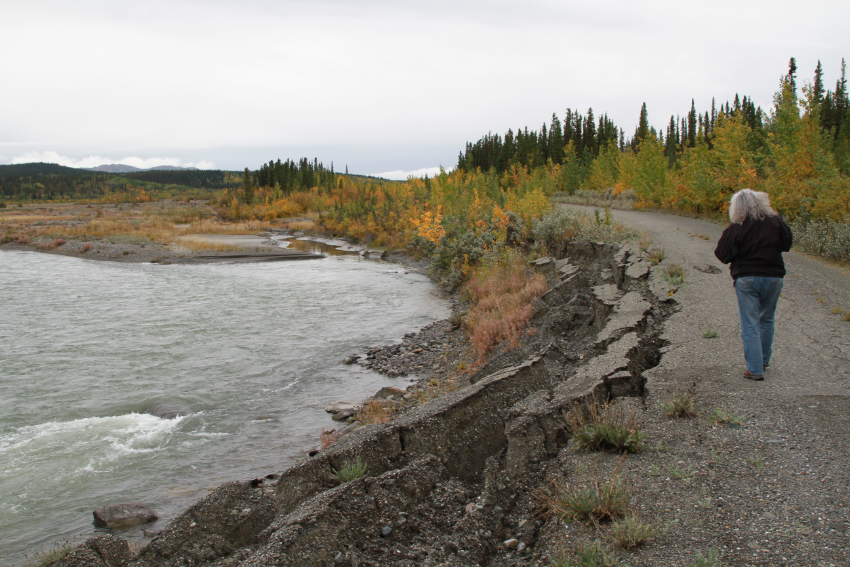
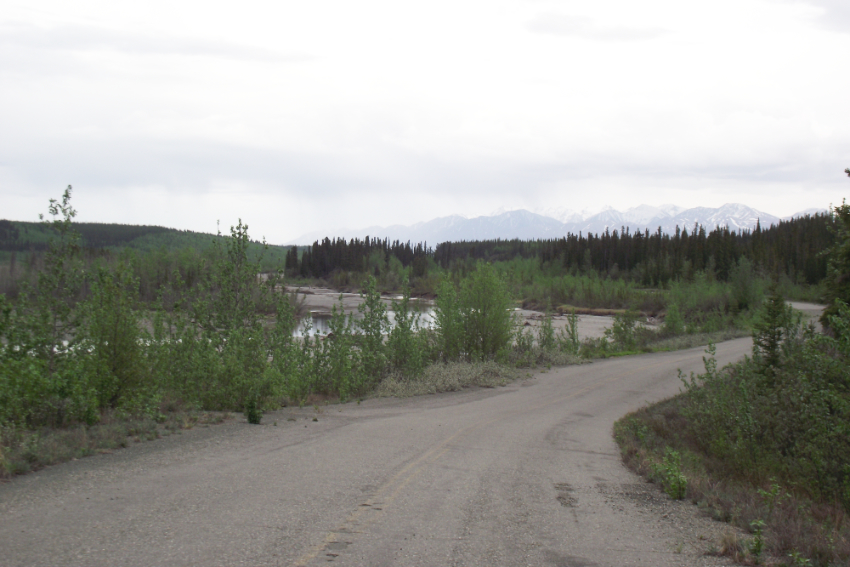
This is probably the best section of old Alaska Highway that is still accessible for a few kilometers. Here it drops down to run along the Kluane River, which was constantly eroding the old road and was one of the main reasons it was relocated back in the mid-late 1990s.

From the turn off the highway to the memorial site is 6.4 km (4 miles). The dark blob in the parking lot isn't a bear, just my bike with a jacket draped across it.
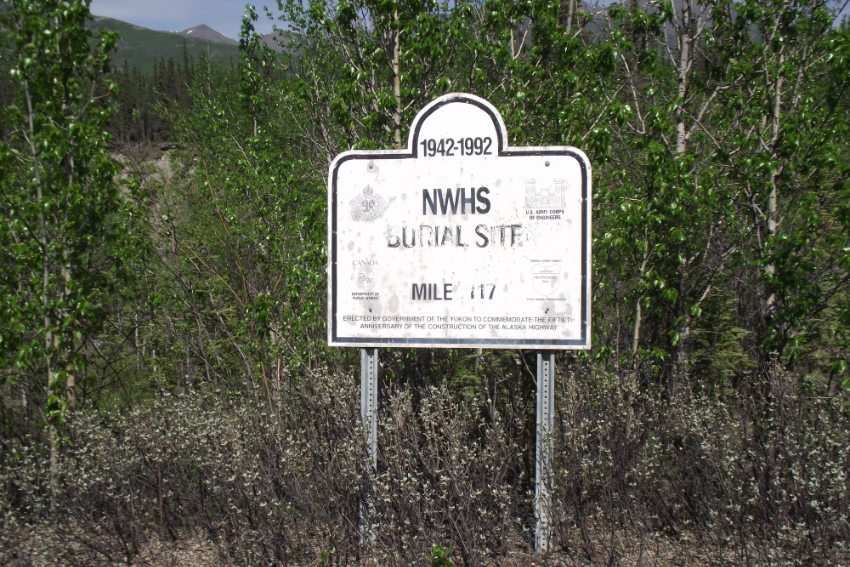
This sign is getting to be almost illegible. Installed for the highway's 50th anniversary in 1992, it designates a North West Highway System (NWHS) Burial Site, at Historic Mile 1117. It also has the logos of (from top left, clockwise) the Royal Canadian Engineers, the US Army Corps of Engineers, the US Public Roads Administration and the Canadian Department of Public Works (NWHS).
This is the primary "Lieutenant Small Memorial Site" interpretive sign. It briefly describes the arrival of the 1,400 members of the 18th Engineers Regiment in Whitehorse in April 1942, and their duties. It also includes a photo of the original memorial.
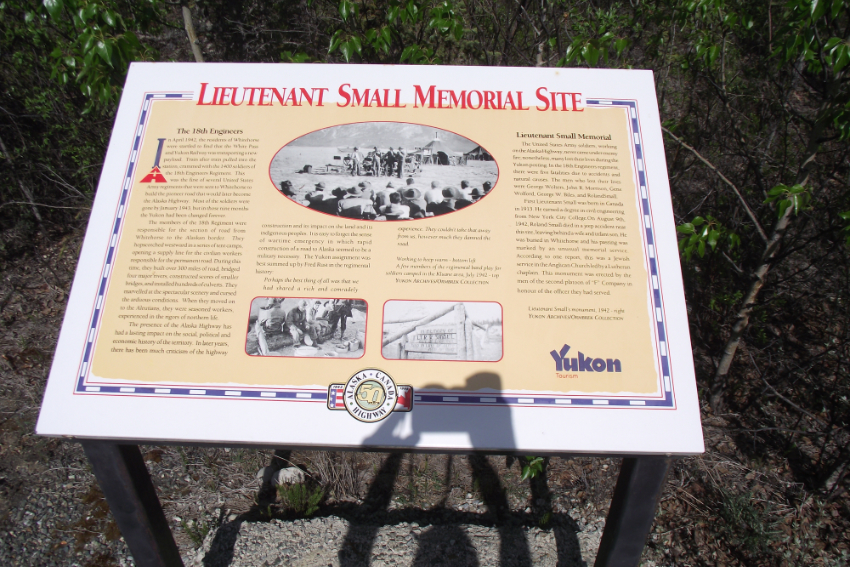
From the interpretive sign:
The United States Army soldiers working on the Alaska Highway never came under enemy fire; nonetheless, many lost their lives during the Yukon posting. In the 18th Engineers regiment, there were five fatalities due to accidents and natural causes. The men who lost their lives were George Wolters, John R. Morrison, Gene Wolford, George W. Biles, and Roland Small.
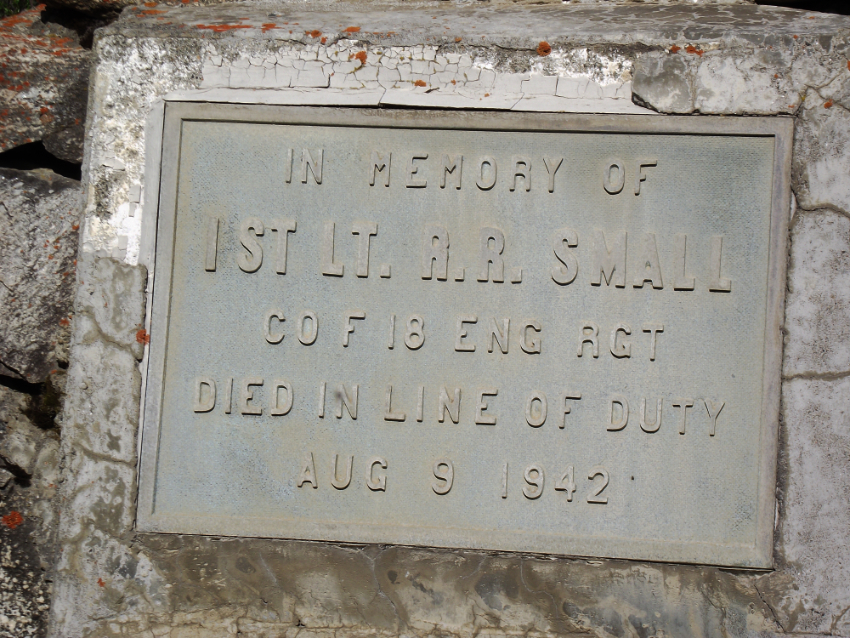
First Lieutenant Small was born in Canada in 1913. He earned a degree in civil engineering from New York City College. On August 9th, 1942, Roland Small died in a jeep accident near this site, leaving behind a wife and infant son. He was buried in Whitehorse and his passing was marked by an unusual memorial service. According to one report, it was a Jewish service in the Anglican church led by a Lutheran chaplain.
This monument was erected by the men of the second platoon of "F" Company in honour of the officer they had served.
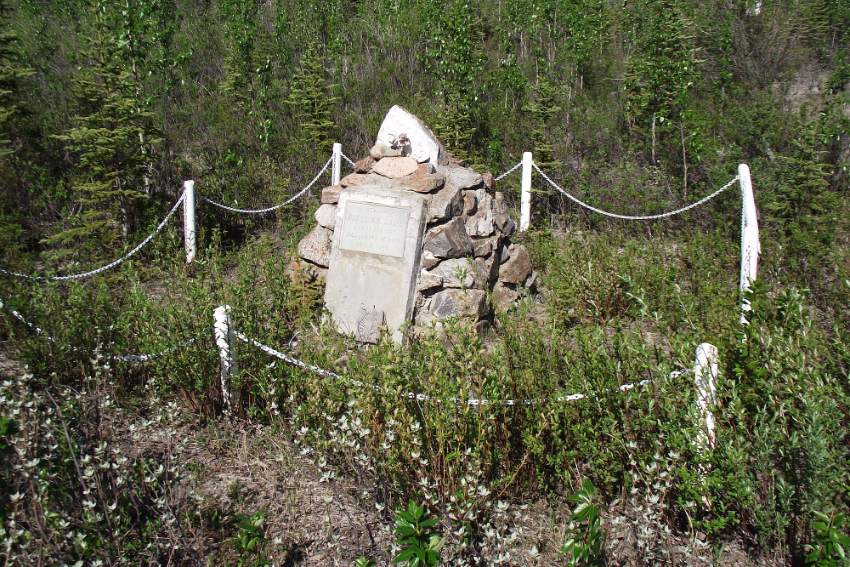
The Old Log Church Museum in Whitehorse commented on their Facebook page that: "With no rabbi or synagogue in the town of Whitehorse, Lt. Small's funeral, a Jewish service, was held in the Anglican Old Log Church, and was administered by a Lutheran army chaplain. Small's mother was thankful that so much effort had been made to accomodate her son's religious customs, and wrote the rector a letter thanking him."
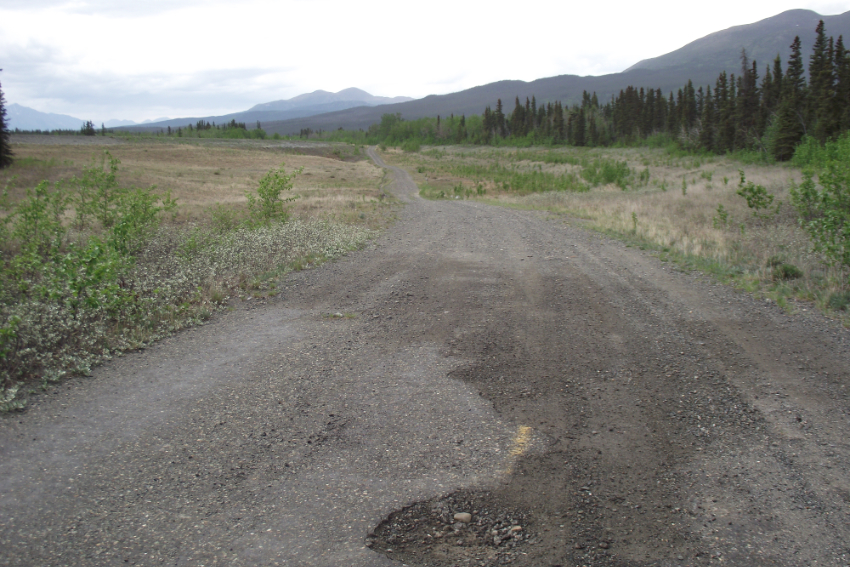
If you have a smaller vehicle (campervan or smaller) you can continue on 1.4 kilometers back to the Alaska Highway. The last half of that is narrow gravel, seen ahead in this photo.
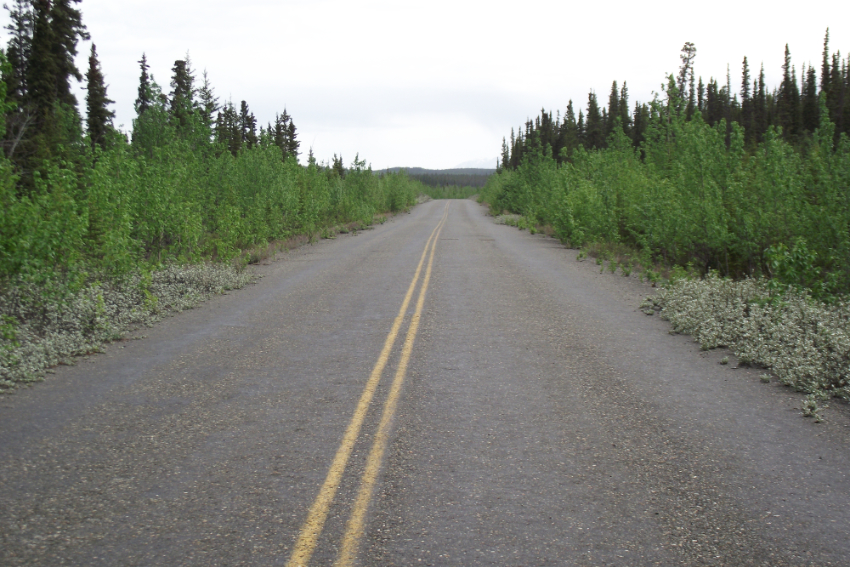
You can also return the way you came in - the next 3 photos show that return route along the Kluane River (the first photo shows the view back from the gravel section).
This side road, as well as providing access to what I feel is an important historic site, also gives today's travellers a feel for what much of the Alaska Highway was like up into the 1990s and even later.

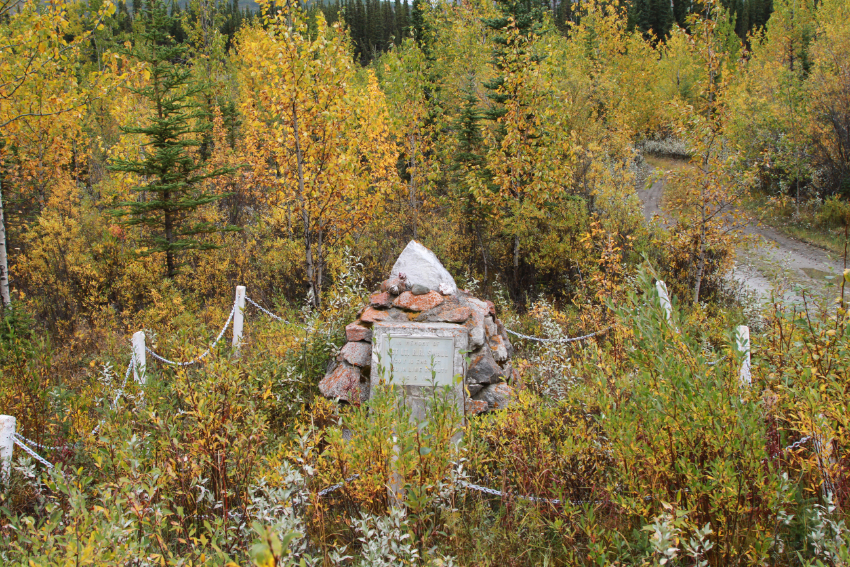
The next 3 photos were shot on September 4, 2021. They show the Kluane River eating away the road, and the cenotaph growing over.