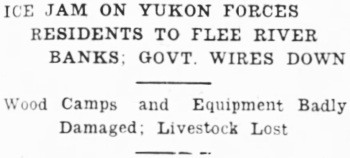
Floods of unprecedented magnitude which caused havoc in the Yukon River Valley from Selwyn to Coffee Creek, a distance of 35 miles, have now subsided and the following report was received this week from the stricken area.
Coffee Creek, Selwyn and all intermediate points were inundated with
upwards of eight feet of water. Ice jammed the White River up to three miles south of Coffee Creek and again from Selwyn to eight miles south.
The upper jam moved first but failed to release the lower one and the
water rose to 30 feet above the low water level. Eye witnesses at Selwyn and Coffee Creek describe the water as coming ahead of the ice in a huge wall when the jams were released, inundating all buildings in the space of a few minutes time.
At Selwyn the losses are estimated at over $1,000, including the drowning
of one horses, several dogs and all the provisions, etc, of the six residents were destroved.
At Coffee Creek losses are estimated at $7,000, including the drowning of
16 cattle, two horses and several dozen chickens. Several tons of hay were lost in the flood and a blacksmith shop with all accessories and two other buildings were carried away by the rushing waters, as also were 50 cords of steamboat wood. The remaining buildings at these points were left in a half ruined condition.
On hearing the jam start to move, Cy Detraz of Coffee Creek made a hurried exit from the house to the side of the building, where he could view the river. Seeing the water coming over the bank, he made a frenzied rush for the door of his home, but water had already risen there to three and a half feet. Mrs. Detraz, who ~was
indisposed and was confined to bed, was trapped in the bed-room floating on the bed. Mr. Detraz hurriedly tied his boat close to the building and, climbing onto the roof, dropped a rope with a noose attached through the skylight and hoisted his wife to safety. After placing her in the boat he rescued Mr. and Mrs. Jack Meloy, who had taken refuge on the roof of their home.
The women of Coffee Creek are improving gradually, but many are still
confined to their beds suffering from exposure.