This afternoon, they buried one of the north country's most colorful figures, 72-year-old Sam McGee, who was "cremated" thirty-odd years ago by Robert W. Service.
The story of how Sam McGee came to be the "hero" of Service's famous poem was told today by McGee's parther, a man who had flown down from Whitehorse, Yukon, to attend the funeral. He was Dick Corless, famous "flying prospector" of the north, who has
been successfully operating an extensive prospecting and mining business in the Yukon since 1912.
Several times since he left the Yukon 30 years ago, Sam McGee went back to his former haunts and accompanied Mr. Corless on prospecting trips. He was going to go back this summer. Their equipment is still waiting for them in a little cabin on Burwash Creek, 200 miles west of Whitehorse.
TOOK FIRST PLANE
But Sam McGee did not come. Over the week-end, Mr. Corless heard of the death of his old friend in a news broadcast. He immediately took the Yukon Southern plane for Edmonton, arriving in Calgary on Monday.
Mr. Corless told of another interesting northerner, dead many years now, who originated the cremation story. He was a medical man, "Doc" Sugden of Whitehorse.
One bitterly cold winter day, in the early years of the century, Sugden was called to attend an old Swede who was seriously ill on the shores of Lake LeBarge, about 30 miles north of Whitehorse. When he reached the man, he was already dead.
BARGE ON LAKE
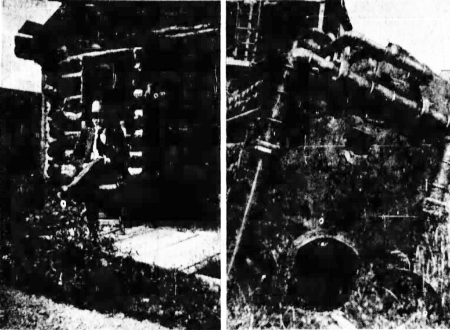
No one could ever verify Sugden's story of what happened then, for he was the only person there. All alone, he could not bring the man's body back 30 miles to Whitehorse. But "on the marge of Lake Lebarge," as Service later put it, there was an old derelict, the Alice May.
Sugden claimed that he had disposed of the body by putting it in the boiler of the old boat and cremating it. Service was then working in the Bank of Commerce in Whitehorse, and, according to Corless, Sugden told him the story.
Whether or not Sugden's story was true can never be proved. But Lake LeBarge is there. And even the old Alice May is still there, dismantled now, with the famous boiler removed.
Service's explanation of how Sam McGee's name got into the poem was a simple one. McGee had gone into the Yukon in 1898, working variously as a government road builder, miner and wood hauler. Service came across his name in the bank ledger, and it fitted his material so well that he used it.
FITTED MATERIAL
Mr. Corless related the story of
one meeting McGee is supposed to have had with Service. At the time, McGee was freighting on the Yukon River, over Whitehorse Rapids in Miles Canyon, near Whitehorse.
One day Service wanted to go over the rapids for the experience. He climbed aboard McGee's boat just as it was leaving shore. When the boat reached mid-stream, McGee turned on the poet, "You cremated me once," he announced belligerently, "I think I'll drown you now."
The attraction of the northland never left the old sourdough, and he went back to the Yukon several times. The last time was in the summer of 1938, when he celebrated his 70th birthday at Burwash Creek.
Funeral services for Sam McGee here held at the home of his daughter, Mrs. E. C. Gramms of Beiseker, at 1 o'clock this afternoon. The body was then taken to Rosebud church, a few miles out of Beiseker, for services and interment, at 2:30
o'clock.