




|
|
Frank Dorbrandt, pioneer Alaska aviator
Northern Aviation History
Dateline: April 6, 2023. Last update: December 6, 2025.
Frank Dorbrandt's early life is filled with mystery, with online genealogical information often contradictory. Find a Grave states that he was born in Pasadena, California, on June 12, 1893. One family tree at Ancestry which uses the spelling Dorbandt says he was born Floyd Andrew De Hay on that day in Texas, and in 1900 was a resident of an orphanage in South Pasadena. Another very brief family tree at Ancestry says he was born in 1894 in Hot Springs, Owyhe County, Idaho.
During World War I, Frank Dorbrandt joined the United States Army Air Service (USAAS) as a pilot. He was shot down in France, and bore "frightful scars made by shrapnel" for the rest of his life.
In 1921 and 1922 he and Jack Barto worked the fair circuit doing aerial performances, with Jack flying and Frank doing wing walks and various acrobatics.
In 1921 he married the former Mary Anna Price of Salt Lake City. Her father, James Price, owned a ranch at Wilson Creek, Nevada.
On August 19, 1929, the large red-headed pilot married Miss Vida Deigh of Anchorage. After the wedding in Anchorage the couple flew to Nome where Dorbrandt was based.
On March 14, 1932, Dorbrandt became the first pilot to land his aircraft inside an active volcano. The flight was made with George Emery of Seattle and Anchorage photographer George Johnson. On May 27th, the flight was repeated, this time with Father Bernard Hubbard and mechanic Herb Larison. It was also described as the first landing inside an active volcano and became one of his most famous flights. It is described as part of a lengthy National Park Service article, Exploring the Moon Crater of Alaska: From Foot to Flight. The apparent duplication in claims was explained: on the March flight Dorbrandt set his plane down on a snow field inside the crater, but only touched the snow and then resumed speed and took off.
On February 24, 1933, Frances Patricia Seller was born in Seattle. Her mother, Marjorie K. Seller, who was born in Unalaska on December 31, 1915, claimed that Frank Dorbrandt was her father, but that seems to have never been proven. Marjorie also claimed that she and Frank were married. There is apparently a detailed article from the Fairbanks Daily News-Miner in 2010 here, but it's behind a paywall so we haven't read it.
On Saturday, March 16, 1935, Dorbrandt entered into his third marriage, to the former Mrs. Gale Pierce Long of Anchorage, in that city. The ceremony was performed by U.S. Commissioner Thomas Price upon Dorbrandt's return from Hazelton, where he had wrecked his aircraft during an attempted flight from Anchorage to Seattle.
Frank Dorbrandt died in hospital in Fairbanks of complications from pneumonia on Sunday, May 5, 1935, at the age of 41. He was buried at the Anchorage Memorial Park Cemetery.
Some of the articles reproduced below originally used the incorrect spelling "Dorbandt" - we have left those errors intact.
Saturday, September 17, 1921, The Salt Lake Tribune (Salt Lake City, Utah)
Special to The Tribune.
ST. ANTHONY, Idaho, Sept. 16. - The Fremont county fair is proving a success. Exhibits are good and the races, bucking, roping and bull-dogging are the best ever seen in this part of the state. The aerial battle and a thrilling aeroplane leap by
Frank Dorbrandt 1000 feet in the air will feature Saturday's program.
A lengthy article about the Brigham City, Utah, Peach Festival, published in The Box Elder News on September 16, 1921, included this description of Frank Dorbrandt's performance: "The flying circus was interesting and thrilling. Frank Dorbandt hung from the axel of the plane by his heels and toes as the machine flew over the ball park, stood straight up on top of the planes without holding to anything and performed other daring feats which took the breath of the thousands below who were watching the stunts. Following the exhibition which included nose spins, loop the loop and similar feats, passengers were taken for rides. Among those who went aloft were Mayor John W. Peters and Manager W. V. Call of Peach Day. They report the experience as being intensely interesting. There was no night flying despite the fact that Mgr. Call's contract called for a performance."
Tuesday, July 4, 1922, The Bisbee Daily Review (Bisbee, Arizona)
Frank Dorbrandt had one of the 12 cars entered in the Rodeo-Bisbee Dash, a big Buick Special. "If looks count for anything, Dorbandt is sure of placing near the top of the list, for the Buick has all the earmarks of a fast boat." He was out of the race early, but the cause wasn't described.
Thursday, November 9, 1922, The El Paso Times (El Paso, Texas)
"El Pasoans will soon be able to go from here to Douglas, Ariz., by airplane, according to an announcement made yesterday by Frank Dorbandt, who has purchased an airplane and intends to establish a commercial air toute between here and Douglas. He came to El Paso from Marfa is two hours and 20 minutes."
Friday, November 10, 1922, El Paso Herald (El Paso, Texas)

Frank Dorbandt, of Douglas, Ariz., left El Paso at noon Friday for Douglas, Ariz., and will go by way of Deming, N. M., in an airplane.
He took with him copies of The Herald for distribution in Deming, where he will fly at the annual rodeo in progress there, before going to Douglas, probably by the northern route.
With Dorbandt are his wife and Jack Bartow, a flier, and D. C. Young, a mechanic.
Dorbandt is returning from Houston, where he bought four airplanes, he said. He flew to El Paso in one of the planes.
Tuesday, November 14, 1922, The Deming Graphic (Deming, New Mexico)

Frank Dorbandt and Jack Barto, stunt fliers of Douglas, Ariz., afforded
some thrills for the rodeo crowd last Sunday afternoon. Both are former army fliers. Mr. Dorbandt was shot down in France and still carries frightful scars made by shrapnel. He walks out on the wings of his plane, hangs from the landing gear by his toes and does other daredevil tricks. Mr. Barto, the pilot, swooped down within ten feet of the ground.
It is the intention of these two dare devils to return to Deming and vicinity in a short thme when they will release a few more tricks from their bag.
Wednesday, November 22, 1922, The Tucson Citizen (Tucson, Arizona)

Making the first commercial flying trip to record between Douglas and outlying points, Frank Dorbandt, former military aviator and local resident, yesterday carried William Davies and Mr. Stedham to Webb and the Swisshelm mines.
The trip to Webb, approximately 30 miles from Douglas, was made in 16 minutes, outgoing, the time for the return flight being cut to 14 minutes, said to be a record between these two points. The flight was made from the aviation field here.
Mr. Davies was taken to Webb, from which point he made the trip to the Swisshelm mine by horse back. Flying to the mine, a distance of about 15 miles from Webb, Dorbandt dropped two parachutes instructing Mine Foreman Billy Gillis to proceed to Webb to pick up Davies.
Tuesday, December 12, 1922, El Paso Herald (El Paso, Texas)

Jack McFarland, William Fox news reel representative in the southwest,
accompanied by Rex Broaddus and Frank Dorbandt, left Tuesday for Marfa and other towns in that section where they plan giving a series of exhibition flights within the next few days.
Dorbandt will pilot the plane, a Lincoln standard, while Broaddus who is known as the "aerial dare devil" will give a series of stunts such as hanging from a moving plane by his teeth, standing upon his head and hands out on the wings and trapeze work on a rope ladder suspended from the plane.
Thursday, March 8, 1923, The Arizona Republican (Phoenix, Arizona)
Frank Dorbandt, commercial flier of Douglas, arrived in Phoenix Tuesday in his mountain special 200 horsepower plane. He made the trip from Douglas to Phoenix in
three hours and carried as a passenger, Harry Curtis of Cochise county, who came to Phoenix to attend the convention of the Arizona Cattle Growers' association.
Mr. Dorbandt, who operates the Arizona Airway company of Douglas, will fly at the rodeo at the fair grounds today, and will take passengers up with him, giving them a chance to see what Phoenix and the Salt River valley looks like from the air. Mr. Dorbandt will return to Douglas Friday and will take with him, Ralph Cameron, Jr.
Friday, April 13, 1923, The Coconino Sun (Flagstaff, Arizona)
Frank Dorbandt, Douglas commercial aviator, and a passenger, Fred Clark, El Paso, were slightly injured when a plane they were testing struck a telephone pole four miles northwest of Douglas Saturday. The crash knocked off the pole about five feet from the top and interrupted the Associated Press service to Douglas and Bisbee for more than an hour.
Dorbandt and Clark were brought to Douglas by motorists who witnessed the accident. Neither was injured seriously enough to be taken to a hospital.
Dorbandt formerly was a stunt aviator, being among the first to crawl
along the wings of a flying plane and hang by his toes.
Saturday, March 29, 1929, The Daily Missoulian (Missoula, Montana)

Frank Dorbandt, pioneer of commercial aviation, was in Missoula yesterday on his way to Anchorage, Alaska, where he will fly over that Northern territory. He has 6,000 hours of flying to his credit.
Mr. Dorbandt is to pilot a Travel Air closed cabin ship, accommodating six passengers, and his route will be into the far reaches of Alaska. He will take trappers and prospectors out into the virgin land and will bring them supplies and equipment.
Saturday, May 11, 1929, The Kusko Times (Takotna, Alaska)
Frank Dorbandt is reported to be flying charters for Anchorage Air Transport.
Thursday, August 8, 1929, The Daily Province (Vancouver, British Columbia)

NOME, Alaska, Aug. 8 - Colbin Ben Eilson [Carl Ben Eielson], Arctic and Antarctic aviator
with the Wilkins expedition, acting as agent for the Aviation Corporation of Delaware, has closed negotiations for the consolidation of the Bennett Rodebaugh Company, Fairbanks, Alaska, and the Wien Alaska Airways of Nome and Fairbanks into the Alaska Airways
Incorporated. The business will be handled by the Lomen Reindeer Corporation offices, with Pilot Frank Dorbandt as pilot-in-charge.
Monday, August 19, 1929, Anchorage Daily Times (Anchorage, Alaska)

A courtship which began in Anchorage early this year culminated this afternoon in the marriage of Miss Vida Deigh, popular Anchorage young lady, and Frank G. Dorbandt, flying ace of the new Eielson company. The ceremony was performed by U. S. Commissioner Thos. C. Price at the apartments of Alonzo Cope in the Shonbeck building, at 1:30 o'clock and an hour later the happy couple were on their way to Nome in the Stinson biplane which Mr. Dorbandt brought to Anchorage from Fairbanks on Saturday. The couple were attended by Mr. Cope and Mrs. Rex F. Swartz and Mrs. Swartz is making the flight to Nome with them, it being her intention to remain at Nome until the last sailing of the steamer Victoria for the states.
Miss Deigh has been a resident of Anchorage for a number of years and
during the last several years she has been a member of the clerical force at the Anchorage postoffice, having served as assistant postmaster during the last year.
Mr. Dorbandt came to Anchorage last spring to accept a position as pilot for the Anchorage Air Transport, being one of the most experienced fliers ever enrolled in the Alaska service. He left the Anchorage company to fly for the Wien Alaska Airways and was representing that company at Nome when the Wiens sold out to the new Eielson company. He is now returning to Nome for the new company.
The honeymoon plane has set a course for Takotna, in the Kuskokwim district and if flying conditions are favorable beyond that point the flight will be continued straight for Unalakleet and from there to Nome; otherwise, the course will be by way of Holy Cross.
Mrs. Ed Mahle, mother of the bride, and a few close friends of the
newlyweds were at the airport when the plane departed, the news of the wedding having been carefully guarded until after the departure of the ship.
Wednesday, October 2, 1929, The Bellingham Herald (Bellingham, Washington)
NOME, Alaska, Oct. 2 - (AP) - With an airplane scouting grazing grounds in advance, what was believed one of the most spectacular reindeer drives in the history of the industry will begin shortly from the Kotzebue Sound coast in Arctic Alaska to Kittigazuit peninsula on the east side of the McKenzie delta in the Northwest territories of Canada.
The herd will be composed of 3,000 selected reindeer, purchased by the Canadian government from the Lomen Reindeer Company. An airplane, piloted by Frank Dorbandt, with Alfred J. Lomen, manager of the Lomen company, and A. W. Porsild, Canadian government representative, left here today to prepare for the advance of the great herd.
Travel Equipment Unusual
They will fly to the head of the Colvill river, covering in eight hours
the route which will require nearly a year to negotiate. They will locate the camping and feeding grounds for this portion of the trip.
The herd itself will be followed by a caravan of forty specially manufactured sleds, drawn by fifty trained reindeer, to transport the equipment of the herdsmen. The men will be aided by trained reindeer and sheep dogs of Alaska and Idaho.
The route to be followed will be through an unpeopled, untimbered, little known area of Arctic America, a distance of 1,500 miles. It was estimated that the drive will be in progress nearly a year and a half. Scouting planes will be used during this time to keep in touch with the expedition.
Saturday, November 2, 1929, The Bellingham Herald (Bellingham, Washington)
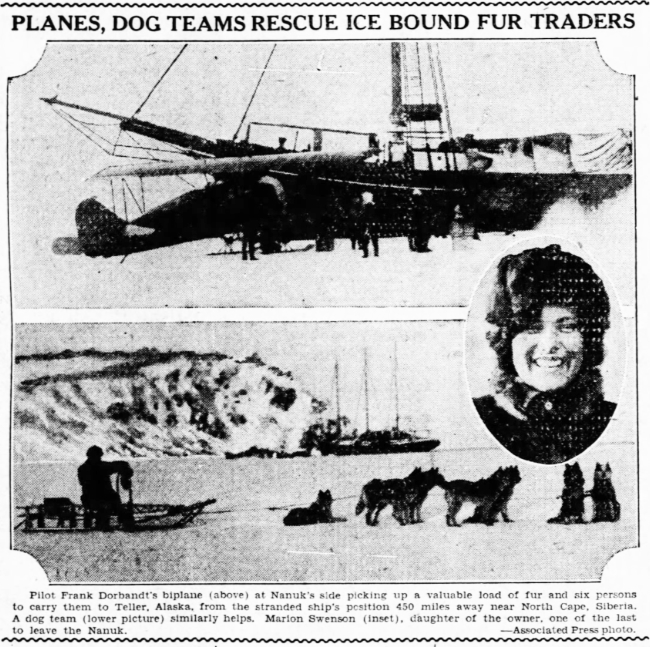
NOME, Alaska, Nov. 2 - (AP) - Two Alaska Airways planes, piloted by Ben Eielson and Frank Dorbandt, which left North Cape, Siberia, with six passengers and 1,000
pounds of furs aboard Thursday morning intending to reach here the same day, had failed to arrive at a late hour yesterday.
Heavy snowstorms along Bering straits, it was believed here, might have foreed the planes down in the vicinity of East Cape on the Siberian coast, where they would be out of communication* with the outside world.
The Alaska Airways Company recently contracted with a trading company to bring a number of passengers and a large quantity of furs to Nome for reshipment to Seattle. It was estimated at it would require fifteen trips to fulfill the contract.
Saturday, November 17, 1929, The Sioux City Sunday Journal (Sioux City, Iowa)

NOME, Alaska, Nov. 2 - (AP) - Pilots Carl Ben Eielson and Frank Dorbandt were still stormbound Saturday awaiting another opportunity to fly to North cape, Siberia, near which the Swenson fur trading ship Nanuk is frozen in the Arctic ice pack.
Eielson and Dorbrandt each have made one trip to the ship, bringing back to the mainland six men and a fortune in furs. Eielson has been stormbound in the vicinity of Cape Serbge since November 9, while Dorbandt is grounded by unfavorable weather conditions at Teller.
Among those aboard the Nanuk, which will not be released by the ice until next summer, are Olaf Swenson, of Seattle, and his daughter, Marion, who are expected to stay aboard the ship until the last of the fur cargo has been transferred by air to the mainiand of Alaska. This, it was predicted here, might take a month, due to the uncertain flying weather.
Monday, November 18, 1929, The Bellingham Herald (Bellingham, Washington)
SEATTLE, Nov. 18 - (AP) - The silent fastnesses of the Far North continued today to hold in its embrace the fate of the persons marooned on the Swenson Fur Trading Company's ship Nanuk and the Soviet ship Stavropol, both of which are locked in the ice at North Cape Siberia.
Word was also lacking from Pilot Frank Dorbandt, stormbound for more than a week at Teller, Alaska, and from Pilot Carl Ben Eielson, veteran Alaskan flyer, who was presumably forced down somewhere on the Siberian coast in the vicinity of North Cape.
Eielson and Dorbandt are attempting the rescue of those on board the Nanuk and the Stravopol They made one trip, bringing six passengers and a quantity of furs from the Nanuk to Nome, Alaska. When they attempted to return to the Nanuk, which still
has nine persons aboard, including Olaf Swenson, head of the fur company, and his daughter, Marion, they were forced to take refuge from storms which have been raging for several days in the North Cape area. Dorbandt landed at Teller, while Eielson's exact whereabouts was unknown.
Word was received Saturday from Nome that Dorbandt intended to make an attempt to reach the Nanuk yesterday, but there were no further messages from him. His failure to communicate with the outside was not considered particularly significant, however, owing to the limited facilities for establishing communications.
Monday, November 18, 1929, Joplin Globe (Joplin, Missouri)

Nome, Alaska, Nov. 18. - (AP) - News of the wrecking of an all-metal cabin plane of the Alaska Airways, Inc., piloted by Lieut. Carl Ben Eielson, on the ice bound Siberian coast eight days ago was received here today.
The wrecked plane was sighted approximately sixty miles from the Swenson fur trading ship Nanuk, whose valuable cargo of furs and passengers Eielson had been flying to rescue.
Details Are Meager.
Only meager details of the wrecking of the plane were received here, but it was believed that a dog team driven by natives traveling along the coast brought news
to the ship as the radio operator of the Nanuk reported Olaf Swenson, head of the company, who is aboard the ship, was sending a dog team from the vessel to the scene.
No news of the fate of Eielson or Mechanician Borland was received.
Pilot Frank Dorbandt, with another cabin plane, broke an ankle [axle] in an attempt to take off from Teller with a heavy load of gasoline to fly on a rescue mission. Repairs were being made to his plane while the arrival of another Alaska Airways plane had been awaited.
A blizzard was raging at Teller and Nome today and the conditions were regarded as serious.
Eielson, who is a veteran pilot of the north, won international fame when he and Sir George Wilkins flew over the uncharted "blind spot" of the Arctic from Point Barrow to Spitzbergen.
Two Trips Made.
He and Dorbandt each had made one trip from the Alaskan mainland to the trading ship Nanuk, which is frozen in the ice near North Cape, Arctic Siberia. They had brought back six persons who were aboard the Nanuk and a fortune in furs. It was expected six more trips would be necessary to bring all the passengers aboard the Nanuk and the remainder of the furs to safety.
Among the passengers aboard the Nanuk is Marion Swenson, 17-year-old daughter of Olaf Swenson, who went into the Arctic on her father's ship to seek adventure.
Fears that the Nanuk would meet the fate of another Swenson trading schooner, the Elisif, which was crushed by ice last spring, was expressed here.
Another vessel, the soviet ice breaker Stavrapool, is frozen in not far from the Nanuk.
The wireless of the vessel is the only means of communication in the region.
Dozens of other newspapers reported as this one did that Dorbrandt had broken an ankle at Teller, rather than the correct story, that he had broken an axle on his plane.
Tuesday, November 19, 1929, The Sacramento Bee (Sacramento, California)
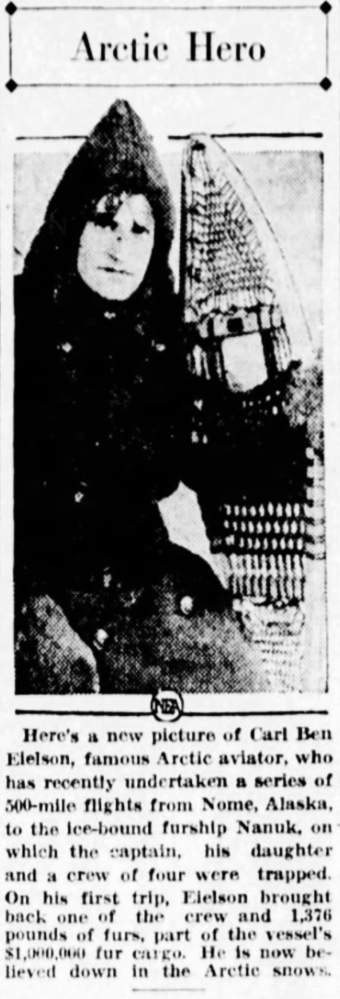
NOME (Alaska), Nov. 19. - (AP) - Pilot Frank Dorbandt, whose plane was damaged in attempting a take off at Teller, Alaska, to fly to the rescue of passengers on the ice bound ships Nanuk and Stayropol, was reported here to-day to be speeding repairs so that he may fly to the aid of his fellow aviator Lieutenant Carl Ben Eielson.
Plane Reported Wrecked.
Eielson, veteran Arctic flier, was reported to-day as having wrecked his plane, in which he had already rescued a number of passengers from the Swenson trading ship Nanuk, eight days ago on the Siberian coast.
At North Cape, it was regarded as certain that Eielson could not fly his plane, as there has been good weather for three days during the time he was missing and he failed to arrive at the cape.
Blizzard Raging.
A blizzard was raging to-day at Teller, where Dorbandt's plane is down with a broken axle, and in the vicinity of the two ice-bound ships. Six persons and a fortune in furs had been rescued from the Nanuk by the two fliers and it was believed six more trips would be necessary to bring the other passengers and fur cargo to safety.
Wednesday, November 20, 1929, The Constitution (Atlanta, Georgia)

NEW YORK, Nov. 19. - (United News.) - All available airplanes and pilots in the Alaskan area are being pressed into service in the search for Carl Ben Eielson, noted aviator-explorer, who is lost somewhere in the ice-locked seas off the far northern coast of Siberia, officials of the Aviation Corporation here were informed today.
Eielson has been missing since November 9, when he headed out from Teller, Alaska, into a raging blizzard. He was flying across the bleak wastes of the arctic seas to rescue passengers on the fur-trading motor ship, Nanuk, icebound off North cape since September.
The flier was reported lost in a telegram received here today by G. B.
Grosvenor, president of the Aviation Corporation. The message came from Frank Dorbandt, Eielson's friend and flying mate.
"Eielson and I left Teller for North Cape, Siberia, on November 9," the
message said. "One hour out I turned back. Eielson went on. There was a blizzard and it has been storming since. Eielson was sighted by natives 60 miles off North Cape, but did
not land. It was nearly dark and visibility was poor. Will keep you informed."
Officials of the Aviation Corporation wired Dorbandt immediately, suggesting that all available planes in the area be made ready for the search, and that they take off as soon as the blizzard abates.
Grosvenor said he has been informed that unless Eielson was injured in a forced landing or crash, the chances are good that he is alive. He had ample provisions, was warmly clad and carried firearms.
If necessary, Grosvenor said, an expedition will be sent out of Seattle
to search for the lost flier. "We have plenty of planes at Fairbanks, however," he said.
Eielson is vice president and manager of the Alaska Airways, Inc., a subsidiary of the Aviation Corporation. He attained international fame when he and Sir Hubert Wilkins flew across the "blind spot" of the arctic from Point Barrow to Spitzbergen.
One report out of Alaska today said that Eielson has a mechanic with
him. Officials here, however, said they believed he was flying alone.
Saturday, November 30, 1929, Reno Evening Gazette (Reno, Nevada)
Thursday, January 2, 1930, The Lewiston Daily Sun (Lewiston, Maine)
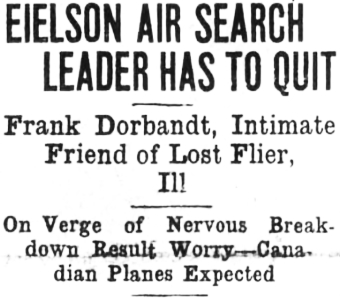
Nome, Alaska, Jan. 1 - (AP) - With Frank Dorbandt, Alaskan airman, out of the search for Carl Ben Eielson and Earl Borland, missing with their airplane in the Arctic since Nov. 9, Nome today awaited the arrival of two Fairchild cabin planes from Fairbanks.
Alfred J. Lomen, head of the searching expedition here, said Dorbandt had been given a leave of absence because of ill health. The flier has been working for virtually nine months in the Arctic and the added strain of sitting idle while awaiting
favorable weather to search for Eielson, a close friend, brought him to the verge of a nervous breakdown. He will not be needed with the Canadian airmen and others here and can have a rest that he deserves, Lomen said.
Although nothing had been heard from Fairbanks, Nome today was looking forward to the arrival of the Canadians who will continue the search for Eielson and Borland between Teller and North Cape, Siberia, where the fur trading motorship Nanuk is frozen in the ice. Two of the Fairchilds were expected here today while a third was to fly tomorrow with Matt Niemenen at the controls.
Ed Young remained at Teller awaiting fair weather to hop to the Nanuk. It was predicted at headquarters here that he would not get off before the Canadians arrive and then would pilot them across Bering Strait to the ship.
At the Nanuk, Joe Crosson and Harold Gillam were making repairs to Gillam's plane, the landing gear of which was damaged when Gillam was forced down after his engine stopped.
Little credit was given here to the theory that Eielson might have landed on Wrangell island. A wireless station is situated there and a landing would have been reported before now, it has been argued.
As preparations are continuing for a greater search for the fliers it was recalled how Eielson first came to Alaska. Always interested in aviation, he was sent to Fairbanks to teach school by his father in 1919, who believed that his son would be taken away from flying.
But even though his father had disapproved of flying Eielson was the first man to take a plane into the air at Fairbanks, soon after he arrived there. His father always had worried about his son's love for flying.
When a search plane piloted by Lt. Pat Reid and carrying mechanics Bill Hughes and Jim Hutchinson vanished after taking off from Fairbanks, Dorbrandt was back flying, searching for that aircraft, on January 5th. Reid's plane was found on January 11th - they had been forced down by a storm but the aircraft and men were all fine.
On January 19, 1930, Frank Dorbrandt flew his first charter in many weeks, taking mining man Weiline from Fairbanks to Fort Yukon, and Anchorage for buyer D. W. Flanagan from Fort Yukon back to Fairbanks. On the 22nd he had several passengers and freight for points along a Fairbanks-McGrath-Takotna-Flat-Kuskokwim-Iditarod route. From that time on, the Fairbanks Daily News-Miner once more published regular reports on his commercial flights.
On January 25, 1930, the wreckage of Eielson's aircraft was spotted by Joe Crosson and Harold Gillam. They both landed near the widely-scattered wreckage - only a small part of one wing and a portion of the cabin was sticking out of the snow. They didn't search for the bodies, which they believed would be found beneath the gasoline cans in the cabin.
The body of mechanic Earl Borland was found on February 17 and that of Eielson the next day, 200 feet from the aircraft.
The search had attracted massive attention - the newspaper archives we subscribe to has over 7,000 articles about it. We have posted a compilation of the most significant articles See "The search for Carl Ben Eielson, 1929-1930".
Friday, February 28, 1930, Daily News-Miner (Fairbanks, Alaska)

The body of Charles R. Davison, aged Tanana river rancher, was found today by Pilot Frank Dorbandt and Fred B. Johnston in his cabin, which is located about seven miles from Fairbanks.
At the instance of friends who had not seen Davison for some time the two men flew from Fairbanks about noon today to make an investigation.
They circled the cabin and failing to see fresh tracks or smoke, landed on the Tanana ard taxied up the slough to a position in front of the cabin.
Entering they found the oldtimer's body on the floor in front of the stove. He was clothed only in underwear and had apparently got out of bed with the intention of putting wood in the fire when he was stricken.
Davison was 87 or 88 years old. He had resided on the Tanana river
homestead since 1914. He wes very active for his age and frequently walked from his ranch to town and back again. His last trip in was made three or four months ago.
H. H. Ross will bring the body here tomorrow. Davison's death occurred before the last snowfall. There was a light covering of snow on the well beaten paths around the cabin.
Davison was of Scandinavian descent. He was born in Ohio. So far as
could be learned he leaves no close relatives.
Thursday, March 6, 1930, Daily News-Miner (Fairbanks, Alaska)
Bringing Father Concanon from Holy Cross to enter the local hospital, Pilot Frank Dorbandt of the Alaskan Airways landed his Fairchild monoplane here early this afternoon. He flew through thick weather trom Fish Lake here and reported that visibility is steadily lessening, indicating that the funeral planes may have to stop over at Ruby. There is a heavy head wind coming toward Fairbanks, he said.
Monday, March 10, 1930, Daily News-Miner (Fairbanks, Alaska)
Boris Magids, Deering trader, chartered an airplane from Fairbanks to catch the steamer Northwestern at Seward and finally boarded it Sunday evening after the
boat had been held there for him several hours. He made the flight with Pilot Frank Dorbandt. They had to land in the Broad Pass district because of dirty spark plugs and were delayed for several hours. Alonzo Cope, Alaska Airways mechanic at Anchorage, traveled from Anchorage to Seward in the plane and will return here with Dorbandt. They were unable to leave Seward this morning because of weather conditions. Dorbandt is flying a Travel Air plane.
Tuesday, March 11, 1930, The Constitution (Atlanta, Georgia)
SEWARD, Alaska, March 10. - (AP) - Boris Magrid, called to Miami, Fla., by the death of his brother and partner, Sam, made the first airplane flight from Fairbanks to Seward yesterday to catch the steamer North-western, which was held several hours for his arrival.
Frank Dorbandt flew the plane which was forced down once by a storm and dirty spark plugs. The weather was so cold the pilot had to use a blow torch to get the motor to a starting temperature before he could take off, after being down in deep snow on skis.
Saturday, March 29, 1930, Daily News-Miner (Fairbanks, Alaska)

Pilot Frank Dorbandt is reported to have bent a propellor and suffered other minor breaks to his ship when the big Fairchild, in which he was piloting Federal
Judge Cecil H. Clegg and Court Stenographer Louise Parcher to Bethel, nosed up in a snow drift during the takeoff at McGrath yesterday. The report of the accident was contained in a wire to the local office of the Alaskan Airways.
Manager Charles L. Thompson said this morning that he was endeavoring to locate Pilot Barnhill, who left here for the Iditarod yesterday morning and who was due home via Ruby with Dean Patty as a passenger this afternoon. If Barnhill can be intercepted in time he will be turned back to McGrath and will make the flight to Bethel with the court party.
Repairs will be sent to Dorbandt at McGrath as soon as a plane can be made available from the home airport.
Monday, March 31, 1930, Daily News-Miner (Fairbanks, Alaska)
Pilot W. H. Barnhill, who returned to Fairbanks from the Iditarod and Ruby, carrying Dean Ernest N. Patty of the Alaska College from the lower Yukon town, left at 3:30 yesterday afternoon for McGrath. He carried a mechanician, James Hutchinson, and spare parts for Frank Dorbandt's plane, which was damaged in an attempted takeoff. Barnhill will continue on to Bethel, carrying Federal Judge Clegg and Miiss Louise Parcher, court stenographer, as passengers. He will remain at Bethel until court business is concluded and will return his passengers here.
In reporting the mishap to the Dorbandt plane last week it was stated that the ship was a Fairchild. This was in error, as Dorbandt was flying a Stinson. The
Fairchilds are engaged in the Siberia work under Crosson and Young.
When Barnhill took off at 3:30 he was making his second attempt to reach McGrath, as he had previously taken off at 5:30 a.m., and was forced back by storms in the
Minchumina area.
Friday, April 11, 1930, Anchorage Daily Times (Anchorage, Alaska)

Confident that a profitable air transport can be developed between Fairbanks and the states, and eager to undertake the work of pioneering a route that will provide interior Alaska with a two-day service from Puget sound, Frank Dorbandt, veteran airman, who has been flying for the Alaskan Airways during the last year, left for the outside this afternoon to complete the formulation of plans for the inauguration of the new service. He would prefer to launch his enterprise on a big scale, but in the event that he finds it impossible to interest capital in the venture, he is prepared to start
alone, with one ship. He is sure the business will expand rapidly after he gets under way, and that the revenues will be sufficient to provide additional planes as they are needed, provided,. of course, no serious difficulties are experienced at the outset, such as the loss of a ship.
Pilot Dorbandt had not been flying in Alaska long when he saw the
possibilities to inaugurate, and he has been doing a lot of planning during the year he has been flying for the Alaskan Airways. A month ago he was ready to get into action and resigned his post as pilot, but was induced to continue flying for several weeks to clean up some contracted business for the company. When he ieft for the states this afternoon he had completed all of the necessary arrangements for the purchase of an amphibian plane of large carrying capacity with which to inaugurate the proposed service.
It is the intention of Pilot Dorbandt to make Spokane the base of
operations in the states, and to fly from there to Fairbanks by way of the inland route, approximately as selected tentatively for the projected international highway, via Whitehorse. An effort will be made to obtain a contract from the postoffice department for carrying first class mail, and with that as a dependable source of income, it will be possible to carry passengers at a rate tnat is expected to prove very attractive to the traveling public. Express also will be carried and there will be room aboard the plane also for perishable freight in limited quantities at good rates.
Pilot Dorbandt estimates that he could hop off from Spokane or any Puget sound city early in the morning and set his plane down at Fairbanks during the afternoon of the following day. Such a flight would shorten the journey to Fairbanks by about a week and would eliminate the usually unpleasant Gulf of Alaska crossing. The plane would, at the beginning, operate on a regular weekly schedule, leaving time at each end of the route for necessary overhauling and such side flights as might be developed. There would be occasional calls at Dawson when business demanded, and frequent flights to Anchorage, to deliver inbound and pick up outbound passengers.
Pilot Dorbandt, who had years of successful flying in the states before coming to Alaska, has an enviable record also as an Alaska flier, he and Pilot Matt A. Nieminen of this city, being the only two airmen in the territory who have flown here more than a year without a serious smashup. Neither of the two fliers has lost a plane and they both have done some of the hardest and most hazardous flying thus far recorded in Alaska. Pilot Dorbandt has flown about 700 hours during the year he has been in the territory, and his flights have taken him to virtually every section of the territory and to the bleak Siberian coast, where the trading motorship Nanuk is icebound.
Mrs. Dorbandt is accompanying her husband to the states.
Friday, August 1, 1930, Daily News-Miner (Fairbanks, Alaska)

Frank Dorbandt, former Alaskan Airways pilot, has purchased a plane and intends to return to Alaska soon to establish a flying service out of Anchorage. Mrs. Dorbandt wired friends in Anchorage that the plane will leave Seattle soon. She will be a passenger, as will Alonzo Cope, who recently resigned as mechanic for the Alaskan Airways to throw in his lot with Dorbandt.
Mrs. Ina Rich of Fairbanks, Dorbandt's sister, has learned that he
purchased a Fairchild machine. It will be equipped with pontoons and will fly up the coast to Anchorage.
Dorbandt has been testing the plane out at Seattle. He carried a load of newspaper men and paced Lieut. Harold Bromley's ship the day the Tacoma-Tokio plane was given gas consumption and speed tests, following which the manager of the Tacoma airport announced he would not sanction the flight because Bromley's plane was too slow and used too much gas.
Monday, August 4, 1930, Anchorage Daily Times (Anchorage, Alaska)
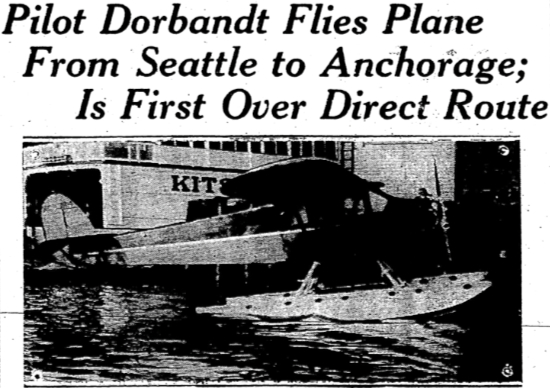
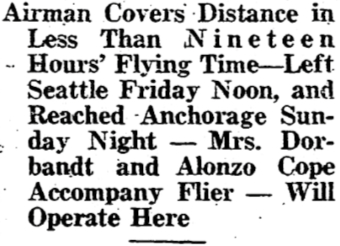
Piloting a Fairchild monoplane equipped with pontoons, Frank Dorbandt, former Alaskan Airways pilot, reached Anchorage last evening shortly after 7 o'clock on the first direct flight ever made between Seattle and this city. Accompanied by Mrs. Dorbandt and Mechanician Alonzo Cope, who also formerly was in the service of the Alaskan Airways, Pilot Dorbandt hopped off from Seattle Friday morning at 11:15 o'clock and covered the distance of approximately 1,650 miles in slightly less than 19 hours actual flying time. As a matter of fact, the ship was flown at least 100 miles more during that time, to get around fog banks.
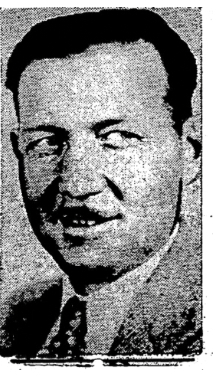 The monoplane is a special built high altitude mapping ship and is
particularly suited for Alaska flying because of its ability to take off from and land on small fields. It will carry four passengers, pilot, 300 pounds of baggage and gasoline sufficient for six and a half hours of flying. It has a cruising speed of 100 miles. The ship is based at present at Lake Spenard and will be located permanently at Anchorage, engaged in commercial flying. When land flying, Pilot Dorbandt will use the new municipal field.
The monoplane is a special built high altitude mapping ship and is
particularly suited for Alaska flying because of its ability to take off from and land on small fields. It will carry four passengers, pilot, 300 pounds of baggage and gasoline sufficient for six and a half hours of flying. It has a cruising speed of 100 miles. The ship is based at present at Lake Spenard and will be located permanently at Anchorage, engaged in commercial flying. When land flying, Pilot Dorbandt will use the new municipal field.
The first stop out of Seattle was made at Alert bay, where the ship was refueled. The fliers remained there about 40 minutes and then proceeded to Ketchikan, arriving there at 7:45 o'clock Friday evening.
The following morning they started for Port Althorp but ran into fog which was so heavy they were compelled to fly very low, being only a few feet above the water at times. They were not in any difficulty, however, being able to land at any time
desired; and in fact, they did land in the water for a survey of their surroundings, and decided to shift their course to Juneau instead of pushing on through the fog to Port Althorp. They stayed over in Juneau and set out for Port Althorp Sunday, with flying conditions much more favorable. A stop was made at Cordova yesterday for gas and the flight resumed. They crossed Prince William sound and followed a draw leading to Portage creek, but ran into fog there and came down for a look around. They taxied up the draw for some further distance and then taxied back out of the fog for another start, this time setting a course for Seward and from there to Lake Skilak and Anchorage. No difficulties were experienced at any stage of the flight and the entire journey was thoroughly enjoyed by all three of the travelers.
The fliers circled the wrecked Gorst ship at Icy strait, and dropped some newspapers to the several men who were there salvaging the craft. The ship was sold to some fishermen.
Mr. and Mrs. Dorbandt have done a lot of traveling since they left Anchorage and all of it has been done by airplane and auto, the total mileage being about 30,000. They were not on a train or a street car at any time. They flew from San Francisco to Seattle, and bought an auto at the latter city, running it about 3,500 miles before they were ready to start for Alaska.
Pilot Dorbandt flew the Fairchild to Denver, taking Mr. Cope to that city to speed his journey east. And he also did some flying for the Gorst company while Mr. Cope repaired a Gorst ship used on the Seattle-Bremerton route. Dorbandt also took the Bromley ship up for test flights for Bromley's backers and it was on his recommendation that the flight to Tokyo was abandoned.
It is the intention of Cope and Dorbandt to make at least three and possibly four flights to the states from Anchorage during the week, the first trip being scheduled for about September 1. In the meantime they will operate wherever business calls them from their Anchorage base.
Mr. and. Mrs. Dorbandt have taken an apartment in the Shonbeck building and will make Anchorage their permanent home.
Tuesday, August 5, 1930, Anchorage Daily Times (Anchorage, Alaska)

Wednesday, August 13, 1930, Anchorage Daily Times (Anchorage, Alaska)
The Valley of Ten Thousand Smokes, as viewed from an airplane, is a sight which baffles description, according to Pilot Frank Dorbandt, of the Pacific International Airways of Alaska, who returned to Anchorage last evening at 9:20 o'clock from a flight to that spectacular region, with the distinction of having been the first pilot to take an airplane into the valley. The flight also included a stop at Afognak, picturesque island just north of Kodiak, and it was the first time that a plane had ever been there. Accompanying Pilot Dorbandt on the history making flight into the valley were Mr. and Mrs. Benson, government school teachers who boarded the plane at Bethel and went thru to Afognak, and Alonzo Cope, mechanician.
Pilot Dorband hopped off from Anchorage in the pontoon-equipped Fairchild monoplane Saturday afternoon, with Leo W. Breuer, territorial conimissioner of education, and E. J. Beck, as passengers. A course was set through Rainy pass to the upper Kuskokwim and numerous stops were made along the Kuskokwim river, with a side trip to Iditarod. An effort was made to fly straight across from Bethel to the Yukon river but because of the presence of heavy fog it was found necessary to take a round-about route, coming into the Yukon river far above the mouth. The big river was then followed in its winding course, with the plane close to the water most of the time.
Sunday night was spent at a fishing village near New Hamilton and the plane being the first ever to stop there, the natives were very much interested. The pilot and Cope spent the night in the ship, while their two passengers took their sleeping bags into one of the cabins in the village, where they had, as a fellow lodger, the native chief, who requested permission to sleep in the cabin with the visitors in order that he mght be awakened when they arose to depart. He wanted his villagers to be up in time to see the big plane resume its flight.
Breuer and Beck were landed at St. Michael early Monday morning, just in time to connect with the motorship Northland for Nome. The plane then returned to the lower Kuskokwim and the fliers were joined et Bethel by Mr. and Mrs. Benson fer the flight to Afognak. On the way across to the Alaska peninsula and the islands beyond, a stop was made at Snag Point, near Dillingham, and from there it was but a short hop into the Valley of Ten Thousand Smokes, the plane entering the Katmai reservation at the northwest corner and circling the valley close to the many fumeroles, which were sending up their "smoke" on every side. The valley was overhung by a fog which obscured the tops of Katmai and the several other mountains which were seen there, some of which were not indicated on the map.
Now that Pilot Dorbandt has visited the valley and is familiar with
conditions there, he is prepared to make flghts to the region from Anchorage with sight-seeing passengers. The flight to the valley and return to Anchorage can be made in
less than eight hours, including a trip around Katmai.
In the flight to St. Michael and return, the fliers covered about 2,000
miles in 22 hours and 40 minutes of flyng, and during ail of that time the plane was within easy reach of a safe landing. In fact, Pilot Dorbandt declares that he will use pontoons on all of his summer flights hereafter, having found that they are much more convenient than wheels because of the many rivers and lakes throughout the interior country. The pontoons he uses are large and strong and it was found at St. Michael, with the waves rolling quite high, that the plane is quite seaworthy with its water equipment.
There are some good landng fields, in the interior now and there is one
also near St. Michael, on an island just west of the town. The field, which is on a sand spit, is about 75 feet wide and half a mile long. It appeared to be in very good condition. The bureau of education supply ship Boxer arrived at St. Michael while the plane was there.
The steamer Tupper, which is the ocean supply ship for the Kuskokwim district, is scheduled to reach Bethel tomorrow and the vessel will be very welcome, as it has supplies aboard to replace those which were lost early in the season when the steamer Tana's barge sank with a full cargo of shipments for the upper Kuskokwim, and no chance to
replace them until the second and last voyage of the Tupper from Seattle. Some of the upper Kuskokwim communities have been getting along on rather short rations during the summer and the return of the Tupper has been eagerly awaited. The barge which went down, supposedly as the result of settling on a snag after having been loaded at Bethel, is a total loss and as a result, it will be necessary for the steamer Tana to make two trips up the river this fall to make delivery of the Tupper freight.
Things are rather quiet along the lower Yukon river and the outlook for the winter is not any too good for the Kuskokwim, all depending upon the return of fur bearers.
Everywhere the plane stopped there was inquiry regarding the plans for Anchorage radio broadcasting during the coming winter, and willingness was expressed on every hand to send in contributions of cash to insure the operation of the station here. The radio fans will be informed that all that will be expected of them will be the sending of letters to the advertisers, informing them of the successful operation of the station.
Thursday, August 14, 1930, Anchorage Daily Times (Anchorage, Alaska)

Thursday, August 21, 1930, Anchorage Daily Times (Anchorage, Alaska)
Pacific International Airways of Alaska, through Dorbandt and Cope of Anchorage, has offered the services of a plane if ships are unable to reach Point Barrow with food supplies. It is believed here the situation is not that serious but the residents of Point Barrow appreciate the offer as typical of true Alaskan spirit and the offer has put them entirely at ease regarding the food situation.
Tuesday, March 15, 1932, The Vancouver Daily Province (Vancouver, British Columbia)

SEATTLE, March 15. - (AP) - A special despatch to the Times today from
Anchorage, Alaska, said Frank Dorbandt and two companions, braving deadly gases, landed their plane yesterday inside Aniakchak volcano. It was the first time in history, it was believed, a plane has been set down inside an active crater.
Dorbandt was returning from an 1800-mile fur-buying trip over the Alaska Peninsula and the Aleutian Islands. His companions were George Emery of Seattle and George Johnson, Anchorage photographer.
NARROW ESCAPE LAST SUMMER.
Father Bernard J. Hubbard, Alaska explorer and professor at Santa Clara
University, and Pilot Harry Blunt were nearly sucked into the volcano last summer when, in Blunt's plane, they passed low over the crater.
Dorbandt reported many of the peaks in the range of mountains on the
Alaska Peninsula in eruption.
"We took off on skis from Ugashik (northwestern shore Alaska Peninsula) but from Chignik on we found everything covered with volcanic ash. (Chignik is on the south shore of the Alaska Peninsula). We discovered several unnamed peaks smoking and the whole range seems active.
SAW TWO OCEANS.
"Flying at 12,000 feet we could see both the Pacific Ocean and Bering Sea, with literally hundreds of islands visible in_every direction. The weather was perfect and It was an awe-inspiring sight to watch the eruption beneath us.
"We also flew over Mount Katmai, Mount Pavioff and Mount Shishaldin, taking still and motion pictures of them. We sighted a large herd of deer, driven by Laplanders, that had started from Bethel for Unimak Island but had been forced to turn back toward the mainland because of the volcanic condition."
Sunday, April 24, 1932, Los Angeles Sunday Times (Los Angeles, California)
The page below, with photographs obviously shot by George Johnson during the March flights, was copyrighted by "Frank Dorbandt, the man who risked life itself to photograph Alaska's volcanoes in action." Johnson appears to have been working with press agency Wide World, who is also noted as a holder of the copyright. Several other newspapers also published photos from this series.

Tuesday, May 31, 1932, Stockton Daily Evening Record (Rockton, California)
KANAKANAK, Alaska, May 31. - (Associated Press) - The crater of the Aniakchak volcano, with its hundred of steam jets and numerous vents, Father Bernard R. Hubbard believes, offers a rival attraction to the famed Valley of Ten Thousand Smokes of a number of years ago, but now dead.
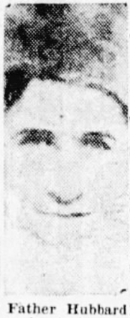 The dangers of its unceasing erupting activity and its inaccessibility, however, he hastened to add yesterday on his return from the first airplane landing ever made inside an active volcano, hardly makes it a tourist attraction.
Returning from a flight with Pilot Frank Dorbandt into the gaping mouth of the volcano, the largest in the world, the Santa Clara University professor described the hazards of the trip. The visit was made last Friday.
With Herb Larison, a mechanic, as the other occupant of the plane, a landing was made on a small lake on the crater's floor. After flying for 50 minutes inside the walls, the party spent five hours on the crater's floor.
Clouds of escaping steam and gases were flown through, he said, and in the heated currents from the erupting vents, the plane was tossed back and forth. The gases caused no trouble to the motor.
MEAL COOKED
After landing, a meal was cooked on the shore, with mineral waters from springs nearby to drink. The three then explored amid steam jets and erupting vents.
The flight out of the crater, with the walls towering 2000 feet above
them, was aided when Pilot Dorbandt flew the plane deliberately into the heated currents rising from the vents.
"On each turn," Father Hubbard said, "the current pushed the plane
upwards. Finally the last thrust shot our craft over the rim."
STILL ERUPTING
The three-mile area blown out of the crater a year ago was found to be still erupting, and a fresh eruption about a mile in area was going off. For three successive summers, Father Hubbard has done exploration work about Aniakchak volcano.
On returning here. Father Hubbard left in a short time for False Pass on Unimak island to rejoin his party of student explorers. He said he planned to return within a few weeks and spent a month in the area.
Last winter Pilot Dorbandt also flew within the crater's walls and
set his plane down on a snow field there, but only touched the snow and then resumed speed and took off.
Tuesday, May 16, 1934, The Sun (Baltimore, Maryland)

Seattle, May 15 (AP) Announcing a new Alaska air line, with regular
freight and passenger service between Cordova, Anchorage and Fairbanks, Pilot Frank Dorbrandt, famed northern flyer, said here today he expected it to be extended to Siberia for ten months of the year.
"We expect to fly to Siberia every month, except November and December, the season of especially heavy storms," he said.
Dorbrandt, chief pilot for the Ptarmigan Air Lines, which was organized
recently in California, will start north on Saturday in one of five large planes to be used by the line, he said.

Monday, May 21, 1934, The Vancouver Daily Province (Vancouver, BC)
QUESNEL, May 21. - The tri-motored plane of the Ptarmigan Airways, in charge of Frank Dorbandt, which left Vancouver Sunday morning for Alaska, was forced down from lack of gas on Mike Ranger's hay meadow in the Nazko Valley, eighty miles west of here, at 3 o'clock Sunday afternoon. Word of the landing was brought here by Pat King, Nazko Valley Rancher, who rode all night carrying provisions and messages for the stranded airmen.
King arrived here at 11:15 this morning with Alex Harrington, whose cattle ranch he reached at 4 a.m., after being on the road between the plane and the Nazko store on foot one way and on a commandeered horse returning.
The Nazko road at this time of the year is a tough one for cars, ten miles an hour being good going. King and Harrington drove seventy-five miles by car, and King still had his chaps and spurs on when he reached Quesnel.
MISTOOK VALLEY
OF THE CHILCOTIN.
The pilot apparently mistook the Valley of the Chilcotin for the Fraser
and after crossing the divide into Nazko they found themselves short of gas. Dorbandt made a perfect landing in Ranger's field. A note sent by Marshall Kester of the Ptarmigan
Airways reads:
"We have been forced down, out of gasoline, in our tri-motor Ford about
seventy-five miles from Quesnel. Frank Dorbandt and I were en route to Prince George, Hazelton and Fairbanks with passengers. Head winds caused us to run short of gas, which
Mr. Pat King has kindly consented to get for us."
King and Harrington expect to reach the plane with a fresh supply of gas about 7 o'clock tonight, and Dorbandt plans to hop to Quesnel before dark.
The machine landed at the Sea Island airport late Saturday afternoon,
and left at 9 a.m. Sunday via Prince George and the interior B. C. route. It is owned by the Ptarmigan Air Lines, Cordova, and will go into service on arrival there. Donald A. Glass of Seattle was pilot with Dorbandt, V. Eyre and J. Carr listed as crew.
The passengers were M. Kester, Los Angeles; F. Williams, Seattle; J. Howland, Seattle; P. Olsen, Seattle; J. Koessler, Chicago, and D. Haneburg, Seattle.
Tuesday, May 22, 1934, Spokane Daily Chronicle (Spokane, Washington)

VANCOUVER. B. C., May 22. (AP) - The tri-motored plane flown by Frank Dorbrandt. veteran Alaska aviator, with seven passengers aboard landed safely at Quesnel, B. C., at 5:45 a. m. today, reports received from there said.
Thursday, July 26, 1934, Johnson City Chronicle (Johnson City, Tennessee)
U. S. Marshal Sells Plane
TACOMA, Wash. (UP) - To A. J. Chitty, new U. S. Marshal, fell the
duty of selling an amphibian plane seized from Frank Dorbrandt, Alaskan flying ace. Dorbrandt was arrested for having contrabrand Alaskan furs. He gained national recognition recently by flying Father Hubbard, "glacier priest," over Alaskan mountains.
Tuesday, August 21, 1934, The Atlanta Constitution (Atlanta, Georgia)
ANCHORAGE, Alaska, Aug. 20 - A/P - Frank Dorbrandt, noted Alaska flyer, was missing tonight on an non-planned flight into the arctic fog.
Dorbrandt was last seen late yesterday after an altercation with local airport officials which resulted in revocation of his license. Allegedly intoxicated, he took off into a fog bank and has not been heard from since.
Dorbrandt landed here yesterday noon en route from Point Barrow via Fairbanks with a trimotored plane.
He carried 11 passengers, one dog and four 50-gallon tanks of gasoline in the cabin. There were only five seats in the plane, the passengers sitting on tanks and luggage with no belts.
The plane, overloaded by 200 pounds, made a "suicide turn" in landing, which nearly catapulted the ship and tossed passengers about the cabin.
Inspector Murray Hall, on the field at the time. grounded the plane and
revoked Dorbrandt's license.
Dorbrandt came into town, got drunk and threatened to shoot Hall if the latter offered interference, Anchorage authorities said.
He returned to the field, unloaded gas tanks from the cabin and took off alone with two and one-half hours of gasoline. Before leaving he said: "You'll not see me again."
Dorbandt was the central figure in several dramatic airplane flights of
the north. He rushed serums and anti-toxins to Indians and Eskimos stricken with various diseases, and took injured white men to hospitals.
He landed Father Bernard Hubbard, the "glacier priest," inside the smoking volcano of Aniakchak, and was one of the leaders in airplane searches for lost aviators and sailors.
Recently the federal government accused him of smuggling furs into the
United States, and in Seattle he failed to appear August 16 to answer to a suit of Marjorie Seller, pretty 19-year-old girl, who charged the flyer was the father of her 17-month-old child, Frances Patricia. This case was continued until September 12.
Tuesday, August 21, 1934, St. Joseph News-Press (St. Joseph, Missouri)
ANCHORAGE, Alaska, Aug. 21. - UP -The supposed "suicide flight" of Frank Dorbrandt, daring Arctic aviator, began to look today more like an airman's expression of rage.
Fears for his life were felt Sunday night when he lifted his big tri-motored plane, carrying only a scant supply of gasoline, from the Anchorage airport with the words, "You'll not see me again."
Death Quest Feared.
Some of his friends thought he might have set out on a dramatic quest for death to escape the pursuit of lawsuits. They believed he intended to fly over the ocean or over Alaska's snow-capped mountains until his gasoline was exhausted, and then crash.
But their fears were largely dissipated when they learned the husky pilot had landed at another airport fifty miles away, spent the night and taken off the next day for an unannounced destination.
The hero of many Alaskan flying exploits took off on his strange flight shortly after he flew here from Point Barrow, northernmost settlement of the territory, to learn he had been ordered grounded by the airplane inepector.
Laughed at Fears.
He already faced government fur smuggling charges and a filiation complaint filed by a nineteen-year-old Seattle girl.
Last night Pilot Murrell Sassen flew in from Susitna Station, fifty miles northeast of Anchorage, and laughed at fears for the wandering aviator. Dorbandt landed at Susitna Sunday night, spent the night there and took off again at noon yesterday, Sassen said.
Wednesday, August 22, 1934, Chippewa Herald-Telegram (Chippewa Falls, Wisconsin)

Anchorage, Alaska. (AP) - Frank Dorbrandt, famed Alaska flier, was
safely back in Anchorage today - in jail.
His return late yesterday ended the mystery of his disappearance and talk
of an "aerial suicide." It likewise ended search of a rugged territory and fears of friends inspired by his strange threat, "you'll never see me again," shouted as he took the air here Sunday night in his big tri-motored plane.
The hero of a hundred northland adventures said he left on his mystery
flight in a fit of anger because aeronautics Inspector Murray Hall ordered him grounded for breaking aviation regulations. The intervening two days he spent on Susitna river, 60
miles away.
Waiting at the airport for Dorbrandt's return was Deputy Marshal Frank Hoffman, who escorted him to jail. Bondsmen, on whose bond the daring aviator had been at liberty under federal fur smuggling charges, had withdrawn their backing.
Friends today sought to raise $2,500 bail. Besides the smuggling charges,
Dorbrandt faces a filiation suit instituted by a 19-year-old girl.
Sunday, September 30, 1934, Nevada State Journal (Reno, Nevada)
KETCHIKAN, Alaska, Sept 29 - (UP) - Frank Dorbrandt, Alaskan air ace, pleaded not guilty to two counts of having possession and transportation of illegal furs when arraigned in court today.
Dorbrandt was charged in indictments with having had unstamped beaver furs in his possession and transporting them across the Canadian boundary in 1932.
Sunday, September 30, 1934, The Tacoma Sunday Ledger (Tacoma, Washington)

KETCHIKAN, Alaska, Sept. 29. - (UP) - Frank Dorbrandt, Alaskan flier, today pleaded not guilty to charges of smuggling furs out of Alaska and federal court will begin trial of the case in about two weeks.
Dorbrandt, hero of many far north rescue expeditions, recently forfeited
$500 bond in Seattle for failing to appear at the filiation hearing of Marjorie Seller, who said he was the father of her child.
Sunday, January 20, 1935, St. Louis Post-Dispatch (St. Louis, Missouri)
By the Associated Press
ATLIN, B. C., Jan. 19. - Pilot Frank Dorbrandt and his three passengers took off today for Prince George, 600 miles distant, after a day's delay in 50-below-zero
weather. He hoped to reach Seattle tomorrow.
The party took off from Anchorage, Alaska, Thursday morning, to speed Grant Reed, railroad dispatcher, to the bedside of his wife, who is seriously ill in San Diego, Cal. Other passengers were Herbert Reed, grocery manager, and Gus Gelles, manager of an Alaskan guide service.
Saturday, April 27, 1935, San Bernadino Daily Sun (San Bernadino, California)

(By United Press)
KETCHIKAN, Alaska, April 26. - Frank Dorbrandt, Alaska aviator and hero of many "mercy" flights, and Lyman Destaffany were fined $750 each on a Federal charge of
smuggling furs.
The two pleaded guilty on misdemeanor charges and the original felony indictment returned against them last fall was not pressed.
Saturday, May 4, 1935, The Capital Journal (Salem, Oregon)

Fairbanks, Alaska, May 4 (UP) - A sudden relapse during pneumonia
following an airplane accident ended the life today of Frank Dorbrandt, pioneer Alaska flier and colorful modern adventurer of the northland.
His hand was struck a few days ago by the propellor of his plane while he was turning the motor over. Although very painful. the injury did not appear serious.
However, pneumonia set in and he was taken to a hospital. At midnight he suffered a sudden and unexpected sinking spell and died at 1 a.m. today.
Dorbandt's name was in the news during the past few years in daring flight over bleak, snow covered areas of the north.
Sunday, May 5, 1935, Sunday Times (New York, New York)

Fairbanks, Alaska, May 4. - Pneumonia, following a minor airplane accident, today took the life of Frank Dorbrandt, 42, idol of the Alaskan skies and one of
the six oldest active commercial fliers in America.
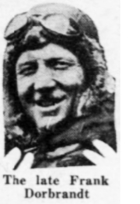 His fatal illness came after an injury to his hand, which was struck by a
propellor a few days ago while he was turning the motor over.
His fatal illness came after an injury to his hand, which was struck by a
propellor a few days ago while he was turning the motor over.
It was Dorbrandt, red-haired, blue-eyed and husky, who piloted Father Bernard Hubbard, "Padre of the Glaciers", into the crater of famed Aniakchak volcano; who,
with the late Carl Ben Eielson, helped to rescue the crew and cargo of the ice-bound S. S. Nanuk in 1929; who saved hundreds of Alaskans threatened by plague, starvation or freezing.
After his license had been revoked for overloading and the Government accused him of fur smuggling, and a 20-year-old half-breed beauty charged him with paternity of her child, he told friends, "You'll never see me again," and took off from Anchorage last August for the open ocean.
He was mourned as a suicide, but two days later he reappeared and was arrested. He was at liberty on $2,500 bail when he died.
Sunday, May 5, 1935, The Los Angeles Times (Los Angeles, California)
|
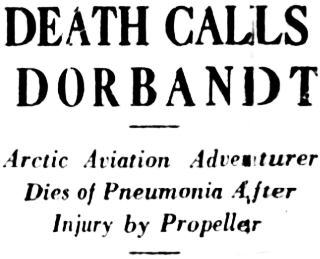

FAIRBANKS (Alaska) May 4. (U.P.) - A sudden relapse during pneumonia following an airplane accident ended the life today of Frank Dorbrandt, pioneer Alaska flyer and colorful modern adventurer of the Northland.
His hand was struck a few days ago by the propeller of his plane while he was turning the motor over. Although very painful, the injury did not appear serious.
SUDDEN SINKING SPELL
Later pneumonia set in and he was taken to a hospital. At midnight last night he suffered a sudden sinking spell and died at 1 a.m. today.
Dorbandt's name was in the news during the past few years 2n daring flights over bleak, snow-covered areas of the North.
ANIAKCHAK LANDING
One of his most spectacubar flights was when he piloted Rev. Bernard
R. Hubbard, S.J., padre of the glaciers, into the crater of Aniakchak volcano. Dorbandt landed Father Hubbard, professor of geology at Santa Clara University, three times on Sunrise Lake, three-fifths of a mile below the rim of the crater, twenty-one miles in circumference.
|
Friday, May 10, 1935, The Daily Province (Vancouver, B.C.)
Frank Dorbrandt, the great air pilot of the North, never spared himself or his belongings when there was suffering to relieve. He was the messenger of the angel of mercy. Today he lies dead in an Alaska hospital and there is none to claim his body.
|


