Dateline: October 1, 2026.
On Wednesday, September 30th, I headed west on the Alaska Highway, determined to finally find the Takhini Salt Flats, a place that everyone knows about but nobody will say exactly where it is.
I found it, and it was even better than I had expected.
I'll start with explaining how to find it, because it is so simple. Right at the Km 1468 milepost of the Alaska Highway, a dirt road leads off into the forest. Yes, it's that simple. No need for lat/long or other complex directions. Km 1468 - that's 45 km west of Erik Nielsen Whitehorse International Airport.

There is lots of parking well off the highway. Most people seem to walk in from there, but if you have a higher-clearance vehicle you could drive a few hundred meters to the first lake if you need to.

The access road is a very pleasant walk.

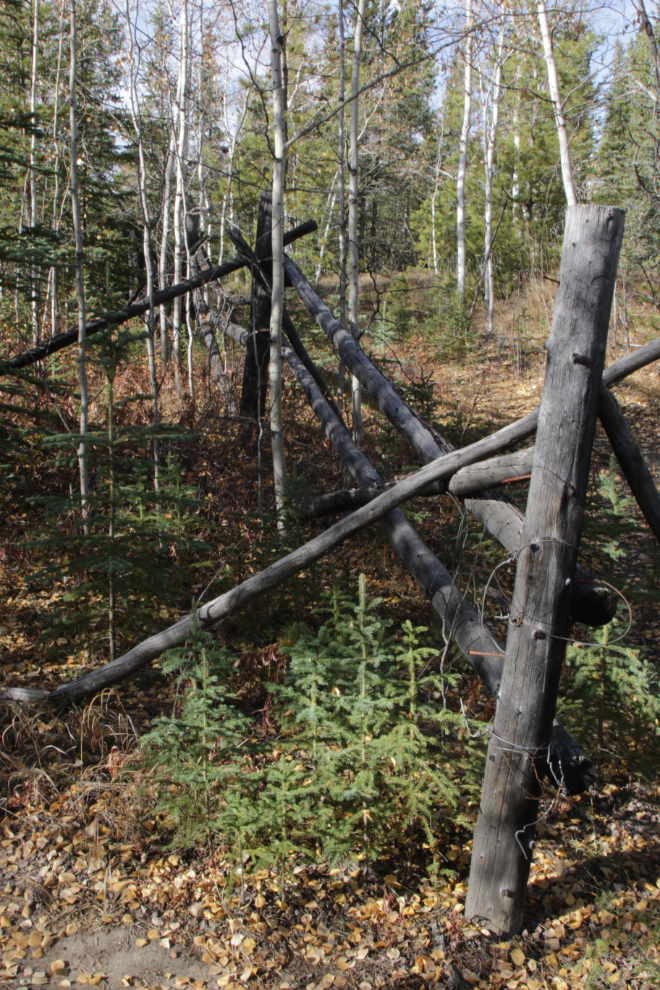
It's been decades since the log fence has been maintained.
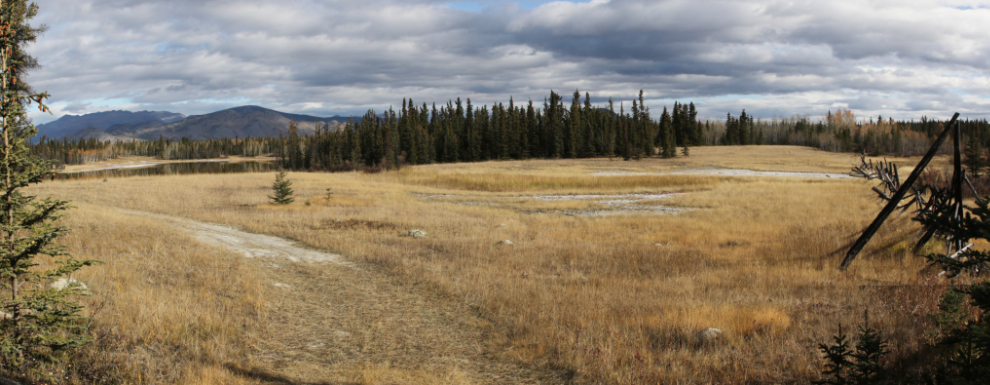
From the highway to where this panorama opens up is less than 500 meters.
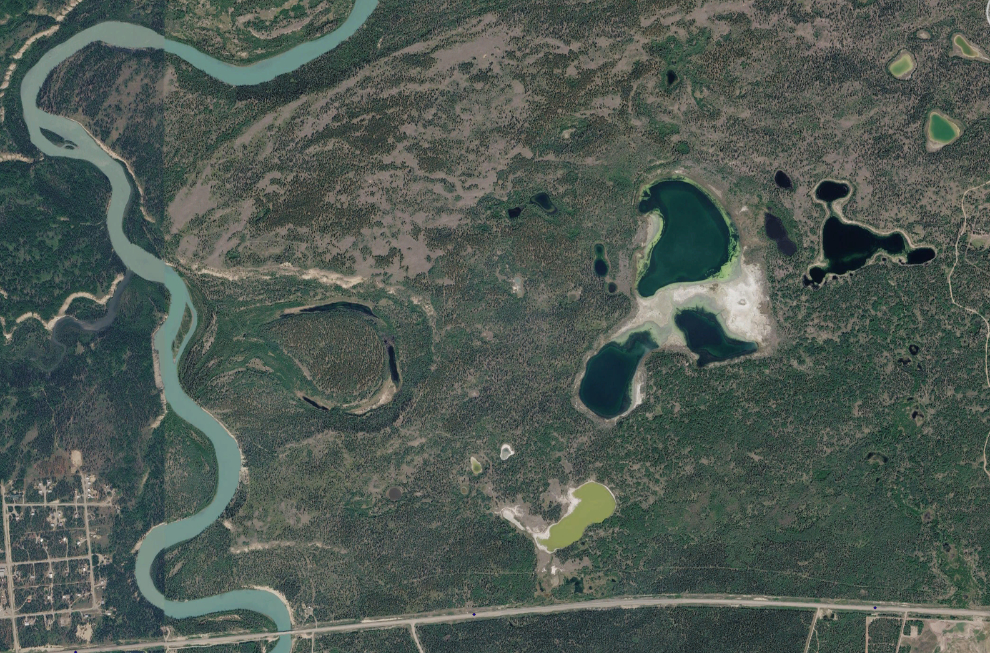
Here's what the area looks like from the air. See an interactive map here, with the Takini River to the left and the Alaska Highway running across the bottom (Whitehorse is to the right).
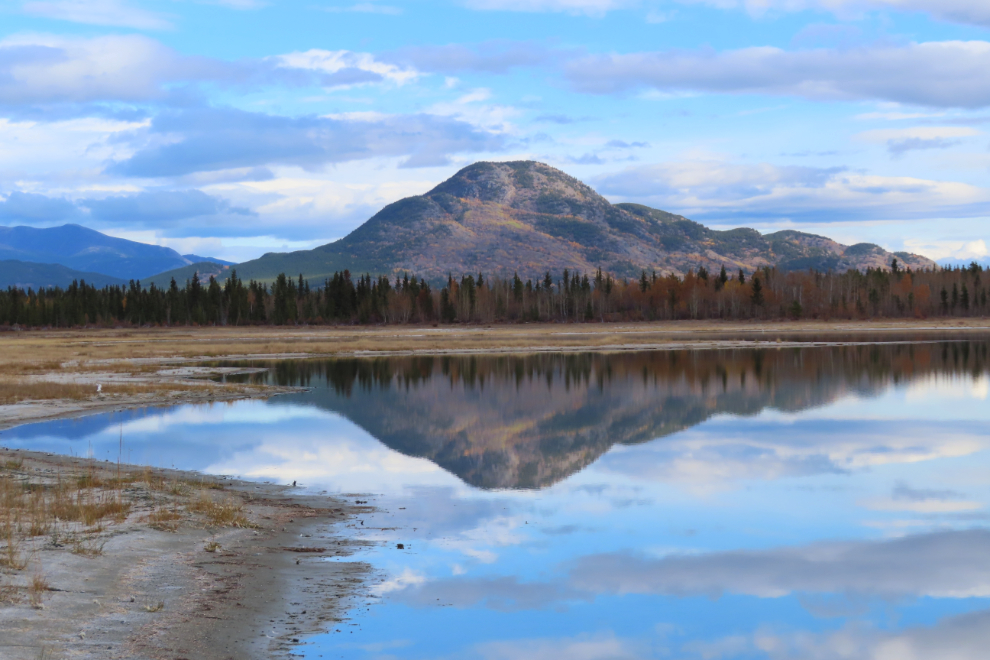
The lakes we see now are what's left of Two Horsemen Lake, a large lake that covered the whole area in the 1940s.
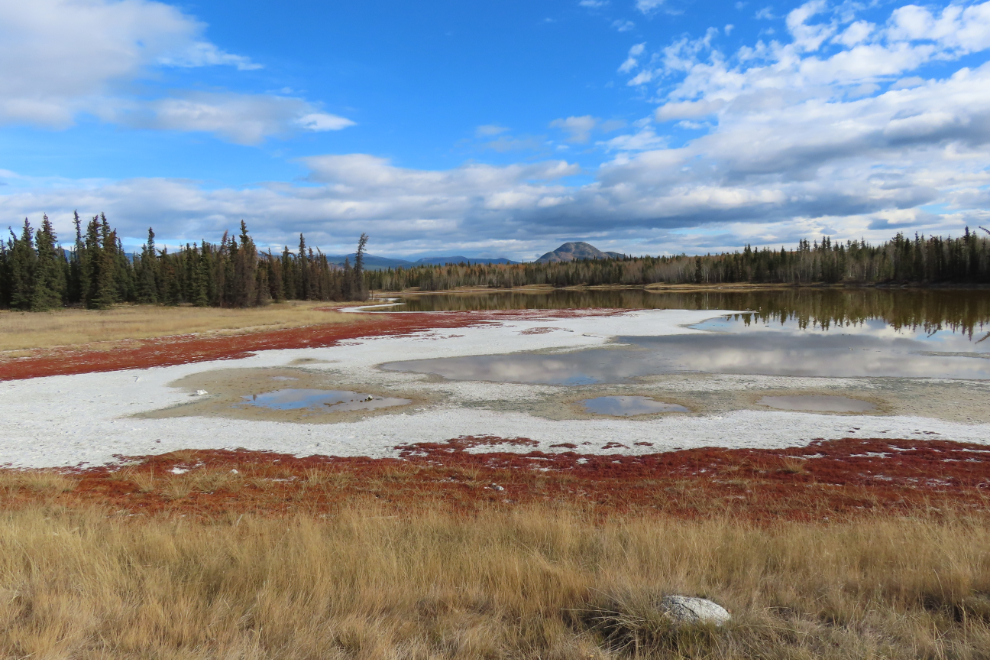
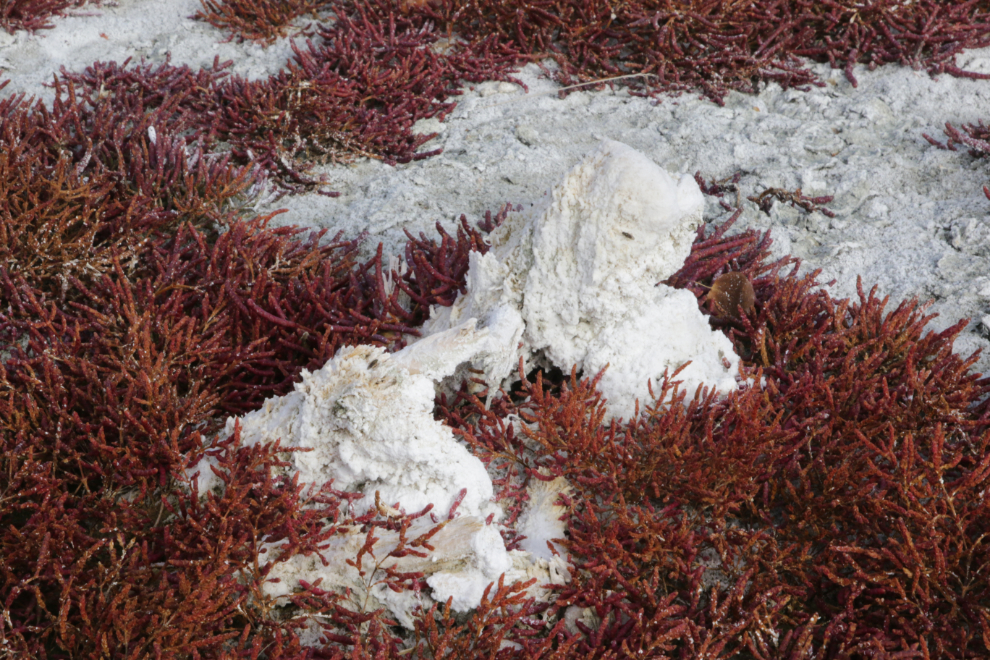
An interpretive sign at the Takhini Burn rest area describes what happened to create this marvellous place: "As surface water evaporates, ground water is drawn upwards, taking naturally occurring salts to the surface. Not all plants can grow in such an environment, but some thrive in the salty earth. Arctic glasswort (Salicornia borealis) blankets this site. The plant starts its life a dull green colour, but matures to a brilliant red in the fall. Different types of this salt-tolerant plant are found around the world, with some species edible by humans."


Although we call it salt, the white crust that blankets the area isn't common table salt, it consists of mirabilite and thenardite, which are sodium sulfate minerals.
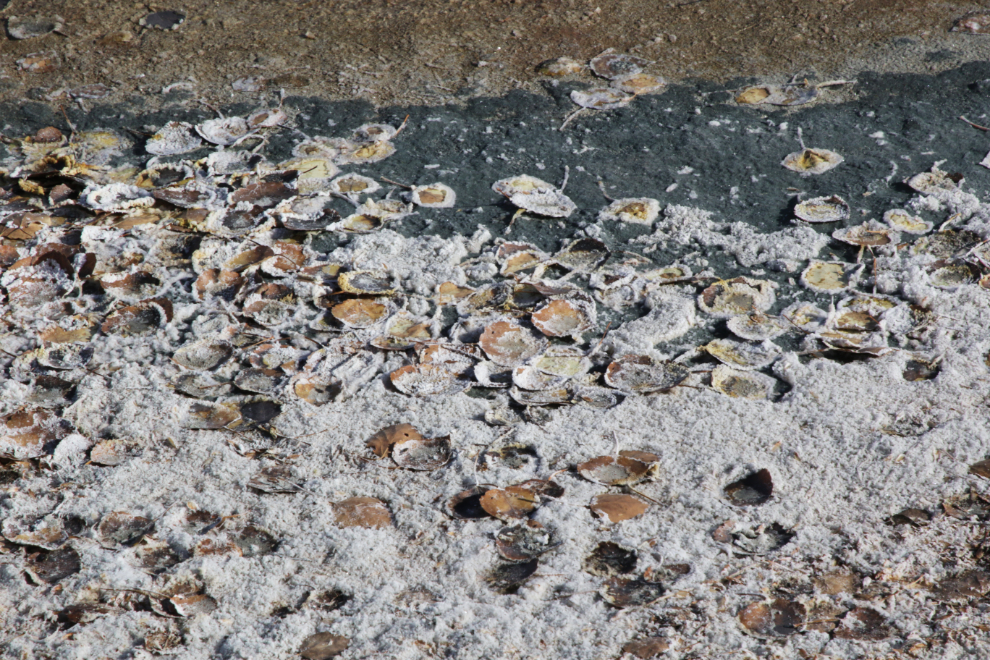
It's funny now that it took me so long to get here when the Alaska Highway is right there. I've actually taken many photos of this spot over the past few decades as it's particularly scenic from the highway in all seasons.
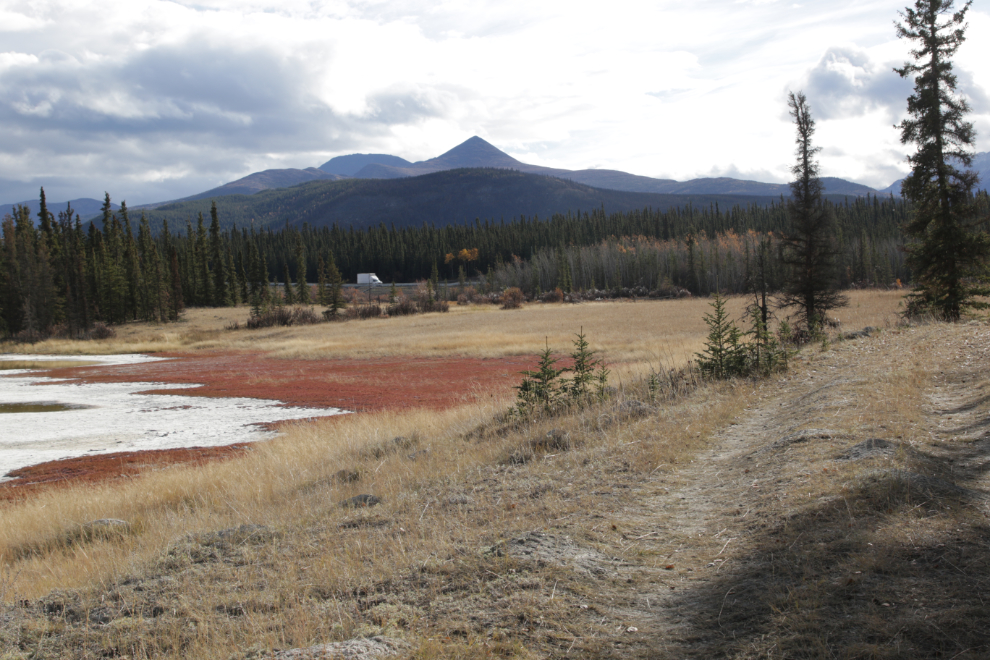
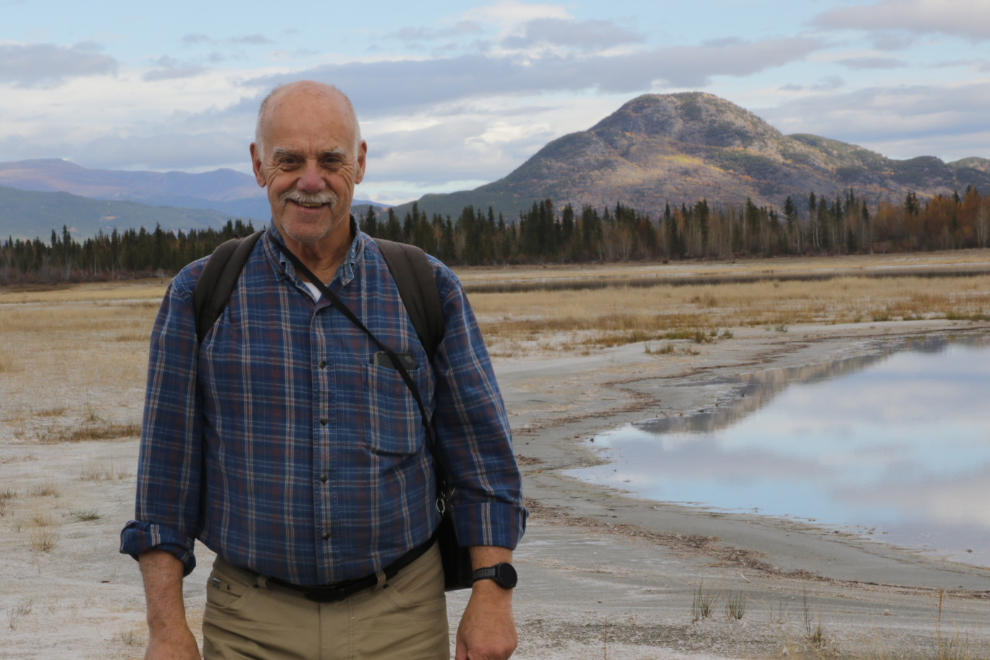
This place had such a wonderful vibe this day. It's beautiful in a very calm way (as opposed to "spectacular") and I saw no other people.
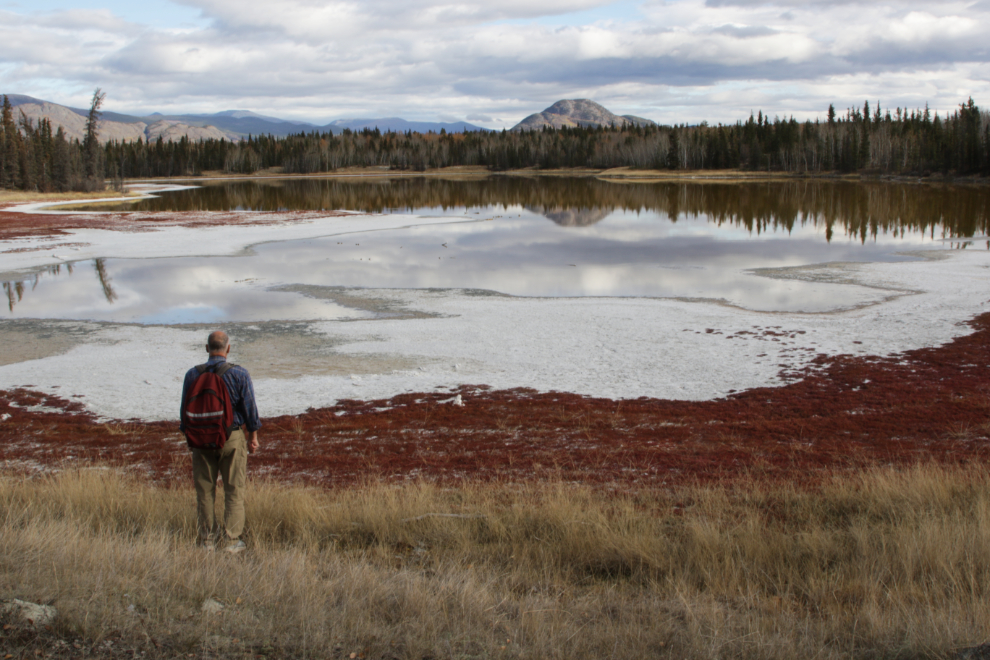
The salt makes for an infinite variety of photo ops.
This was my first sign that some of the area's wild horses were close by.

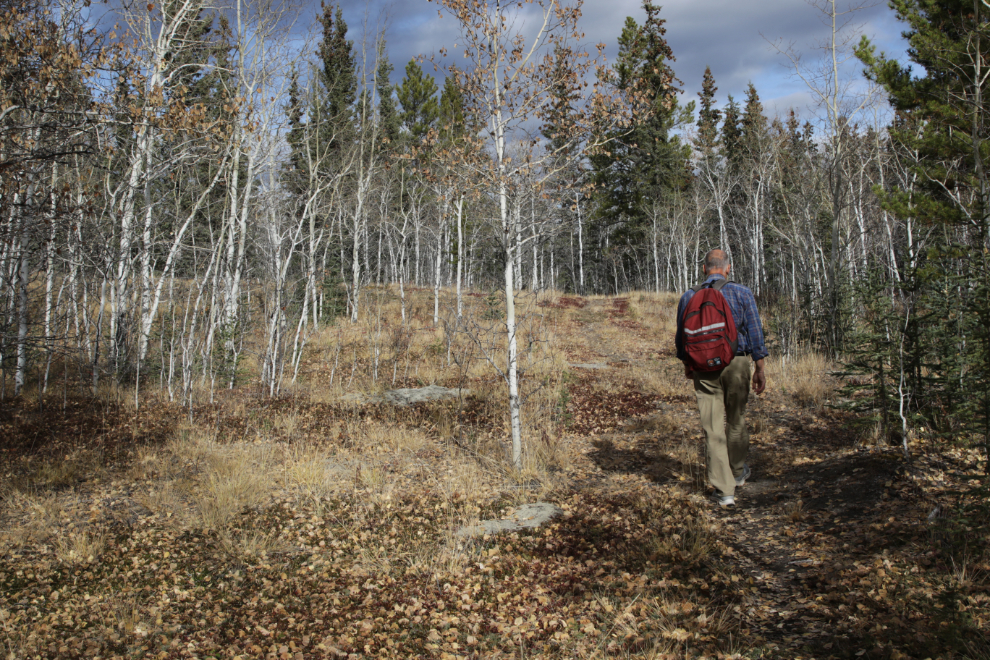
This is a great area to wander in, on ATV trails like this one or just through the dry, open aspen/spruce/pine forest, or along the shores of the lakes.
The next lakes I came to were very different, in part because the massive and locally famous 1958 wildfire came through there and the extremely dry climate has allowed lots of very interesting remains from it.

Recent horse signs were now common, and I hear a few distant nickers from off in the forest somewhere.


I took a lot of photos this day.
The wood of some of the fire-killed trees that remain from 68 years ago has aged in wonderful ways.

Some of the trees - this one being an extreme example - show that there used to be permafrost here so the trees' roots couldn't go deep and had to spread wide. The fire dramatically changed the local ecosystem, probably permanently.


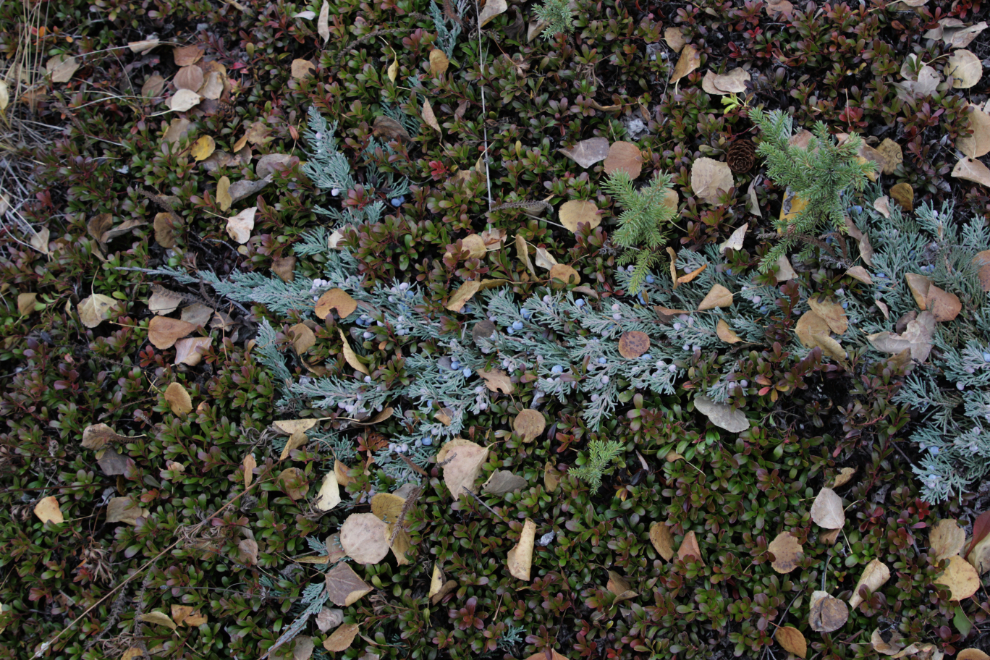
Creeping juniper with a nice load of berries spreading across lowbush cranberry (Vaccinium vitis-idaea).
The weather was starting to threaten rain as I got further back among the lakes, but before leaving I went for a long barefoot walk here. There's a special energy here that I wanted to absorb a bit of.


The final photo shows one of the wild horses' stud piles (the largest I saw by far). Aud Fischer described them well on the Yukon Wild Horse group on Facebook: "You always know wild horses are around when you see studpiles, large mounds of manure, purposefully pooped on over and over again. Studpile rituals are an ingrained behavior in stallions, testosterone driven since geldings do not do this. They are a kind of horsey Facebook, telling everyone which stallions are present, how healthy he is and his status. Not only are they information posts, they are also used to resolve conflict through a set of behaviours called 'the studpile ritual'. The studpile ritual usually starts with the stallions sniffing a studpile, pooping on it in turn and then moving on. Often they will also size each other up, posture, sniff each others noses, tails and flanks, strike out, rear and squeal. Usually this is all that is needed to reassert hierarchies, but occasionally, if this is not enough, fights can break out."

My first visit to Takhini Salt Flats was just a teaser and I'll certainly be back a few times.