Communities of Northern British Columbia
Dateline: January 30, 2024.
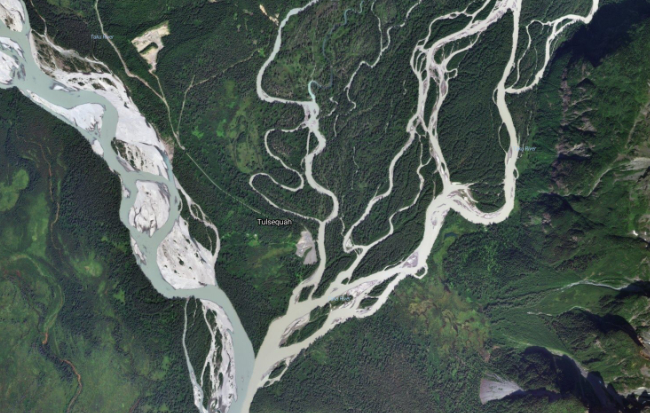
Tulsequah is not a community, but the area at the confluence of the Taku and Tulsequah (Talsekwe) Rivers. In the past century, the area has been best known for mines - the largest has been the Tulsequah Chief Mine, an underground copper, lead and zinc mine which was operated by Cominco from 1951 to 1957.
Until a mining stampede began in July 1929, Tulsequah was rarely mentioned in newspapers. In September 1917, a tour was headed up the Taku as far as the Tulsequah, with Fall colours and waterfalls being the main attractions. And in November 1923, a hunter returned to Juneau from a trip during which he bagged a lot of small game as well as a big bull moose and a silver-tip bear.
This history will continue using the quotes and articles below:
August 23, 1929:
Northern B.C. Mineral Find Starts Rush, 1929
A lengthy article from The Daily Province (Vancouver, BC) describes the excitement.
September 9, 1929: "Authority for the Alaska-Washington Airways company to land planes on the Taku river section of northern British Columbia has been granted by the Canadian customs service, A. J. Smiley, representing the Canadian service here, announced today. Landing of planes in that section will expedite the prospecting operations in the Taku and Tulsequah rivers, Smiley said." (The Spokesman-Review, Spokane)
November 1, 1929:
Americans taking advantage of Tulsequah mineral find
In an article in The Vancouver Sun, the Canadian government geologist in the Tulsequah area berates Canadian mine developers.
2022:
Tulsequah Mine cleanup
An information page by the BC government, current to 2022.
August 2022:
An open, oozing wound
The closed Tulsequah Chief mine has been leaching untreated waste into a salmon-bearing river since the 1950s. The province may finally start cleaning it up.